
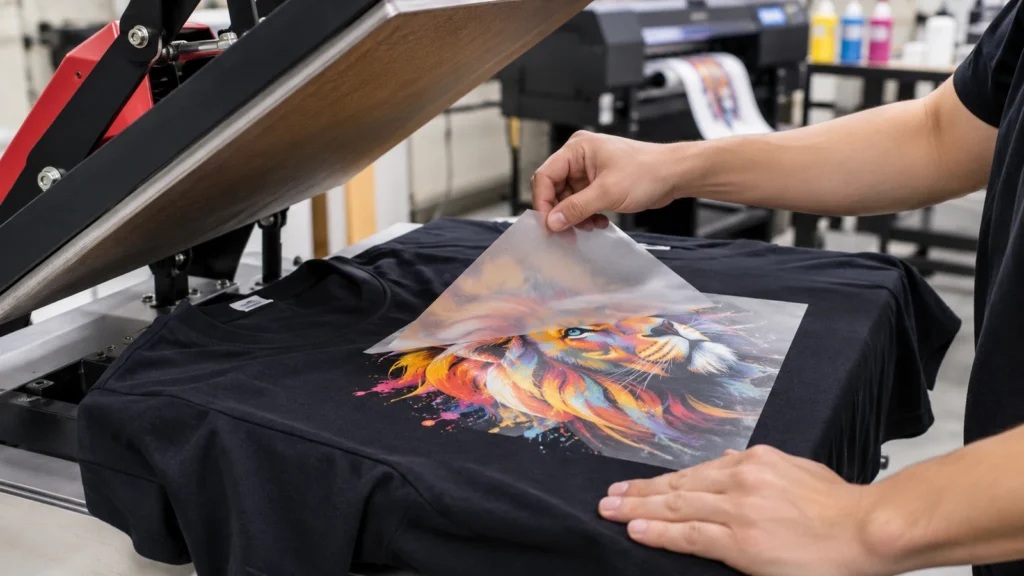
DTF Transfers on Work Shirts: Pressing, Stretch and Wash Controls
For a production buyer choosing heat-transfer printing for detailed multicolour logos, the best result begins with a usable specification, not a visual mock-up alone. The purpose of this guide is to reduce ambiguity before money is committed. It separates decisions that need a physical sample from decisions that can be settled with a measured technical proof. Check the destination and handover arrangements before accepting a production schedule.
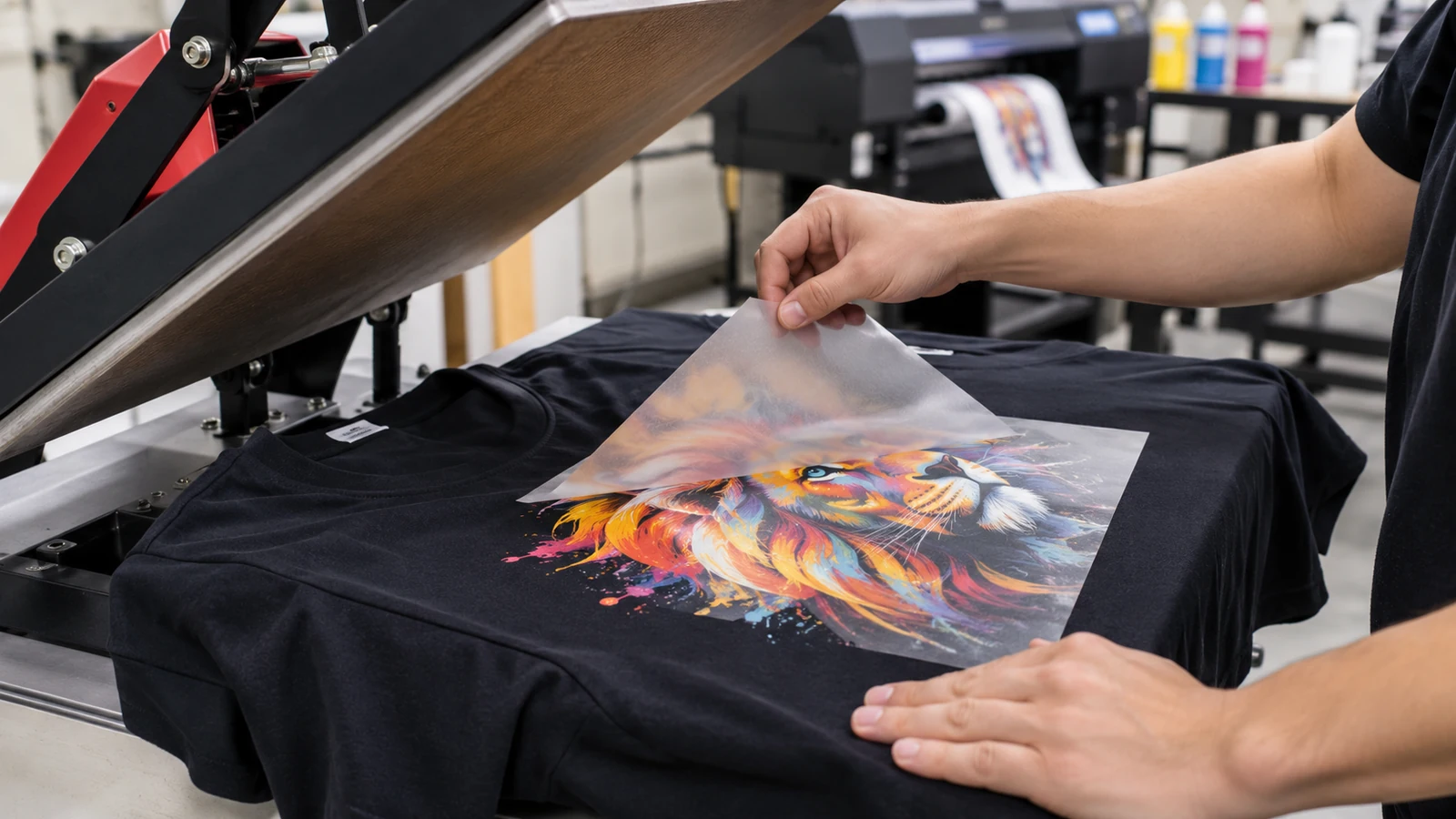
Print placement from stable garment references
For a production buyer choosing heat-transfer printing for detailed multicolour logos, a core requirement is to measure print placement from stable garment references instead of eyeballing a folded shirt. This is not just a preference in a catalogue: it affects who can use the item, how it performs during an ordinary working day and whether the first delivery can be repeated later.
The practical check is to put a representative sample into the situation for which the item is intended. Ask the wearer, installer or packer to follow the normal sequence, then look at the specific issue: measure print placement from stable garment references instead of eyeballing a folded shirt. Photograph the result at useful angles and record what passed or failed.
Press temperature time and pressure against the specific garment fabric
One early decision for a production buyer choosing heat-transfer printing for detailed multicolour logos is whether to test press temperature time and pressure against the specific garment fabric. The two available-looking options may not be interchangeable once the item is being worn, displayed, shipped or handled. Ask what the feature changes in daily practice, and specify the observation that would make an option unacceptable.
During proofing, compare at least two realistic choices when there is uncertainty. An appropriate test might mean a worn fitting, a printed sample on the actual stock, a test application to the packaging surface or a brief installation at the intended height.
Heavy transfers across high-stretch and fold points
The design or purchasing brief for a production buyer choosing heat-transfer printing for detailed multicolour logos should make room for this constraint: avoid heavy transfers across high-stretch and fold points. It matters because different suppliers can interpret the same general request in different ways.
A sensible review combines a measured proof with a practical trial. Check the actual edges, fixing points, fastening areas or decorated zones relevant to avoid heavy transfers across high-stretch and fold points. For a garment, inspect it while worn and after the care routine; for printed collateral, check at final size and under the lighting where readers will see it.
Proper cooling or peeling according to transfer instructions
Do not isolate artwork approval from production decisions for a production buyer choosing heat-transfer printing for detailed multicolour logos. The important condition here is to allow proper cooling or peeling according to transfer instructions. Ask the production team what tolerance, material behaviour or handling step could influence that result.
For the approval sample, document the chosen dimensions, orientation and position on the finished item. Return to allow proper cooling or peeling according to transfer instructions when reviewing the result, not only to the colour palette. Check it from the perspective of the person who will actually use or receive the product.
Assess edge adhesion and cracking
Think of this stage as a handover decision for a production buyer choosing heat-transfer printing for detailed multicolour logos: assess edge adhesion and cracking after repeated laundering before bulk approval. There is a cost to ambiguity even if it never appears on an invoice. Repeated questions, mismatched samples and late design corrections consume time that should have been reserved for manufacture and inspection.
Before signing off, run a short practical inspection against this requirement. Have one person describe the item and another confirm it against the sample; discrepancies should be resolved before quantities are locked. The record should include material, final dimensions, colour reference where necessary and the exact concern: assess edge adhesion and cracking after repeated laundering before bulk approval.
Final order checklist
For a production buyer choosing heat-transfer printing for detailed multicolour logos, write one final specification before releasing production. Compare the actual sample with the approved artwork, check the finished dimensions and ensure quantities match the people, locations or packing units involved. Do not allow a change to one component to leave the other approvals out of sync. A shared final file is more reliable than separate messages to several people.
- Measure print placement from stable garment references instead of eyeballing a folded shirt.
- Test press temperature time and pressure against the specific garment fabric.
- Avoid heavy transfers across high-stretch and fold points.
- Allow proper cooling or peeling according to transfer instructions.
- Assess edge adhesion and cracking after repeated laundering before bulk approval.
For Penang orders, check the receiving postcode and event deadlines instead of treating production time as the entire schedule. Check cartons and finished items against this list on receipt. Where something differs, photograph the item and note its size, code or batch before discussing a remedy. This gives both buyer and supplier a useful basis for resolving a problem.
Frequently asked questions
What should the initial enquiry include?
Describe a production buyer choosing heat-transfer printing for detailed multicolour logos, the intended quantity and product model, and the exact intended use. Include artwork, sizes or dimensions, number of variants, receiving postcode and required arrival date. Highlight this non-negotiable point: measure print placement from stable garment references instead of eyeballing a folded shirt. Ask the supplier to quote the same scope instead of comparing incomplete prices.
Is a digital mock-up enough for approval?
A mock-up is useful for composition and approximate placement, but not always for a physical characteristic such as test press temperature time and pressure against the specific garment fabric. Request a production-representative sample or final-size proof where the decision is significant. Confirm measurements, materials and any finishing process, then record which version was actually approved.
Which common mistake should be checked before production?
One avoidable risk is overlooking the following: avoid heavy transfers across high-stretch and fold points. The result may be costly to correct once fabric is cut or printed pieces are trimmed. Ask the responsible person to inspect this specific detail and capture the decision in the sign-off sheet, including any tolerance agreed with the supplier.
How can a later reorder match this batch?
Keep the final garment or print model, size breakdown, material and colour references, approved artwork, placement measurements and an actual retained sample. Note whether the order addressed assess edge adhesion and cracking after repeated laundering before bulk approval. Reconfirm availability at reorder time rather than assuming that every supplier or material specification remains unchanged.
For a project-specific quotation, share the quantity, model or material, artwork and exact delivery postcode. Consult UniformPenang.com contact and service information and request written confirmation of the relevant options and schedule.