
Penang Uniform Sizing Guide
How to Choose Uniform Sizes for Orders
Use the selected garment’s actual size chart, compare it with a well-fitting shirt and organise one accurate staff size list before approving your Penang uniform order.
Direct answer: Choose the exact garment before asking staff for sizes. Share that product’s size chart, ask each wearer to measure a similar garment laid flat, compare chest width and body length, and allow enough room for normal work movement or layering. Do not assume that an M, L or XL fits the same across different brands, cuts or garment types.
Accurate staff sizing
Why Uniform Size Planning Matters
A uniform order can include the correct artwork, colour and printing method but still create problems when the size list is inaccurate. Employees may receive garments that are too tight for movement, too loose for customer-facing work or too short after the wrong size chart was used.
Good size planning begins with the product code, cutting and fabric. A unisex cotton T-shirt, fitted polo, quick-dry shirt, long-sleeve work shirt and jacket can all use different measurements. The buyer should therefore confirm the garment first and collect sizes only from the matching chart.

Quick comparison
How to Check Sizes for Different Uniform Types
Use this table as a practical starting point. The final choice should follow the selected product’s size chart, staff measurements, working environment, movement needs and preferred fit.
| Garment or Wearer | Measurements to Compare | Fit Allowance to Review | Common Mistake |
|---|---|---|---|
| Unisex round-neck T-shirt | Chest width and body length | Normal arm movement and preferred loose or regular fit | Choosing by the size label without checking garment width. |
| Polo or collared shirt | Chest width, shoulder width and body length | Room across the chest, shoulders and upper arms | Using a T-shirt size without checking the polo cutting. |
| Fitted or gender-specific cut | Chest, waist, hip and length where shown | Comfort while sitting, reaching and moving | Converting directly from a unisex size. |
| Quick-dry or activity shirt | Chest width, length and sleeve opening | Movement, ventilation and personal fit preference | Assuming stretchy-looking fabric will always fit comfortably. |
| Long-sleeve or work shirt | Chest, shoulder, sleeve length and body length | Reaching, lifting, bending and any required base layer | Checking only chest width and ignoring sleeve movement. |
| Jacket or outerwear | Chest, shoulder, sleeve and jacket length | Space for the clothing worn underneath | Selecting the same size as a thin T-shirt without layering allowance. |
| Children or youth sizes | Actual garment width and length | Comfort, activity and reasonable growth allowance | Ordering only by age because children of the same age can fit differently. |
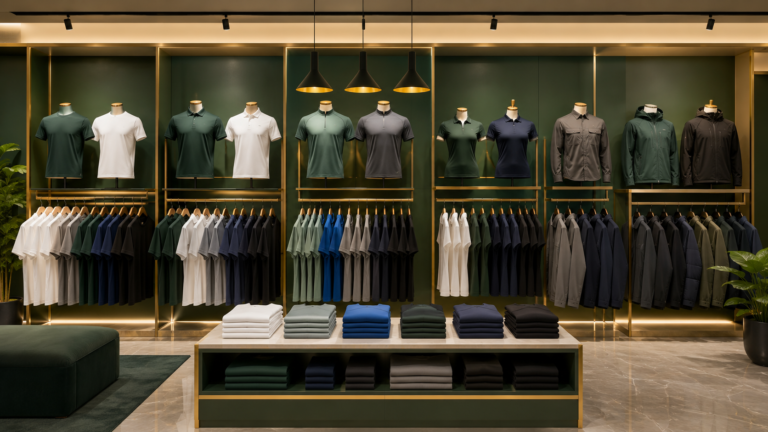
Garment-specific sizing
Uniform Options and Their Main Sizing Considerations
Different uniforms can fit differently even when the same employee wears them. Review the garment category, cutting, fabric and intended use before finalising the staff size list.
Unisex T-Shirts
Unisex shirts can simplify mixed-team orders, but some wearers may prefer a looser or more fitted result.
Review: chest width, body length, shoulder drop and personal fit preference.
Polo Shirts
Polo cutting can feel more structured around the shoulders, sleeves and collar than a round-neck shirt.
Review: shoulder width, chest allowance, sleeve opening and untucked length.
Quick-Dry Shirts
Quick-dry uniforms may suit factories, warehouses, events and outdoor teams, but fabric texture and cutting vary by product.
Review: ventilation, movement, opacity, body width and preferred looseness.
Fitted and Gender-Specific Cuts
Fitted garments may use narrower waists, shorter sleeves or different proportions from unisex products.
Review: the dedicated chart for that cut instead of converting from a unisex label.
Long-Sleeve and Work Shirts
Workwear must support reaching, lifting and bending while keeping sleeve and body lengths practical.
Review: chest, shoulder, sleeve length, cuff area and movement allowance.
Jackets and Outerwear
Outerwear should be sized according to what staff will wear underneath during normal operations.
Review: layering, shoulder movement, sleeve length, zip closure and storage needs.

Printing and fit
How Printing and Branding Can Affect Uniform Comfort
Printing normally does not change the labelled garment size, but artwork coverage, placement and garment construction can affect how the uniform feels during work. Review fit and branding together before approving production.
DTF Printing
A compact chest logo usually feels different from a large solid front or back transfer.
Size consideration: allow comfortable movement when the design covers a large flexing area.
Silk Screen Printing
Silk screen can suit repeated staff artwork, but the print size and position should still be checked across the full size range.
Size consideration: confirm whether one artwork dimension works on both small and extended garments.
Embroidery
Compact embroidery can support polos, shirts and jackets without covering a large garment area.
Size consideration: check chest placement, pocket position and whether the logo remains balanced on smaller sizes.
Sublimation
Sublimated jerseys may use a ready-made cut or a custom cut-and-sew pattern with its own size specification.
Size consideration: use the exact jersey chart rather than a previous cotton-shirt size.
Names and Numbers
Personalised details must match the correct wearer, garment type and size in the final order list.
Size consideration: keep one row per employee so names are not attached to the wrong garment.
Different Garments, One Brand
A company may use polos, T-shirts and jackets for different roles while keeping the same logo and colours.
Size consideration: collect a separate size for each product instead of copying one size across all garments.

Measuring guide
How to Read a Uniform Size Chart Correctly
Many apparel size charts show garment measurements rather than body measurements. Ask staff to place a similar well-fitting garment on a flat surface and compare the same points shown on the selected product chart.
Chest Width
Measure straight across the garment from underarm to underarm without stretching the fabric.
Body Length
Measure from the highest shoulder point near the collar down to the bottom hem.
Shoulder Width
Measure across the back from one shoulder seam to the other when the chart provides this value.
Sleeve Length
Follow the chart’s measurement method because some products measure from the shoulder and others from the centre back.
Waist and Hip
Use these measurements when the chart includes shaped polos, fitted tops, trousers, skirts or aprons.
Movement and Layering
After comparing measurements, check whether the wearer can sit, reach, bend and layer clothing comfortably.
Fabric and cutting
Why the Same Size Can Feel Different
Cotton Fabric
Cotton can feel soft and familiar, but fabric weight, construction and care instructions may affect the final wearing experience.
Polyester or Microfiber
Quick-dry fabrics can drape and stretch differently from cotton, so staff should still follow the selected product chart.
Cotton Blends
Blended fabrics may combine structure and easier care, but the garment cut remains more important than the fibre name alone.
Regular vs Oversized Cut
An oversized product can have a wider body and dropped shoulder even when the label matches a regular-fit shirt.
Unisex vs Fitted Cut
These cuts may use different chest, waist, sleeve and length proportions and should not share one automatic size conversion.
Colour and Stock Availability
Not every colour is available in every size. Confirm the full required range before the team submits final choices.
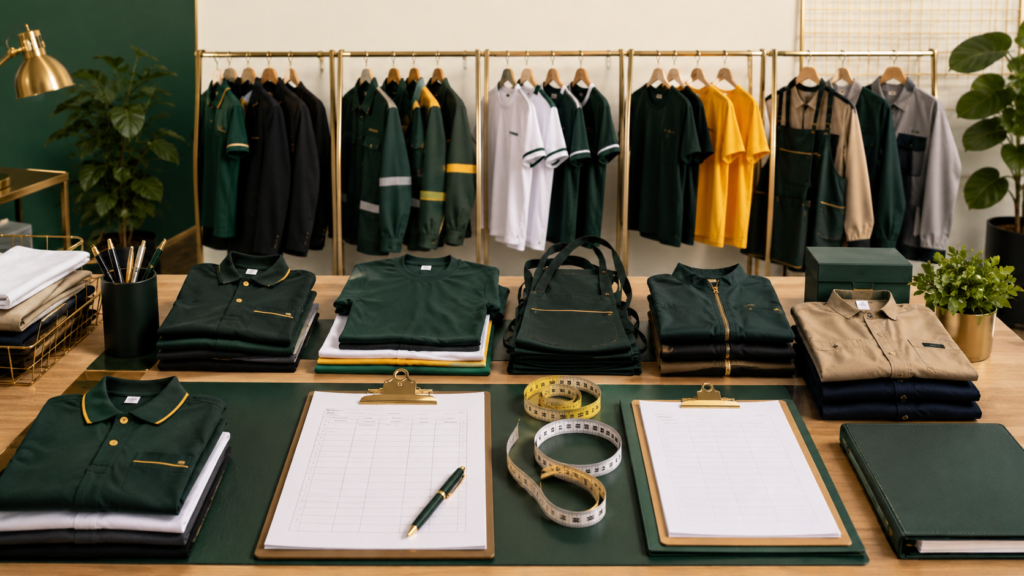
Size collection workflow
How to Collect Uniform Sizes for a Penang Order
Use one controlled process so every employee receives the correct chart, deadline and garment description.
Confirm the Exact Product
Record the brand, product code, garment category, colour, cutting and available size range.
Obtain the Correct Size Chart
Use only the chart for the selected product and identify whether the measurements refer to the garment or the body.
Explain How to Measure
Ask staff to measure a similar well-fitting garment laid flat and compare the same chart points.
Provide a Fitting Option Where Practical
A physical sample or controlled fitting session can help larger teams, subject to product and sample availability.
Collect One Response per Wearer
Use one spreadsheet or form with employee name, department, garment type, selected size and personalisation details.
Review Exceptions Early
Check extended sizes, fitted cuts, children’s sizes, layered garments and staff who require a different product.
Freeze and Approve the Final List
One authorised buyer should confirm the final quantity by size before printing or personalisation begins.
Keep the Record for Repeat Orders
Store the product code, colour, size list and approved artwork, then reconfirm availability before every reorder.
Buyer scenarios
Size Planning for Different Teams
Office and Sales Teams
Focus on chest, shoulder and length so polos or shirts remain presentable while sitting, driving and meeting customers.
Factory and Warehouse Teams
Allow enough room for lifting, reaching and protective layers while keeping loose fabric appropriate for the work environment.
School and Club Orders
Separate adult, youth and child charts. Do not use age alone as the final sizing method.
Event and Volunteer Crews
Unisex T-shirts may simplify distribution, but organisers should still collect actual sizes instead of estimating by group.
Cafe and Service Teams
Check movement, apron layering, repeated washing and whether front-of-house and kitchen teams use different garments.
Mixed Garment Orders
Collect separate sizes for polos, T-shirts, jackets and fitted cuts because one employee may need a different size in each product.
Common Uniform Sizing Mistakes
- Collecting sizes before selecting the exact garment and product code.
- Assuming the same size label is identical across every brand and uniform type.
- Sending a chart without explaining how each measurement should be taken.
- Using body measurements when the chart shows flat garment measurements.
- Copying a T-shirt size directly to a polo, jacket or fitted garment.
- Ignoring shoulder, sleeve and body length when checking workwear.
- Estimating children’s sizes only from age.
- Failing to confirm extended sizes and colour availability early.
- Accepting size changes through several separate chats after final approval.
- Discarding the final size record needed for future repeat orders.
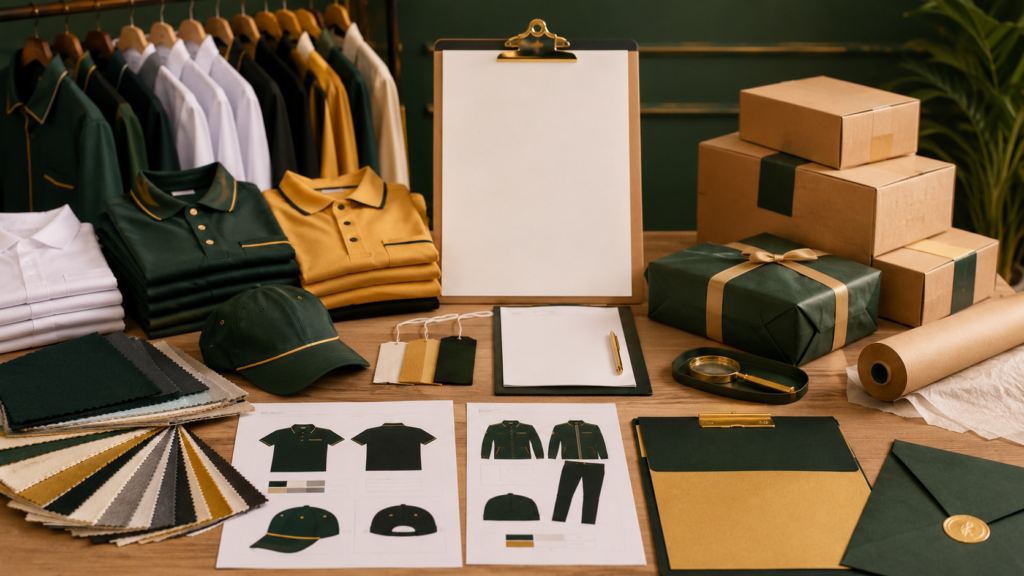
Final checklist
Information to Prepare Before Confirming Sizes
Garment and Staff Details
- Brand and exact product code
- Garment colour and cutting
- Actual product size chart
- Staff name and department
- Selected size for each garment type
- Extended-size or fitted-cut requirements
Order and Approval Details
- Total quantity by size
- Names, numbers or role personalisation
- Final approved artwork positions
- Required receiving date
- Penang delivery address and postcode
- One authorised final approver
Frequently asked questions
Uniform Size FAQs for Penang Buyers
Should staff choose sizes from their normal clothing labels?
No. Normal clothing labels are only a rough reference. Staff should compare a well-fitting garment with the actual chart for the selected uniform product.
Should we use body measurements or garment measurements?
Follow the method stated on the product chart. Many uniform charts show a garment laid flat, while some show body measurements. Do not mix the two methods.
What should an employee do when between two sizes?
Review the working activity, preferred fit, fabric, layering and the most important measurement. A wearer who needs more movement or layering may prefer the larger option, subject to the selected cut.
Can women use the same unisex size chart?
They can use the unisex chart when ordering a unisex garment, but the fit may be looser or longer than a fitted cut. Compare actual measurements rather than converting by label.
Are extended uniform sizes available?
Selected products may offer extended sizes, but the available range depends on the garment, brand, colour and current stock arrangement. Confirm these sizes before collecting the final list.
Can we request samples for staff fitting?
Sample or fitting arrangements may be reviewed depending on the selected product, quantity and availability. Confirm the arrangement before planning a fitting session.
Can staff change sizes after artwork approval?
Changes depend on the production stage. Personalised or already processed garments may not be changeable, so the buyer should freeze the size list before production begins.
Can we reuse the same size list for a repeat order?
Keep the previous record, but reconfirm every wearer and the product specification. Staff preferences, body measurements, product supply and garment cutting can change.
Can uniform orders be delivered to Penang?
Uniform Penang can review apparel supply and delivery arrangements for Penang, subject to order confirmation. Provide the complete receiving address, postcode and contact person.
Prepare an accurate size list
Request a Penang Uniform Quotation
Share the garment type, brand or product preference, colour, quantity, size breakdown, artwork, printing positions, required receiving date and Penang delivery postcode. The team can review the available garment and customisation arrangement.
Useful Uniform Penang Resources
Uniform and Printing Services
Explore garment categories and customisation options.
View services →DTF Printing in Penang
Review artwork coverage, placement and garment considerations.
Open guide →Silk Screen Printing
Review repeated printing for coordinated team orders.
Open guide →Corporate Uniform Buying Guide
Plan garments, sizing, artwork and repeat orders.
Open guide →Uniform Penang Blog
Browse more uniform and printing guides.
Browse blog →Contact Uniform Penang
Submit garment, colour, quantity and size requirements.
Contact team →Our Regional Apparel and Printing Network
These websites belong to the same company or regional network.
JC Print Malaysia
Visit website →SelangorPrint
Visit website →Uniform Johor
Visit website →Uniform Sabah
Visit website →Uniform Singapore
Visit website →Uniform Hub Singapore
Visit website →Tanah Studio
Visit website →KitaPrint
Visit website →Disclosure: These are related company or regional network websites, not independent recommendations.