Uniform fabric selection guide
How to Choose the Right Uniform Fabric
The right uniform fabric should suit the wearer’s duties, working environment, expected washing frequency, branding method and desired appearance. Choosing by fabric name alone is rarely enough; weight, knit or weave, garment construction and daily use also affect comfort and durability.
Direct answer: Start by identifying where the uniform will be worn, how active the wearer will be and how often the garment will be washed. Cotton is comfortable for casual and indoor use, polyester is practical for active or outdoor teams, and polyester-cotton blends offer a balanced option for many workplaces. After that, confirm fabric weight, colour, fit and compatibility with embroidery, DTF, silkscreen or sublimation before approving the order.
Match the Work Setting
Consider heat, movement, air conditioning, customer contact, outdoor exposure and the amount of physical work involved.
Check Care Requirements
Daily uniforms need fabric that can handle the expected washing routine without becoming difficult for staff to maintain.
Plan the Branding Early
The logo size, print method and placement should be selected together with the garment rather than added as an afterthought.
Quick comparison
Which Uniform Fabric Fits Your Team?
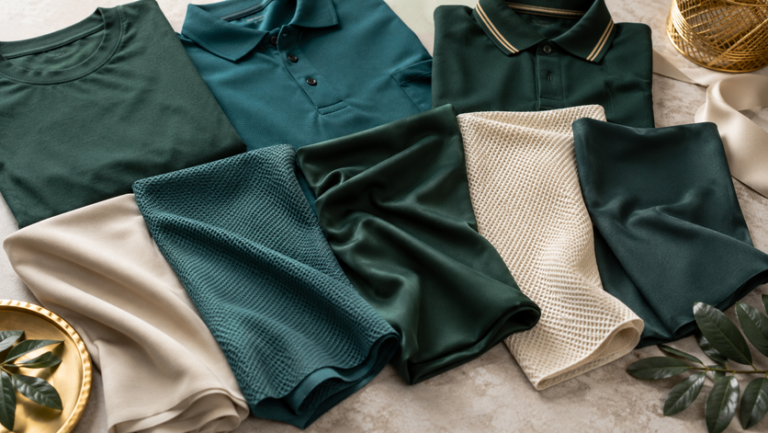
No single fabric is best for every uniform. Use this table as a starting point, then compare the exact garment sample, product specifications and size chart before placing a bulk order.
| Fabric type | General characteristics | Common uniform uses | Points to check |
|---|---|---|---|
| Cotton | Soft hand feel, comfortable against the skin and suitable for a casual appearance | Event T-shirts, indoor teams, retail promotions and casual company wear | Drying speed, shrinkage control, colourfastness and suitability for frequent heavy-duty use |
| Polyester | Lightweight, quick drying and commonly available in activewear constructions | Sports teams, outdoor crews, delivery staff, school activities and event operations | Fabric texture, heat comfort, odour management, snag resistance and print compatibility |
| Polyester-cotton blend | Balances the familiar feel of cotton with easier care and added shape retention | Corporate polos, factory uniforms, service teams and everyday staff apparel | Actual blend ratio, fabric weight, pilling resistance and how the garment feels during long shifts |
| Pique knit | Textured polo fabric with a structured and professional appearance | Office teams, sales staff, retail, hospitality and customer-facing roles | Collar stability, surface texture, embroidery support and comfort in warm working areas |
| Microfiber or performance knit | Smooth or patterned synthetic fabric designed for movement and faster moisture transfer | Active work, sports, outdoor events, kitchens and field service teams | Breathability, transparency in light colours, static, snagging and the correct branding method |
| Woven workwear fabric | More structured construction for shirts, trousers, jackets and industrial garments | Technicians, maintenance teams, logistics, warehouses and supervisory staff | Movement allowance, seam strength, protective requirements and whether specialised compliance is needed |
Practical tip: Two garments labelled “polyester” can feel completely different because the knit structure, yarn, finishing, thickness and cutting may not be the same. Compare the actual product, not only the fibre name.
Fabric options
Understand the Main Uniform Fabric Choices
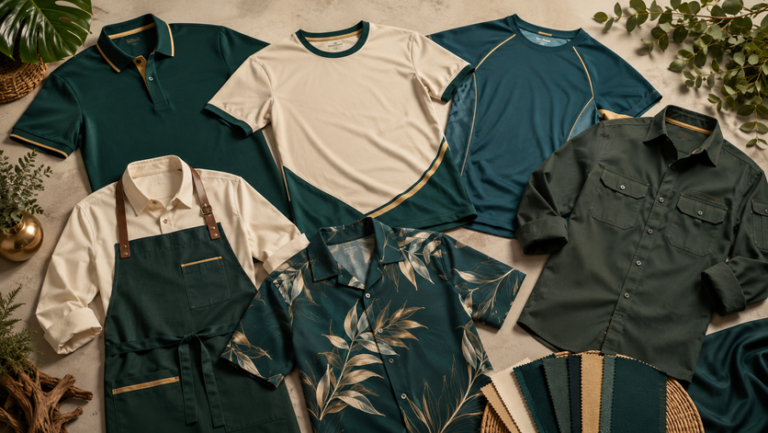
Before comparing brands or prices, decide what the fabric must achieve for the wearer. These common categories cover many company, school, event and service uniform requirements.
Cotton T-Shirt Fabric
Cotton is widely chosen for its soft feel and familiar casual appearance. It works well for indoor teams, campaign shirts, company events and merchandise where wearer comfort and print presentation are important.
- Suitable for many DTF and silkscreen designs
- Available in lightweight and heavier constructions
- Best assessed for shrinkage, colour and wash expectations
Polyester Performance Fabric
Polyester is practical when uniforms need to dry quickly, support movement or be worn in active environments. The surface may be smooth, mesh-like, honeycomb or textured depending on the garment.
- Common for sports, outdoor and operational teams
- Often lighter and easier to dry after washing
- Needs the correct print process and heat settings
Polyester-Cotton Blends
A blended fabric can provide a useful middle ground for teams that want a more natural feel but also need easier care, shape retention and practical daily performance.
- Useful for corporate polos and general staff uniforms
- Often suitable for repeated workplace use
- Blend ratio affects feel, drying and branding results
Pique and Polo Fabrics
Pique knit has a visible texture that gives polo shirts a more structured look than a standard round-neck T-shirt. It is often selected for customer-facing and corporate roles.
- Pairs well with a stable collar and chest branding
- Available in cotton, polyester and blended versions
- Texture should be considered for small printed details
Woven Shirts and Workwear
Woven fabrics are used for button shirts, technician uniforms, trousers, aprons, jackets and other garments requiring a more structured form. They may include cotton, polyester or blended fibres.
- Suitable for formal, industrial and utility garments
- Requires attention to mobility and seam construction
- Specialised work may require certified protective clothing
Treated or Functional Fabrics
Some uniforms include features such as moisture management, odour-control treatments, stretch, water resistance or enhanced visibility. These should be selected only when they solve a real operational need.
- Ask what the feature does and how it should be cared for
- Confirm whether the treatment affects branding
- Review current product documentation before ordering
Important: Fabric choice does not replace workplace safety assessment. Roles involving heat, chemicals, flames, electrical exposure, high visibility or other hazards may require garments that meet specific standards.
Printing and branding
Match the Fabric to the Branding Method
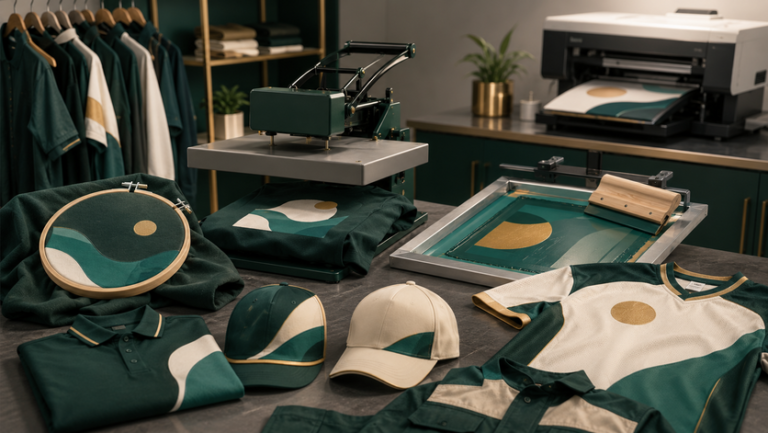
A uniform can feel comfortable but still be unsuitable for the planned logo application. Confirm the artwork, quantity, placement and fabric before deciding on a branding method.
Embroidery
Embroidery is commonly used for polo shirts, woven shirts, jackets, caps and customer-facing uniforms. Stable medium-weight fabrics usually support stitching better than very thin, stretchy or loosely knitted garments.
- Good for simple and bold company logos
- Creates a textured, professional appearance
- May require backing and artwork simplification
DTF Printing
DTF is suitable for detailed, multi-colour artwork on many cotton, polyester and blended garments. Fabric texture, stretch, heat sensitivity and placement still need to be checked before production.
- Supports gradients and small artwork details
- Useful for varied designs and smaller quantities
- Large solid prints may affect breathability at the print area
Silkscreen Printing
Silkscreen is often selected for larger quantities with simple colour separations. Smooth T-shirt fabrics generally provide an easier printing surface, while textured or treated garments may need extra testing.
- Suitable for bold logos and repeated team designs
- Can be efficient for larger quantities
- Ink system should match the garment and colour
Sublimation
Sublimation is mainly used with suitable light-coloured polyester fabric and is popular for sports jerseys and all-over designs. The colour becomes part of the fabric rather than sitting as a thick layer on top.
- Allows full-panel patterns and vibrant graphics
- Maintains a light print feel
- Not a universal solution for cotton or dark ready-made shirts
Avoid this mistake: Do not approve the garment first and decide the print method later. A textured polo, stretch fabric, coated jacket or heat-sensitive performance shirt may require a different branding approach from a standard cotton T-shirt.
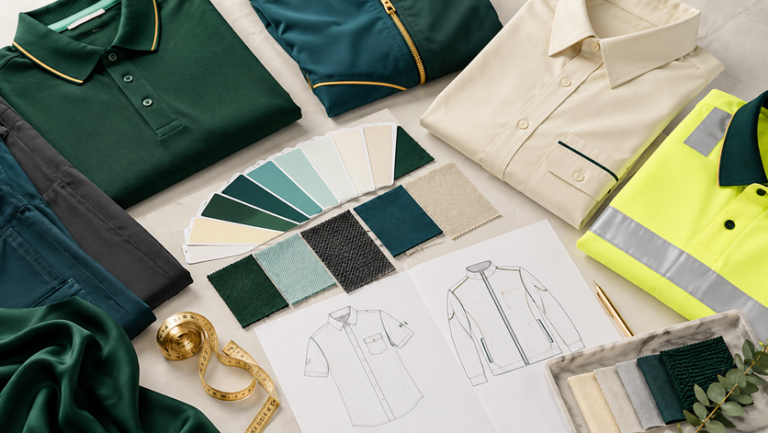
Material and design guide
Look Beyond Cotton vs Polyester
The fibre content is only one part of the decision. A better comparison also considers fabric weight, construction, colour, opacity, stretch and the way the garment is cut.
Fabric Weight
GSM describes fabric weight, not complete quality. A lighter fabric may feel cooler, while a heavier fabric may provide more structure and opacity. The best range depends on the garment and job.
Knit or Weave
Jersey, pique, interlock, mesh, twill and other constructions behave differently. They influence stretch, surface texture, airflow, drape and print appearance.
Colour and Opacity
Light colours may appear more transparent, especially in lightweight performance fabrics. Dark colours can absorb more heat outdoors and may require an opaque print system.
Fit and Movement
Fabric cannot solve a poor cut. Check shoulder width, sleeve movement, body length and size grading so staff can work comfortably in their normal positions.
Washing Routine
Confirm whether the uniform will be washed at home, commercially or after every shift. Heat, detergent, tumble drying and ironing can affect different garments in different ways.
Reorder Consistency
Record the exact brand, model, colour code, size chart, branding file and placement. A vague description such as “black dry-fit polo” is not enough for a reliable reorder.
Colour planning tip: View the physical garment under normal lighting when brand colour is important. Screen colours, catalogue images and different dye batches may not appear exactly the same.
Sample approval: For a large or repeated order, approve a physical garment sample or a clearly identified existing model before collecting final sizes. This gives buyers a more reliable reference for feel, fit, colour and branding position.
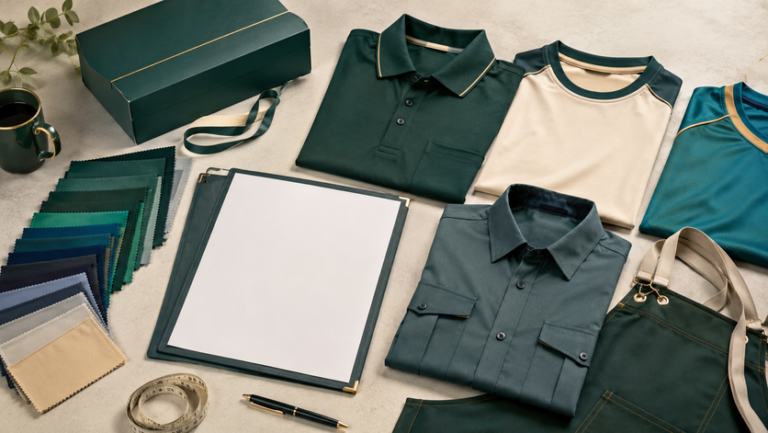
Ordering process
A Practical Fabric Selection Process
Use a structured process to avoid selecting a fabric based only on appearance or the lowest unit price.
Define the Wearer and Work Environment
List the departments, job duties, indoor or outdoor conditions, movement level, customer contact and expected hours of wear.
Rank the Most Important Requirements
Decide whether comfort, professional appearance, quick drying, durability, easy care, colour matching, safety or budget has the highest priority.
Shortlist Garments, Not Just Fabrics
Compare specific products with known brand, model, fibre composition, GSM, size range, colour options and care instructions.
Confirm Branding Compatibility
Share the logo and intended placement so embroidery, DTF, silkscreen, sublimation or another method can be matched to the garment.
Approve the Sample and Final Specification
Confirm garment model, colour, size chart, artwork, placement and quantity before production. Keep the details for future reorders.
Buyer scenarios
Fabric Choices for Different Uniform Needs
These examples show how the working situation can change the most suitable fabric direction.
Customer-Facing Corporate Team
Priority: A neat appearance, comfortable all-day wear and professional logo presentation.
Possible direction: A stable pique polo or easy-care blended woven shirt with chest embroidery. Check collar shape, fabric opacity and how the garment looks after sitting or travelling.
Active Operational Staff
Priority: Movement, repeated washing, role visibility and practical durability.
Possible direction: A polyester-cotton polo, performance shirt or appropriate woven workwear garment. Check seam strength, snagging, heat comfort and whether any safety standard applies.
Field Service Team
Priority: Faster drying, comfort during movement and visibility in changing weather.
Possible direction: Lightweight performance polyester with suitable ventilation and an appropriately sized logo. Dark colour placement and reflective or visibility requirements should be considered separately.
Front and Back-of-House Staff
Priority: A coordinated appearance, movement, heat management and easy cleaning.
Possible direction: Use different garments by role, such as a structured polo or woven shirt for service staff and a practical quick-drying option for active areas. Aprons can support both function and branding.
House Teams and Activities
Priority: Colour separation, movement, easy size collection and practical care.
Possible direction: Performance polyester for active use or cotton for lower-intensity event shirts. Confirm light-colour opacity, youth sizing and whether names or numbers are required.
Short-Term Crew or Participant Shirts
Priority: Clear branding, budget control, colour availability and delivery timing.
Possible direction: Cotton or blended T-shirts for a casual event, or performance polyester for outdoor activity. Choose the fabric together with the print size so the shirt remains comfortable.

Buyer checklist
What to Confirm Before Ordering
Use this checklist when comparing uniform garments or requesting a quotation.
Work and Wear Requirements
- Indoor, outdoor or mixed working environment
- Physical activity and expected hours of wear
- Heat, air conditioning, weather and exposure
- Customer-facing, operational or mixed roles
- Home washing or commercial laundry routine
Garment Specification
- Exact brand, model and colour code
- Fibre composition and fabric construction
- GSM or fabric weight where available
- Current size range and approved size chart
- Care instructions and sample approval
Branding Details
- Logo file quality and colour requirements
- Embroidery, DTF, silkscreen or sublimation
- Front, back, sleeve or name placement
- Final logo dimensions on each garment type
- Approval of artwork and production mock-up
Ordering and Reorders
- Quantity by garment, colour and size
- Required receiving date and delivery location
- Allowance for new staff or replacements
- Named person responsible for final approval
- Saved order reference for future enquiries
Common buying mistakes:
- Choosing by the lowest price without checking the daily work environment
- Assuming every cotton or polyester garment performs the same way
- Ignoring fabric opacity, stretch, texture or collar construction
- Selecting a print method before confirming the actual garment
- Collecting staff sizes from an old or different product chart
- Approving colour only from a phone or computer screen
Frequently asked questions
Uniform Fabric FAQs
What is the best fabric for a company uniform?
The best fabric depends on the role. A corporate sales team may prefer a structured pique polo or woven shirt, while an outdoor team may benefit more from a lightweight performance fabric. Start with the working environment rather than one universal material.
Is cotton or polyester better in Malaysia?
Both can work well. Cotton offers a soft, familiar feel, while polyester is often chosen for faster drying and active use. The knit structure, fabric weight, garment fit and workplace conditions matter as much as the fibre itself.
What does GSM mean in uniform fabric?
GSM means grams per square metre and describes fabric weight. A higher number usually indicates a heavier fabric, but it does not automatically mean better quality. Construction, yarn, finishing and intended use must also be considered.
Which fabric is best for embroidery?
Stable polo, woven shirt and jacket fabrics generally support embroidery well. Very thin or stretchy garments may need backing, reduced stitch density or a simplified logo. The final recommendation should be based on the exact garment and artwork.
Which fabric is suitable for sublimation?
Sublimation is mainly used with suitable polyester fabric, especially for light-coloured sportswear and custom-cut jerseys. It is not normally the right process for a standard cotton shirt or a dark ready-made garment.
Should we order one fabric for every department?
Not always. Front office, operations, kitchen, delivery and technical staff may have different comfort and functional needs. A coordinated colour and logo system can keep the brand consistent while using different garments by role.
How can we reduce problems during a future reorder?
Keep the exact product code, colour, approved size chart, artwork, logo dimensions, placement and previous order reference. Stock and dye batches should still be reconfirmed before each new production run.
Choose with confidence
Compare Uniform Fabrics Before You Order
Share your industry, wearer roles, estimated quantity, preferred garment style, working environment, artwork and required date. Uniform Penang can help you compare practical fabric and branding directions for the order.
Useful Uniform Penang resources
Continue Planning Your Uniform Order
Use these related pages to compare garments, printing methods and current uniform services.
Uniform Penang Homepage
Review available uniform, jersey, polo, embroidery and custom printing support.
Explore Uniform Penang →DTF Printing Guide
Learn where DTF can help with colourful logos, detailed artwork and different garment types.
Read the DTF guide →Silkscreen Printing Guide
Compare silkscreen applications for simple designs, team shirts and larger uniform quantities.
Read the silkscreen guide →Gildan Shirt Options
Review Gildan round-neck, polo and heavier garment directions for different groups.
Explore Gildan options →Oren Sport Options
Explore sports, activewear and uniform garments for teams needing lighter performance fabrics.
Explore Oren Sport options →Contact Uniform Penang
Send the working environment, quantity, garment preference and branding details for review.
Go to the contact page →Our other company websites
Regional Uniform and Printing Support
Explore related company websites when the order involves another Malaysian region, Singapore, Australia, broader product sourcing or reseller support.
JC Print Malaysia
Corporate apparel, custom printing and broader garment sourcing support.
Visit JC Print Malaysia →Selangor Print
Uniform and custom printing enquiries for Selangor and the Klang Valley.
Visit Selangor Print →Uniform Johor
Uniform supply and delivery support for companies, schools, groups and events in Johor.
Visit Uniform Johor →Uniform Sabah
Custom apparel and uniform ordering support for customers throughout Sabah.
Visit Uniform Sabah →Uniform Singapore
Corporate uniforms, event apparel and custom printing support for Singapore customers.
Visit Uniform Singapore →Uniform Hub SG
Another Singapore-focused channel for uniform and customised apparel enquiries.
Visit Uniform Hub SG →Tanah Studio
Apparel and creative product support for customers seeking an Australia-based option.
Visit Tanah Studio →KitaPrint
Resources for agents and resellers interested in selling printed apparel online.
Visit KitaPrint →Product range, stock, delivery coverage and service arrangements may vary by website and region. Confirm current requirements with the relevant team before ordering.