
Printed uniform care guide
How to Prevent Logo Cracking and Peeling
A printed logo lasts longer when the correct decoration method, fabric, artwork and curing process are matched from the beginning. Proper washing, drying and ironing habits then help protect the finished print throughout regular uniform use.
Direct answer: Prevent cracking and peeling by choosing a print method that suits the garment, approving artwork with suitable line thickness and size, and ensuring the logo is applied under controlled production conditions. After delivery, wash uniforms inside out in cool or moderate water, avoid bleach and harsh chemicals, use a gentle cycle, do not iron directly over the logo and reduce high-heat tumble drying.
Choose the Right Method
DTF, silkscreen, sublimation and embroidery behave differently on cotton, polyester, blends and performance fabrics.
Control Heat and Friction
Excessive heat, rough washing and repeated abrasion can weaken a printed surface even when the initial application is good.
Follow Care Instructions
A simple staff care guide can reduce avoidable damage and improve consistency across a company uniform programme.
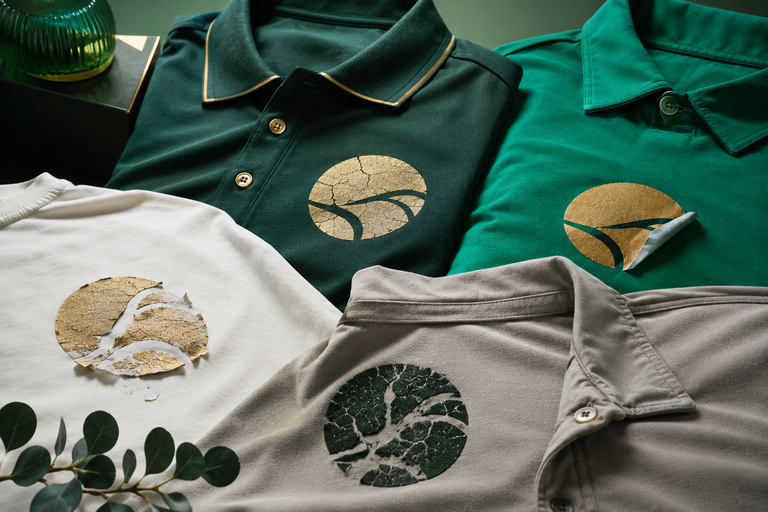
Quick comparison
Why Do Printed Logos Crack or Peel?
Cracking and peeling can look similar, but they often point to different causes. Use the visible signs below as an initial guide before reviewing the garment, print method and care history.
| Visible problem | Common contributing factors | Practical prevention | What to review |
|---|---|---|---|
| Fine surface cracks | Repeated stretching, heavy wear, high drying heat or a large solid print placed on a flexible area | Use suitable artwork coverage, avoid excessive stretching and reduce high-heat drying | Logo size, placement, garment fit and fabric stretch |
| Edges lifting | Weak adhesion, unsuitable fabric surface, contamination or care conditions that stress the print edge | Match the transfer to the garment, use controlled application settings and follow the recommended wash routine | Fabric finish, production settings, washing products and dryer temperature |
| Pieces peeling away | Severe adhesion failure, repeated high heat, aggressive chemicals or ironing directly on the logo | Avoid bleach, direct ironing and harsh heat while confirming the correct decoration method before production | Application quality, care history and whether the garment was suitable for the method |
| Print feels brittle | Excessive heat exposure, ageing, an overly thick print layer or unsuitable storage | Use balanced artwork, appropriate ink or transfer systems and moderate aftercare temperatures | Print thickness, artwork density, storage and repeated dryer use |
| Damage in one location | Seat belts, counters, bags, machinery, name tags or repeated rubbing against the same area | Move the logo away from high-friction zones and choose a more suitable placement | Daily movement, equipment contact and uniform role |
Important: A damaged logo does not always mean the same thing happened to every garment. Compare the affected pieces by wearer, wash routine, size, job role and production batch before deciding on the cause.
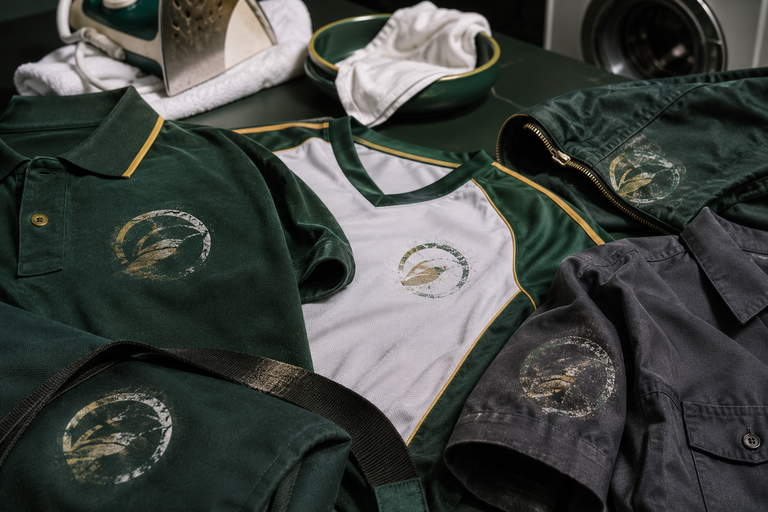
Common causes
What Weakens a Printed Uniform Logo?
Durability depends on the complete system rather than the print alone. The garment surface, artwork, application method, production control and daily care all contribute to the final result.
Fabric and Surface Are Not Compatible
Some fabrics are smooth and stable, while others are stretchy, textured, coated or treated for performance. A method that works well on one garment may not bond or flex in the same way on another.
Prevention: Confirm the garment composition, surface finish and intended decoration method before approving production.
The Logo Is Too Dense or Too Delicate
A very large solid block can feel stiff on a lightweight shirt, while extremely thin lines or tiny separated details may be harder to reproduce consistently.
Prevention: Adjust the artwork for practical line thickness, spacing, logo size and coverage.
Application Conditions Are Inconsistent
Transfer and ink systems rely on controlled combinations of time, temperature, pressure, curing and handling. Variation can affect adhesion and flexibility.
Prevention: Use a repeatable production process and test the actual garment whenever the fabric or method is unfamiliar.
The Garment Is Constantly Overstretched
A tight uniform can repeatedly pull across a chest, shoulder or stomach logo. This adds stress to the print every time the wearer moves.
Prevention: Use an accurate size chart and avoid placing large prints across areas that stretch heavily during work.
The Logo Sits in a High-Friction Area
Aprons, harnesses, counters, backpacks, seat belts and equipment can rub the same part of a uniform throughout every shift.
Prevention: Review the wearer’s job movement before deciding on left chest, sleeve, back or other placements.
Heat or Chemicals Are Too Aggressive
Very hot washing, high-temperature drying, bleach, strong stain treatment and direct ironing can damage or weaken many printed finishes.
Prevention: Provide a clear care guide and ensure staff know that printed areas need gentler handling.
Do not assume thicker always means stronger. An excessively heavy or rigid print may create more stress on a soft, flexible garment. The best result usually comes from balancing opacity, hand feel, stretch and artwork coverage.
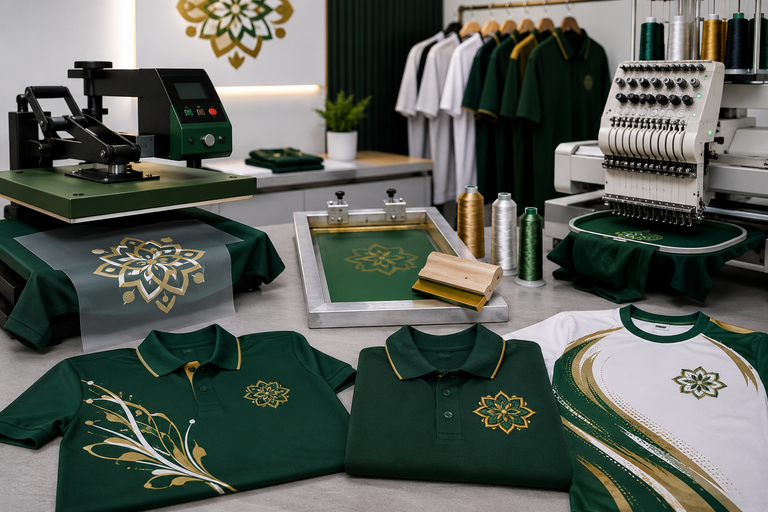
Printing and branding methods
Choose a Method That Matches the Uniform
Each branding method has a different structure and care requirement. Selection should consider the logo, fabric, quantity, colour coverage, garment use and expected washing routine.
DTF Printing
DTF is useful for colourful, detailed artwork on many common garment types. Long-term performance depends on correct transfer selection, controlled heat pressing and suitable aftercare.
- Suitable for detailed multicolour logos
- Keep direct ironing away from the transfer
- Avoid excessive dryer heat and repeated overstretching
Silkscreen Printing
Silkscreen can be practical for repeated designs and larger quantities. Ink choice, curing and artwork construction must be matched to the fabric and intended use.
- Effective for clear, repeatable designs
- Large solid areas should be planned carefully
- Proper curing is essential for wash durability
Sublimation
Sublimation becomes part of a suitable polyester fabric rather than forming a raised layer on top. This reduces peeling risk, although it is mainly used with compatible polyester garments and lighter base colours.
- Ideal for all-over sports and event designs
- No separate surface film to lift from the fabric
- Fabric and colour limitations must be considered
Embroidery
Embroidery does not crack or peel like a printed film, but dense stitching can distort lightweight fabric and may not suit very large or highly detailed artwork.
- Professional for chest, sleeve and cap branding
- Best with artwork simplified for stitching
- Garment structure must support the stitch density
Better method selection: Share the garment product code, fabric composition, logo file, print size, quantity, wearer role and washing conditions. This gives the supplier enough information to recommend a more suitable branding direction.
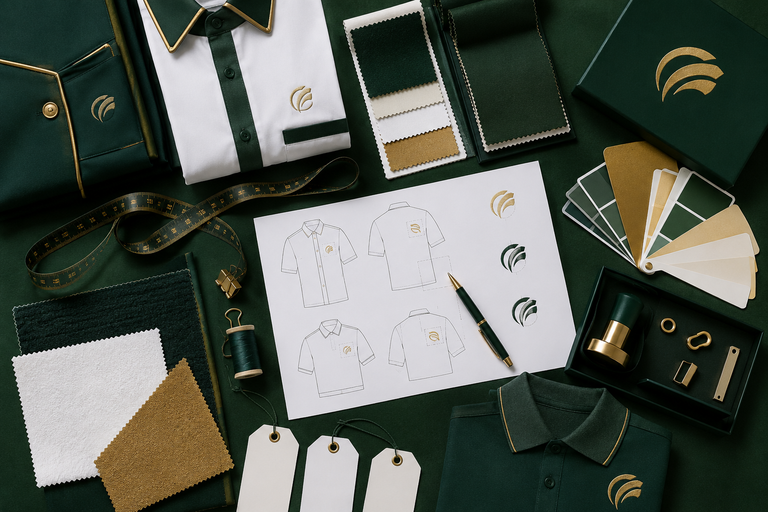
Material, design and care guide
Build Durability Into the Design
A strong logo application starts before printing. Small adjustments to artwork, placement, garment colour and staff care instructions can prevent many avoidable failures.
Artwork
Use clean vector artwork where possible. Avoid extremely thin lines, crowded small text and unnecessary solid coverage that may produce a heavy print area.
Placement
Keep the logo away from seams, pockets, zips and areas that constantly fold, rub or stretch during the wearer’s normal work.
Fabric
Review whether the fabric is smooth, textured, stretchy, water-resistant or heat-sensitive before selecting the application process.
Recommended Care Instructions for Printed Uniforms
- Turn the garment inside out before washing.
- Use cool or moderate water according to the garment label.
- Select a gentle or normal cycle instead of an aggressive heavy-duty cycle.
- Use mild detergent and avoid bleach unless the garment supplier specifically allows it.
- Wash with similar garments and keep rough items, hooks and abrasive accessories separate.
- Air dry when practical or use a lower dryer temperature.
- Do not iron directly on the printed logo.
- Do not stretch, scrape or fold the logo sharply while it is still warm.
Staff communication tip: Add the care guide to the uniform handover message, employee handbook or laundry notice. A short instruction shared consistently is more useful than relying only on the garment label.
Wait before the first wash: Follow the supplier’s recommended waiting period after production. Different systems can require different handling, so do not use one fixed rule for every printing method.
Ordering process
How to Order a More Durable Logo
A structured approval process reduces uncertainty and gives the supplier a clearer basis for recommending the garment, method and placement.
Describe the Uniform Use
Explain the industry, staff duties, indoor or outdoor setting, expected movement, washing frequency and whether the garment may contact equipment.
Choose the Garment Before Finalising the Method
Confirm the product code, fabric composition, colour, fit and size range. Avoid approving a logo process without knowing the actual garment.
Prepare Practical Artwork
Provide the highest-quality logo available and state the required location, approximate width, colour expectations and any small text that must remain readable.
Approve Size and Placement
Review the artwork mock-up carefully. Check that the logo does not cross seams, sit too close to a pocket or cover an area that stretches heavily.
Test When the Application Is New
For unfamiliar fabrics, special finishes or demanding use, discuss whether a sample or test is appropriate before the full quantity proceeds.
Record the Approved Specification
Keep the garment code, colour, artwork, dimensions, placement and printing method for future reorders. Reconfirm stock and production details each time.
Buyer scenarios
Logo Durability by Work Situation
Different teams expose their uniforms to different stresses. The best prevention plan should reflect the actual job rather than applying the same specification to every department.
Professional Daily Polo
A small chest logo usually faces less stretching than a large front print. Embroidery, DTF or silkscreen may be considered depending on artwork, fabric and quantity.
Focus: Clean placement, collar stability, regular washing and a consistent reorder specification.
High-Friction Workwear
Aprons, machinery, safety straps and repeated movement can rub printed areas. Logo placement should be reviewed together with the wearer’s equipment.
Focus: Avoid contact zones, confirm fabric durability and provide clear industrial laundry guidance.
Heat, Sweat and Frequent Washing
Outdoor uniforms may be washed more often and exposed to sun, rain, bags and seat belts. Performance fabric and appropriate branding should be selected as one system.
Focus: Quick-dry garments, lower-friction placement and moderate drying temperatures.
Large Front or Back Artwork
Promotional shirts often use bigger printed areas. The artwork should be balanced so the result remains comfortable and does not create an unnecessarily rigid panel.
Focus: Appropriate logo coverage, fabric weight, wearer fit and washing instructions.
Stretch and Repeated Movement
Athletic wear flexes more than office clothing. Sublimation can be practical for compatible polyester jerseys, while other methods require suitable stretch and application control.
Focus: Fabric compatibility, movement, sweat exposure and avoiding oversized rigid prints.
Stains and Regular Laundering
Food service uniforms may need frequent washing and stain treatment. Strong chemicals applied directly to a logo can shorten its life.
Focus: Practical fabric colour, manageable logo placement and approved stain-removal instructions.
Buyer checklist
Checklist Before Approving Logo Printing
Use this checklist during quotation and artwork approval to reduce preventable problems after the uniforms enter daily use.
Garment and Work Use
- Confirm the exact garment product code and colour.
- Provide the fabric composition and surface type.
- Explain the wearer’s job, movement and work environment.
- Estimate the washing frequency and laundry method.
- Check whether bags, aprons or equipment will rub the logo.
Artwork and Production
- Provide a clear vector or high-resolution artwork file.
- Approve logo dimensions rather than judging only from a screen.
- Check thin lines, small text and large solid areas.
- Confirm the print or branding method in writing.
- Keep the final mock-up and order specification for reorders.
Care Mistakes to Avoid
- Do not iron directly over a printed logo.
- Do not use bleach or strong chemicals without checking compatibility.
- Do not expose the print repeatedly to unnecessary high dryer heat.
- Do not wash rough workwear accessories together with delicate printed uniforms.
- Do not stretch or scrape a warm print immediately after drying.
Frequently asked questions
Logo Cracking and Peeling FAQ
Why did the logo crack after several washes?
Possible causes include repeated stretching, high dryer heat, heavy abrasion, unsuitable print coverage or a method that was not well matched to the garment. Review several affected pieces and their care history before deciding on one cause.
Can a peeling logo be repaired?
Some minor lifting may be assessed by the original supplier, but reheating a damaged print at home can make the problem worse or damage the garment. Share clear photos and the order details before attempting a repair.
Is DTF printing likely to peel?
DTF forms a transferred layer on the garment, so correct material selection, heat application and aftercare matter. A properly matched and applied transfer can perform well, while unsuitable fabric, poor application or aggressive care can reduce durability.
Does silkscreen printing crack?
Silkscreen ink can crack when the print is overstretched, poorly cured, excessively thick or repeatedly exposed to harsh heat and wear. Artwork construction, ink system, curing and garment fit all affect performance.
Which method does not peel from the fabric?
Sublimation dyes a compatible polyester fabric rather than adding a separate surface film, so it does not peel in the same way. Embroidery also avoids film peeling, although it has different limitations related to stitch density, fabric support and artwork detail.
Can uniforms be tumble dried?
Follow both the garment label and the supplier’s print-care guidance. Lower heat is generally gentler on printed areas than repeated high-temperature drying, but the correct instruction depends on the fabric and branding method.
Should staff wash printed uniforms inside out?
Turning the garment inside out can reduce direct rubbing against other items during washing. It is a useful general care step when combined with mild detergent, suitable water temperature and careful drying.
How can we keep future reorders consistent?
Save the garment code, colour, artwork file, logo dimensions, placement, print method and previous order reference. Stock, garment batches and production details should still be reconfirmed for each new order.
Plan a durable uniform order
Match the Logo, Fabric and Work Environment
Share your garment preference, artwork, quantity, print size, wearer roles, washing routine and required date. Uniform Penang can help you compare suitable branding directions before production.
Useful Uniform Penang resources
Continue Planning Your Uniform Printing
Use these related pages to compare garments, branding methods and current uniform support.
Uniform Penang Homepage
Review uniform, polo, jersey, embroidery and custom printing support.
Explore Uniform Penang →DTF Printing Guide
Learn how DTF can support colourful logos, fine details and different garment types.
Read the DTF guide →Silkscreen Printing Guide
Compare silkscreen applications for repeated designs, team shirts and larger quantities.
Read the silkscreen guide →Gildan Shirt Options
Review Gildan round-neck, polo and heavier garment directions for groups and events.
Explore Gildan options →Oren Sport Options
Explore activewear and uniform garments for teams needing lighter performance fabrics.
Explore Oren Sport options →Contact Uniform Penang
Send the garment, quantity, artwork and work-use details for review.
Go to the contact page →Our other company websites
Regional Uniform and Printing Support
Explore related company websites when an order involves another Malaysian region, Singapore, Australia, broader product sourcing or reseller support.
JC Print Malaysia
Corporate apparel, custom printing and broader garment sourcing support.
Visit JC Print Malaysia →Selangor Print
Uniform and custom printing enquiries for Selangor and the Klang Valley.
Visit Selangor Print →Uniform Johor
Uniform supply and delivery support for companies, schools, groups and events in Johor.
Visit Uniform Johor →Uniform Sabah
Custom apparel and uniform ordering support for customers throughout Sabah.
Visit Uniform Sabah →Uniform Singapore
Corporate uniforms, event apparel and custom printing support for Singapore customers.
Visit Uniform Singapore →Uniform Hub SG
Another Singapore-focused channel for uniform and customised apparel enquiries.
Visit Uniform Hub SG →Tanah Studio
Apparel and creative product support for customers seeking an Australia-based option.
Visit Tanah Studio →KitaPrint
Resources for agents and resellers interested in selling printed apparel online.
Visit KitaPrint →Product range, stock, delivery coverage and service arrangements may vary by website and region. Confirm current requirements with the relevant team before ordering.