
New staff uniform distribution guide
Uniform Packaging Ideas for New Staff
Good uniform packaging helps HR, operations and branch managers issue the correct garments to each new employee while creating a more organised first-day experience. The best system is easy to label, easy to inspect and simple to repeat whenever another person joins the team.
Direct answer: Pack every employee's approved uniform items as one clearly identified kit. The outside label should show the employee name or ID, department, garment type, size and quantity. Inside, include the garments, a simple care card and any company instructions for issue, exchange or replacement. Choose a clear garment bag, paper-wrapped pack, reusable pouch or compact box according to the budget, number of items, storage method and desired presentation. Always check the kit against one master packing list before sealing or distributing it.
Reduce Distribution Errors
One labelled kit per employee lowers the risk of mixing sizes, departments, names and garment quantities during a busy staff intake.
Improve First-Day Presentation
A neat, complete pack makes the uniform feel like a prepared part of onboarding instead of a last-minute collection of loose garments.
Create a Repeatable System
A standard label, contents checklist and packing method make future new-hire uniform preparation easier for HR and operations teams.
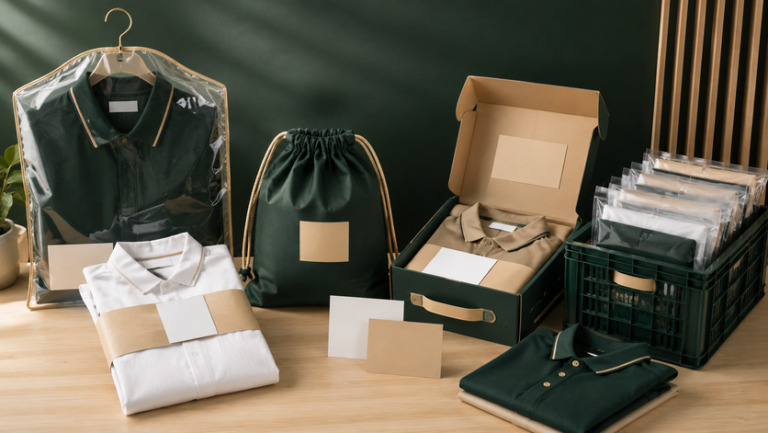
Quick comparison
Which Packaging Style Fits Your Staff Intake?
The right packaging depends on the number of garments, how the kits will be stored, whether they will be delivered individually and how formal the onboarding experience should feel.
| Packaging idea | Best suited for | Recommended contents | Main point to check |
|---|---|---|---|
| Clear labelled garment bag | Large staff intakes, factories, warehouses and fast internal distribution | Folded uniform pieces, employee label and contents checklist | Use a strong, readable label and avoid placing confidential information where it is unnecessarily visible. |
| Paper band with protective outer bag | Retail, office, cafe and service teams wanting a cleaner presentation | Folded tops, care card and branded paper band | The band should stay secure without crushing collars, prints or embroidery. |
| Reusable drawstring pouch or tote | Employee welcome kits, premium onboarding and teams that can reuse the container | Uniform set, care guide, staff card holder or approved small accessories | Confirm the pouch size, strength and whether the additional branding cost is justified. |
| Compact onboarding box | Management hires, remote staff, branch launches and presentation-focused programmes | Uniforms, welcome note, care instructions and role-specific items | Review storage space, courier dimensions, moisture protection and total packing cost. |
| Department crate with individual packs | Factories, logistics operations, events and multi-department onboarding | Individually labelled kits grouped by branch, shift or department | Use a master count for both the department container and every employee kit inside it. |
Practical tip: Do not choose packaging only because it looks premium. A simple pack that protects the garments, shows the correct details and can be distributed quickly is often more useful than a bulky box.
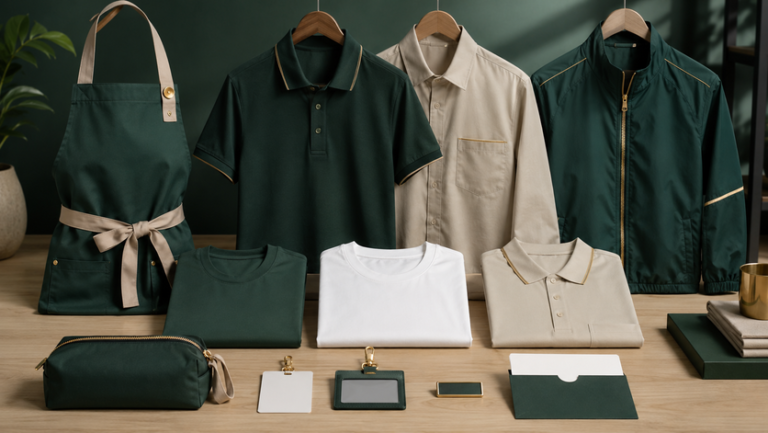
Staff uniform kit contents
What Can Be Included in a New Staff Uniform Pack?
A staff pack should contain only the garments and information needed for that employee's role. Standardising the core items while allowing controlled department differences keeps the programme professional and manageable.
Polo Shirts
Polos can suit office, sales, retail, service, supervisory and customer-facing roles. Pack them with collars folded naturally and avoid heavy pressure on embroidery.
Round-Neck T-Shirts
T-shirts may suit events, warehouse teams, support crews, promotions and casual workplaces. Keep large printed areas flat and free from sharp folds.
Quick-Dry Shirts
Quick-dry garments can support outdoor, logistics, factory and movement-heavy roles. Label the exact model and size because cuts vary between products.
Button-Up Work Shirts
Button-up shirts may suit offices, showrooms, hospitality, management and formal service positions. Protect the collar, buttons and structured areas during packing.
Aprons and Service Wear
Aprons can identify cafe, restaurant, retail, workshop and promotional roles. Pack straps neatly so they do not tangle with other garments.
Jackets and Outerwear
Lightweight jackets may suit drivers, supervisors, field teams and air-conditioned workplaces. Use a package large enough to avoid damaging zips or creating excessive creasing.
Useful Printed Information
- Employee name or staff ID
- Department, outlet, branch or shift
- Garment product and colour
- Size and quantity for each item
- Issue date or onboarding batch
- Internal exchange or replacement instructions
Optional Supporting Items
- Uniform care card
- Company dress standard summary
- Name tag or approved staff accessory
- Reusable laundry or storage pouch
- Return checklist for temporary staff
- QR code linking to an internal uniform guide
Keep the kit role-specific: Personal protective equipment, safety items and regulated workwear should follow the company's safety requirements and should not be treated as decorative welcome-pack additions.
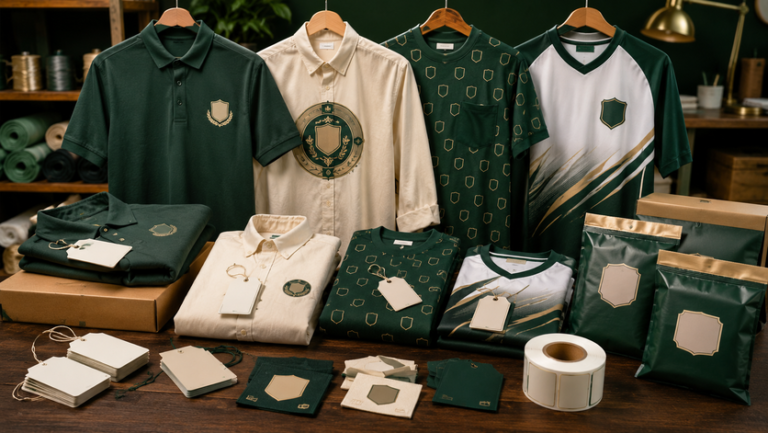
Printing and identification
Coordinate Garment Branding with Pack Labels
The uniform and the package should use the same approved product, colour, logo and employee information. A clear identification system helps prevent the right garment from reaching the wrong person.
Embroidery
Embroidery may suit compact logos on polos, work shirts, jackets and aprons. Pack the garment so the stitched area is not sharply folded or heavily compressed.
DTF Printing
DTF can support colourful logos, detailed graphics and selected department wording. Avoid placing hard objects directly against the printed area inside the kit.
Silk Screen Printing
Silk screen printing can suit consistent artwork repeated across staff shirts. Keep the same approved design reference for later onboarding batches.
Sublimation
Sublimation may suit custom polyester jerseys and full-design uniforms. The pack label should identify the employee size, name or number clearly when designs look similar.
Names, Roles and Departments
Personalised uniform details require extra checking. Keep one controlled row per employee so the name, role, garment and size remain connected.
Removable Kit Labels
Use a label that remains readable during storage and delivery but can be removed cleanly without marking the garment or reusable packaging.
Recommended label fields: Employee name or ID, department, garment code, colour, size, quantity, branding type and packing batch. Avoid printing unnecessary personal information on the outside of a visible package.
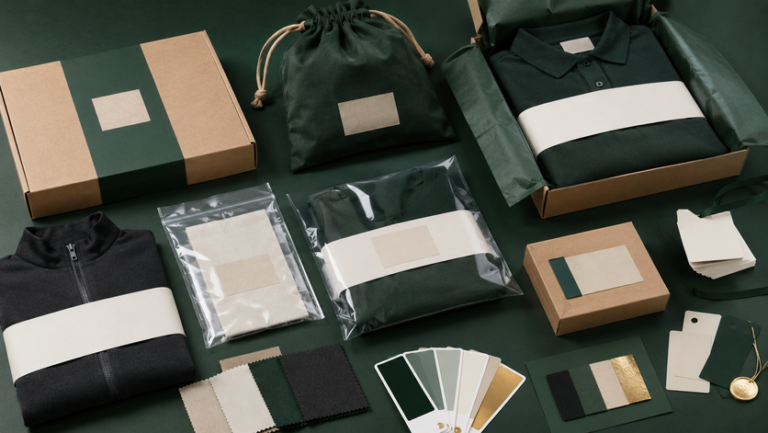
Material, colour and design
Design Packaging That Is Clear, Practical and Consistent
Uniform packaging does not need complicated graphics. A simple system using the company's colours, readable labels and controlled pack sizes can look professional while remaining easy to manage.
Clear Protective Bags
Useful when teams need fast visual checking and efficient distribution. Add a large label in one consistent position so staff do not need to open every pack.
Paper Bands and Sleeves
Suitable for a clean presentation around neatly folded garments. Use enough strength to hold the pack without bending collars or pressing heavily on printed areas.
Kraft or Printed Boxes
Useful for welcome kits containing several items. Choose a practical box size and add internal protection when the pack will be couriered to another branch or remote employee.
Reusable Fabric Pouches
A pouch can become a storage or laundry bag after onboarding. Confirm whether the additional item supports the employee experience or only adds unnecessary cost.
Use High Contrast
Choose a dark label on a light pack or a light label on a dark surface so names, departments and sizes remain easy to read.
Standardise the Layout
Place the label, logo and contents checklist in the same position on every kit to speed up inspection and distribution.
Control Pack Sizes
Use a small number of packaging sizes based on the actual uniform combinations instead of creating a different format for every employee.
Common Uniform Packaging Mistakes
- Packing garments before the final staff size list is approved.
- Using handwritten labels that are difficult to read or easy to detach.
- Mixing employee names, sizes and personalised uniforms in separate documents.
- Adding excessive packaging that increases storage and disposal without improving protection.
- Folding directly across large printed logos, thick embroidery or structured collars.
- Leaving out a contents count, making shortages difficult to identify.
- Displaying unnecessary personal information on the outside of the package.
- Assuming a material is recyclable without checking the local collection system.
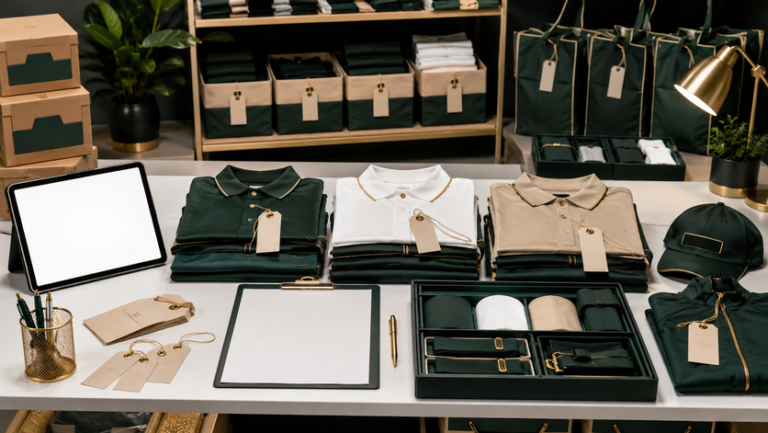
Ordering and packing process
How to Organise Uniform Kits for New Employees
Plan the uniform order and the distribution system together. Packaging becomes much easier when the garment codes, sizes, branding details and employee records are already controlled.
Define the Uniform Kit
List the required garments for each role, department, branch or shift. Separate core company items from role-specific pieces.
Confirm the Exact Garments
Record the brand, product code, colour and size chart before asking new staff to submit their sizes.
Prepare One Staff Packing Matrix
Keep one row per employee with the department, garment, size, quantity, personalisation and delivery location.
Approve Artwork and Identification
Check logo positions, names, roles, numbers and spelling before production. Use the approved details for both the garments and kit labels.
Select the Packaging Method
Choose bags, paper bands, pouches, boxes or department containers based on protection, cost, storage and distribution needs.
Confirm the Packing Arrangement
Ask whether individual sorting, labelling or kit packing is available for the order. When it is not included, plan an internal packing station after the uniforms arrive.
Inspect, Record and Distribute
Check every kit against the master matrix, record any shortages or exchanges and issue the pack to the correct employee.
Buyer scenarios
Packaging Plans for Different Workplaces
The same packaging format does not suit every organisation. Use these scenarios as planning examples and adjust the kit according to actual uniform policy and staff duties.
Sales and Administrative Staff
Use a clean individual pack with the approved polo or shirt, employee label, care card and a simple company dress-standard note.
New Outlet or Branch Team
Group individually labelled packs by outlet and department. Add the branch code so uniforms are not mixed during multi-location distribution.
Factory, Warehouse and Logistics Staff
Use durable individual bags inside department or shift containers. Keep role-specific workwear and required safety equipment controlled by the appropriate internal process.
Cafe, Restaurant and Catering Staff
Separate service, kitchen and supervisor kits while keeping the company colours and logo treatment consistent. Pack apron straps and accessories neatly.
Employees Receiving Uniforms by Courier
Use protective packaging, verify the employee address and size before dispatch, and include clear instructions for reporting damage or requesting an exchange.
Contract and Event Staff
Keep the kit simple, easy to identify and easy to count. Add return instructions when garments remain company property after the project.
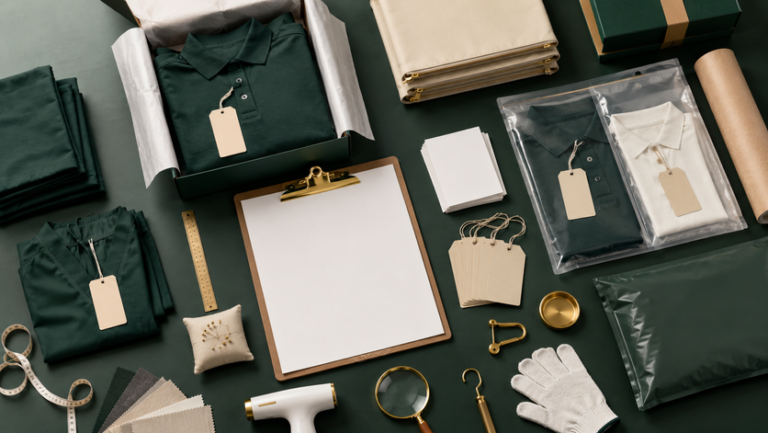
Final checklist
Information to Prepare Before Packing
Employee and Uniform Details
- Employee name or staff ID
- Department, outlet, branch or shift
- Confirmed garment brand and product code
- Approved colour and exact size
- Quantity for every uniform item
- Name, role or number personalisation
- Required receiving and issue date
Packaging and Quality Checks
- Correct packaging type and pack size
- Readable removable outer label
- Contents checklist inside or outside the kit
- Care instructions where required
- Protection for prints, embroidery and collars
- Second-person check against the master matrix
- Exchange, shortage and replacement record
Frequently asked questions
New Staff Uniform Packaging FAQs
What information should be placed on the outside label?
Use the employee name or ID, department, garment type, colour, size and quantity. Add a batch or branch code when several groups are being packed together. Avoid displaying unnecessary confidential information.
Should every new employee receive a box?
No. A box may suit a premium welcome programme or courier delivery, but a labelled garment bag, paper-wrapped pack or reusable pouch can be more efficient for normal internal distribution.
How can we prevent the wrong size from reaching an employee?
Confirm the exact garment and size chart first, maintain one row per employee, label one kit at a time and use a second check against the master packing matrix before distribution.
Should uniform care instructions be included?
Yes, especially when garments include DTF, silk screen, embroidery, sublimation or special fabrics. A short care card can help staff understand washing, drying and ironing precautions.
Can names and roles be added to the garments?
Personalisation may be possible depending on the garment, artwork and branding method. Check spelling carefully and consider whether a role title may change before making it permanent.
Can environmentally responsible packaging be used?
Businesses can reduce unnecessary layers, choose reusable containers and review paper or recyclable packaging options. Confirm whether a material is accepted by the relevant local collection or recycling system before describing it as recyclable.
Does Uniform Penang provide individual kit packing?
Packaging, individual sorting, name labelling and kit assembly should be confirmed for each order because the arrangement may depend on the garments, quantity, personalisation and delivery plan. Share the required packing format when requesting a quotation.
Prepare your staff order
Plan New Staff Uniforms Before Packing
Share the employee roles, garment types, colours, sizes, quantities, logo file, personalisation, required date and preferred packing arrangement. Uniform Penang can review the uniform and branding requirements before production.
Useful Uniform Penang resources
Continue Planning Your Staff Uniform Programme
Use these related guides to organise garment selection, staff sizing, printing and uniform care before the kits are packed.
New Staff Uniform Guide
Plan role-appropriate garments, controlled branding and repeat orders for new employees.
Read the onboarding guide →Uniform Sizing Guide
Use the exact garment chart and a controlled staff size list before production and packing.
Read the sizing guide →Uniform Fabric Guide
Compare fabric comfort, durability, care requirements and branding compatibility.
Choose the right fabric →Protect Printed Logos
Review washing, drying and ironing practices that help printed uniform logos last longer.
Read the logo care guide →DTF Printing Guide
Learn where detailed and colourful DTF branding may suit new staff garments.
Explore DTF printing →Contact Uniform Penang
Send your garment, staff, artwork, quantity, deadline and packing requirements for review.
Go to the contact page →Our other company websites
Regional Uniform and Printing Support
Explore related company websites when the order involves another Malaysian region, Singapore, Australia, broader product sourcing or reseller support.
JC Print Malaysia
Corporate apparel, custom printing and broader garment sourcing support.
Visit JC Print Malaysia →Selangor Print
Uniform and custom printing enquiries for Selangor and the Klang Valley.
Visit Selangor Print →Uniform Johor
Uniform supply and delivery support for companies, schools, groups and events in Johor.
Visit Uniform Johor →Uniform Sabah
Custom apparel and uniform ordering support for customers throughout Sabah.
Visit Uniform Sabah →Uniform Singapore
Corporate uniforms, event apparel and custom printing support for Singapore customers.
Visit Uniform Singapore →Uniform Hub SG
Another Singapore-focused channel for uniform and customised apparel enquiries.
Visit Uniform Hub SG →Tanah Studio
Apparel and creative product support for customers seeking an Australia-based option.
Visit Tanah Studio →KitaPrint
Resources for agents and resellers interested in selling printed apparel online.
Visit KitaPrint →Product range, stock, delivery coverage and service arrangements may vary by website and region. Confirm current requirements with the relevant team before ordering.