
T-Shirt Care Tips
Can You Use Bleach on T-Shirts?
Bleach can remove stubborn stains and brighten some white T-shirts, but the wrong bleach can fade colours, weaken fibres and damage printed or embroidered branding. The safest choice depends on the care label, fabric, colour and decoration method.
Direct answer: Yes, bleach can be used on some T-shirts, but only when the garment care label allows it. Chlorine bleach is generally best reserved for compatible white garments and should be used according to the bleach product instructions. For coloured or printed T-shirts, chlorine bleach can cause fading or damage, so a colour-safe oxygen bleach may be a gentler option when the care label permits it. Never mix bleach with ammonia, acids such as vinegar, or other household cleaners.
Check the Label
The care label is the first place to check before using any bleaching product.
Check the Colour
White and colourfast garments may tolerate different products and washing methods.
Check the Print
Printed logos, transfers and embroidery can react differently from the base fabric.

Quick comparison
When Is Bleach Suitable for a T-Shirt?
| T-shirt type | Chlorine bleach | Oxygen / colour-safe bleach | Recommended approach |
|---|---|---|---|
| Plain white cotton | May be suitable if the care label allows it | Often suitable when label-approved | Follow the garment and bleach product instructions exactly |
| Coloured cotton | Usually avoid because colour loss can occur | Can be a gentler option if colourfast and label-approved | Test an inconspicuous area first |
| Polyester sports shirt | Best avoided unless specifically permitted | Use only if the care label allows it | Prefer mild detergent and stain treatment first |
| DTF or heat-transfer shirt | Avoid direct bleach exposure | Use cautiously only if garment instructions allow | Turn inside out and protect the printed area during washing |
| Silkscreen printed shirt | Can fade ink or affect the surrounding fabric | May be gentler, but still test first | Use mild detergent and cool or warm water according to the label |
| Embroidered shirt | Can affect thread colour and garment colour | Use only when both fabric and embroidery are compatible | Spot-test away from the visible logo |
Simple rule: If the care label says “do not bleach,” do not use chlorine bleach or oxygen bleach. When the label allows non-chlorine bleach only, choose a suitable colour-safe product and follow its instructions.

Bleach options
Chlorine Bleach vs Oxygen Bleach
Chlorine Bleach
Chlorine bleach is commonly used to whiten compatible white laundry and remove certain stains. It is powerful, so it can also strip colour, weaken some fibres or damage decoration when used on the wrong T-shirt.
Oxygen Bleach
Oxygen or colour-safe bleach is often a gentler choice for washable coloured garments. It can help with stains and dullness, but it still needs to be compatible with the care label, fabric and decoration.
Mild Laundry Detergent
For most company shirts, sports shirts and printed T-shirts, regular detergent is a safer first step than bleach. Treat stains early and wash according to the garment instructions.
Pre-Treatment
Instead of bleaching the entire shirt, apply a compatible stain remover to the affected area. This reduces unnecessary exposure of the rest of the garment and printed design.
Bleach Safety Comes First
- Never mix chlorine bleach with ammonia, vinegar, acids or other household cleaners
- Use the dosage and dilution method stated on the bleach product label
- Work in a well-ventilated area and avoid splashing concentrated bleach on clothing or skin
- Keep bleach products away from children and store them according to the packaging instructions

Printing and branding
How Bleach Can Affect Printed T-Shirts
Ink Can Lose Colour
Strong bleach can fade printed ink, change the surrounding shirt colour or shorten the life of the print. Use mild washing methods whenever possible.
Protect the Film and Adhesive
DTF prints depend on a printed film and adhesive layer. Aggressive chemicals can affect the appearance or durability of the transfer, so avoid direct bleach contact.
Avoid Harsh Chemical Exposure
Heat-applied names, numbers and logos can crack, lift or discolour over time when exposed to harsh washing conditions. Wash inside out and follow the garment care label.
Colour Is Built Into the Fabric
Sublimation dye is bonded into polyester fibres rather than sitting as a thick surface layer, but strong bleach can still change the fabric colour or damage the garment.
Thread Colour May Change
Embroidery thread and the shirt fabric may react differently to bleach. Even when the base shirt is white, coloured thread can fade or lose consistency.
Care for the Most Sensitive Part
If a shirt combines printing, embroidery and heat transfer, use the gentlest care method required by any of those elements.
For company uniforms: If you want logos and shirt colours to stay consistent across a team, avoid making bleach part of the normal washing routine unless the garment supplier specifically confirms it is suitable.
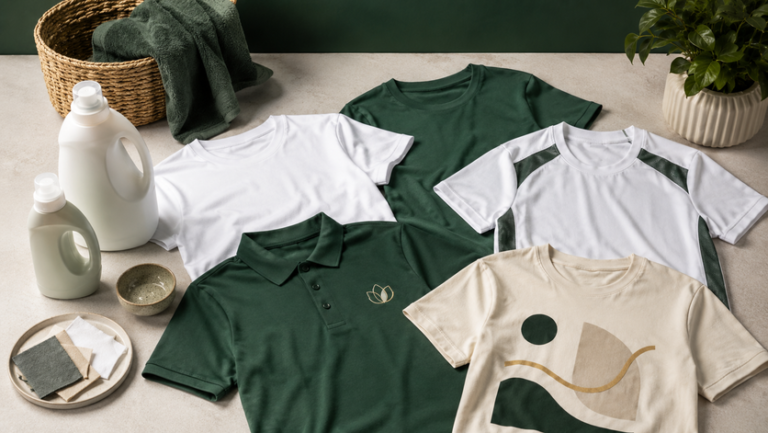
Fabric, colour and care
Which T-Shirt Fabrics Need Extra Care?
White Cotton
Some white cotton T-shirts can tolerate chlorine bleach when the care label permits it, but repeated strong bleaching may still shorten garment life.
Coloured Cotton
Chlorine bleach can remove or unevenly fade colour. Use a colour-safe approach only when the label allows it.
Polyester
Sports shirts and quick-dry uniforms are often polyester-based. Avoid assuming that a white polyester shirt is automatically safe for chlorine bleach.
Cotton-Polyester Blends
Blended fabrics combine different fibres, so the safest care method should suit the full fabric composition rather than only the cotton portion.
Stretch Fabrics
T-shirts containing elastane or spandex need gentler care because harsh chemicals can affect stretch recovery and long-term shape.
Dark and Bright Colours
Black, navy, red and other strong colours can show bleach marks quickly. Keep bleach away unless the product is explicitly colour-safe and the garment label permits it.
Common Bleach Mistakes
- Using bleach without reading the garment care label
- Pouring concentrated bleach directly onto a stain
- Using chlorine bleach on a coloured team shirt
- Bleaching a printed logo because the base shirt is white
- Assuming oxygen bleach is safe for every fabric and colour
- Mixing bleach with another cleaning chemical
- Using bleach repeatedly when a normal stain treatment would be enough
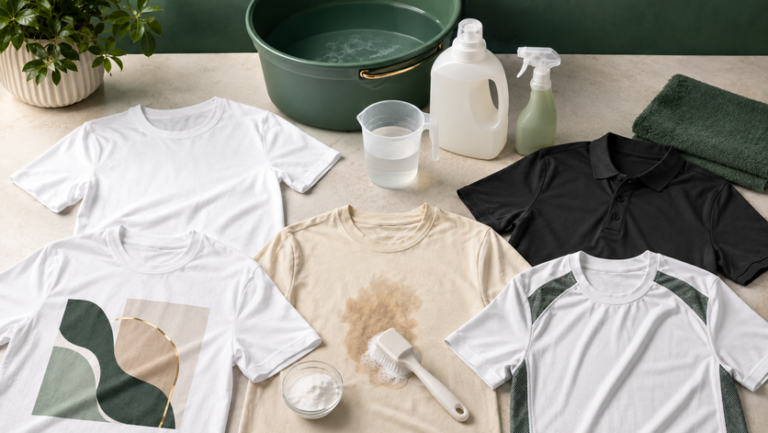
Safe cleaning process
What to Check Before Using Bleach
Read the Care Label
Look for the bleaching symbol and any written washing instructions. If the label says not to bleach, stop there.
Identify the Fabric
Check whether the shirt is cotton, polyester, a blend or a stretch fabric. Different fibres can react differently to bleaching products.
Check Colour and Branding
Consider the shirt colour, print, embroidery, heat transfer and any contrast panels before choosing a treatment.
Choose the Gentlest Suitable Product
Start with detergent or stain pre-treatment. Use bleach only when needed and when both the garment and product instructions allow it.
Spot-Test When Appropriate
For colour-safe products, test a hidden area first if the garment instructions permit testing and you are unsure about colourfastness.
Follow the Product Directions
Use the recommended dosage, water temperature and machine or soaking method. More bleach does not mean better cleaning.
Dry According to the Label
After washing, follow the garment drying instructions to protect the shirt shape, print and colour.
Common situations
What Should You Do in These T-Shirt Situations?
Check Before Whitening
If the care label permits chlorine bleach, follow the bleach product directions. If not, use a compatible non-chlorine alternative or normal stain treatment.
Avoid Chlorine Bleach
A small splash can create permanent light marks. Use colour-safe stain care and wash according to the label.
Treat It as a Decorated Garment
Do not assume the shirt is bleach-safe just because the fabric is white. The coloured print or thread may still be affected.
Use Mild Care First
Performance polyester usually benefits from regular detergent, prompt washing and proper drying rather than routine bleaching.
Pre-Treat the Stain
Address the stain early with a compatible pre-treatment instead of bleaching the whole garment unnecessarily.
Set One Care Policy
Give staff simple washing instructions so everyone uses similar detergent, temperature and drying practices, helping uniforms age more consistently.
Bleach checklist
Before You Bleach a T-Shirt
- Read the garment care label
- Identify the fabric composition
- Check whether the shirt is white or coloured
- Check for prints, transfers or embroidery
- Confirm whether chlorine or non-chlorine bleach is allowed
- Use the bleach product only as directed
- Never mix bleach with other household cleaners
- Use a gentler stain treatment when possible
- Spot-test colour-safe products when appropriate
- Stop using bleach if the garment shows fading or damage
Frequently asked questions
Bleach and T-Shirt FAQ
Can I use bleach on a white T-shirt?
Possibly. A plain white T-shirt may be bleach-compatible, but the care label must allow it. Also check the fabric and any coloured print, thread or trim before using chlorine bleach.
Can I use bleach on a coloured T-shirt?
Chlorine bleach can remove or unevenly fade colour, so it is generally unsuitable for coloured T-shirts. A colour-safe oxygen bleach may be an option only when the garment care label permits it.
Will bleach damage a printed logo?
It can. Bleach may fade ink, affect transfer films or adhesives, and alter the colour around the print. Use mild washing methods for decorated shirts whenever possible.
Can I use bleach on a polyester sports shirt?
Do not assume it is safe. Check the care label first. Many performance shirts are better maintained with regular detergent and prompt washing rather than chlorine bleach.
Is oxygen bleach completely safe for colours?
No product is suitable for every garment. Oxygen bleach is generally gentler than chlorine bleach, but you should still follow the care label, product directions and colourfastness guidance.
What should I use for a small stain?
Start with a compatible stain pre-treatment or detergent rather than bleaching the entire shirt. Treating the stain early can reduce the need for stronger chemicals.
Can bleach remove yellow sweat stains?
Bleach is not always the best solution and may make some stains or fabrics look worse. Check the care label and use a stain treatment that is suitable for the fabric and stain type.
Can I mix bleach with vinegar to clean better?
No. Do not mix chlorine bleach with vinegar, ammonia, acids or other household cleaners. Dangerous fumes can be produced.
Keep uniforms looking consistent
Need T-Shirts That Are Easier to Maintain?
Tell Uniform Penang how your shirts will be used, washed and branded. We can help you compare suitable fabrics, colours and printing methods for company uniforms, events, sports teams and group orders.
Useful Uniform Penang resources
Choose Printing That Matches Your Shirt Use
DTF Printing
Explore colourful logo printing for company and event T-shirts.
Explore DTF →Silkscreen Printing
Compare a popular method for repeated logos and group orders.
Explore silkscreen →Sublimation Printing
See how designs can be integrated into polyester sportswear.
Explore sublimation →T-Shirt Colours for Group Events
Plan shirt and logo colours for better visibility and consistency.
Open article →Prepare Artwork for Shirt Printing
Prepare logos and print dimensions before production.
Open article →Contact Uniform Penang
Share your fabric, colour, quantity, artwork and required date.
Go to contact →Our other company websites
Regional Apparel and Printing Support
JC Print Malaysia
Regional apparel and printing support.
Visit website →Selangor Print
Regional apparel and printing support.
Visit website →Uniform Johor
Regional apparel and printing support.
Visit website →Uniform Sabah
Regional apparel and printing support.
Visit website →Uniform Singapore
Regional apparel and printing support.
Visit website →Uniform Hub SG
Regional apparel and printing support.
Visit website →Tanah Studio
Regional apparel and printing support.
Visit website →KitaPrint
Regional apparel and printing support.
Visit website →Product ranges, stock, colours, delivery coverage and service arrangements may vary by region.