
New employee uniform planning
Custom Uniforms for New Staff Onboarding
A practical guide to preparing consistent, comfortable and role-appropriate uniforms before new employees begin work.
Direct answer: A smooth onboarding uniform order starts with the employee's role, work environment, approved garment, colour, branding position, size and required receiving date. Use one standard product and one controlled size-collection sheet whenever possible. Keep the approved garment code, artwork and order record so future new hires can receive a matching uniform more easily.
Why onboarding uniforms matter
Help New Staff Look Ready from Their First Day
Uniform preparation is part of employee onboarding because it affects presentation, identification, comfort and daily work readiness. When the process is left until the last minute, new staff may begin work in temporary clothing, receive the wrong size or wear garments that do not match the existing team.
A Unified Team Appearance
New employees can match the established team through consistent garment colours, logo positions and role-based uniform standards.
Suitable Clothing for the Role
Different departments may need polos, T-shirts, jackets, aprons, work shirts or other garments based on their actual duties.
An Easier Repeat-Order System
Keeping approved product and artwork records helps HR or operations teams arrange uniforms for future hires with fewer decisions.
Quick comparison
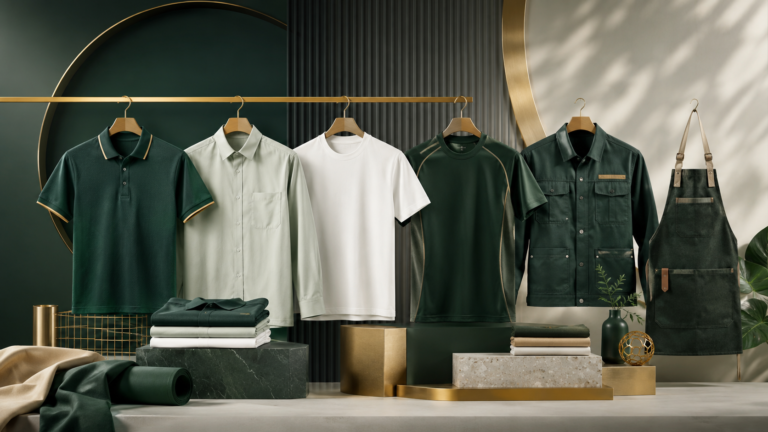
Which Uniform Type Fits Each New Staff Role?
Use the employee's duties, working environment and customer contact level as the starting point. Final suitability depends on the selected garment, fabric, branding method and company dress requirements.
| Staff Role | Uniform Option to Review | Branding Method to Assess | Main Onboarding Focus |
|---|---|---|---|
| Office, sales and customer service | Polo shirt, button-up shirt or smart T-shirt | Embroidery, DTF or silk screen | Professional appearance, comfort and consistent logo placement. |
| Retail, showroom and front counter | Polo, T-shirt, apron or lightweight jacket | Embroidery, DTF or silk screen | Easy staff identification and a neat customer-facing look. |
| Warehouse, logistics and operations | Quick-dry shirt, work shirt or suitable outerwear | DTF, silk screen or embroidery | Movement, heat, visibility, practical fit and department identification. |
| Factory and production team | Polo, quick-dry T-shirt, workwear or jacket | Embroidery, DTF or silk screen | Role suitability, shift use, washing needs and controlled repeat orders. |
| Restaurant, cafe and catering staff | Polo, T-shirt, apron, chef wear or service shirt | Embroidery, DTF or silk screen | Department roles, food-service presentation and easy replacement planning. |
| Events, roadshows and temporary teams | Round-neck T-shirt, polo or quick-dry shirt | DTF, silk screen or sublimation | Clear team identification, event branding and size collection. |
Uniform options
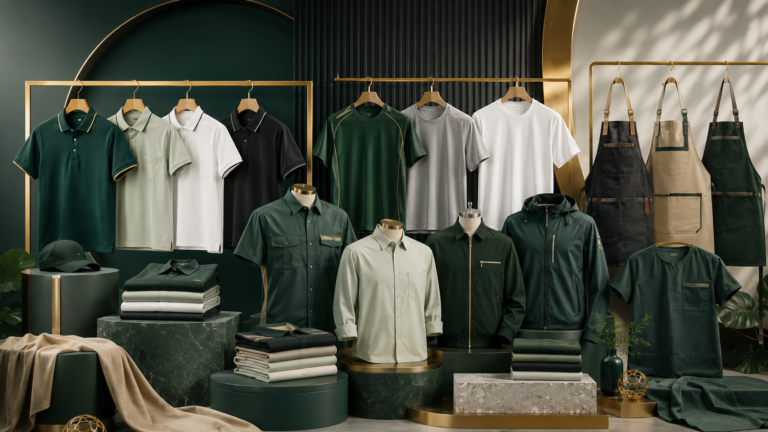
Garments to Consider for New Employee Uniforms
The most practical onboarding uniform is one that suits the role and can be reordered consistently. Avoid choosing a product only because it looks good in a catalogue; check fabric, fit, colour availability, size range and future replacement needs.
Polo Shirts
Polos can suit office teams, sales staff, retail employees, supervisors, service crews and customer-facing roles.
Review: collar structure, fabric, cutting, logo area, colour options and size range.
Round-Neck T-Shirts
T-shirts may suit casual workplaces, events, support crews, promotions, packing teams and selected operational roles.
Review: cotton or blend, fabric weight, fit, print coverage and work environment.
Quick-Dry Shirts
Quick-dry garments can be considered for active, outdoor, warehouse, logistics and movement-heavy work.
Review: breathability, texture, opacity, ventilation and printing compatibility.
Button-Up Work Shirts
Button-up shirts may support office, showroom, hospitality, management and formal customer-facing positions.
Review: sleeve length, cut, fabric care, pocket placement and embroidery area.
Aprons and Service Wear
Aprons and related service garments can help identify cafe, restaurant, catering, retail and workshop roles.
Review: coverage, pockets, straps, washing needs and logo position.
Jackets and Outerwear
Lightweight jackets may suit drivers, field teams, air-conditioned workplaces, supervisors and outdoor staff.
Review: weather use, storage, zip style, movement and reordering availability.
Branding methods
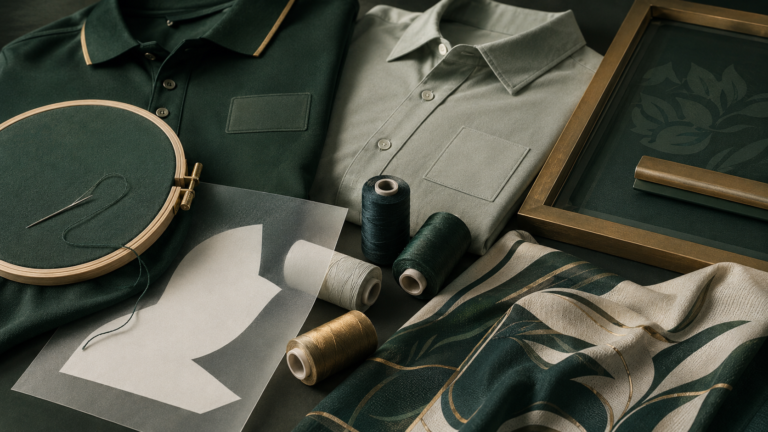
Choose Branding That Supports Repeat Staff Orders
Logo application should be selected together with the garment. Consider the fabric, artwork detail, print position, required appearance and whether names, departments or roles will change between employees.
Embroidery
Embroidery may suit polos, button-up shirts, jackets, aprons and compact company logos.
Review: logo detail, text size, stitch area, fabric thickness and placement.
DTF Printing
DTF can be reviewed for multi-colour logos, detailed graphics, department wording and selected personalisation.
Review: print size, artwork quality, garment fabric and repeated placement.
Silk Screen Printing
Silk screen printing can suit a consistent design repeated across staff T-shirts or selected uniform garments.
Review: artwork colours, order structure, placement and future reorder consistency.
Sublimation
Sublimation can support customised polyester jerseys or uniforms with integrated colours, patterns and department graphics.
Review: garment construction, polyester fabric, design coverage and future matching.
Names, Roles and Departments
Personalisation can help identify managers, technicians, service staff, trainees or departments when operationally useful.
Review: spelling, capitalisation, location and whether the detail should remain after a role change.
Mixed Branding Methods
Some programmes may combine an embroidered chest logo with printed department wording or employee identification.
Review: visual balance, garment suitability and the information needed for repeat orders.
Material, colour and design
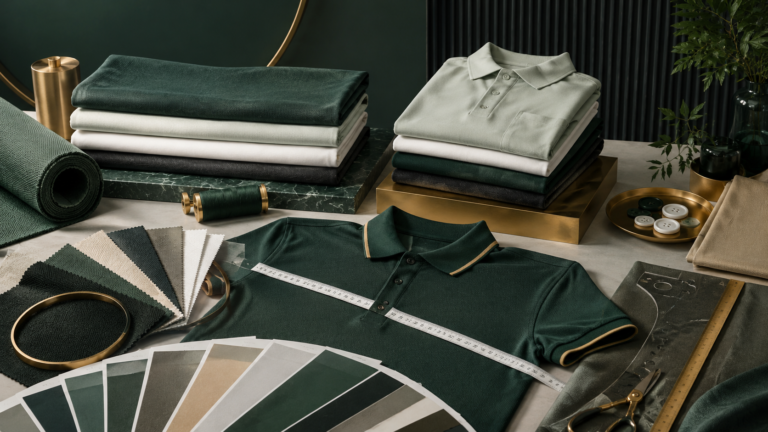
Build a Uniform Standard That Is Easy to Maintain
A clear onboarding uniform standard reduces repeated decision-making. Record the approved garment, colour, branding position and role allocation in a simple internal guide.
Match Fabric to Daily Work
Consider heat, movement, air conditioning, customer contact, washing frequency and the employee's normal tasks before selecting the fabric.
Use Controlled Company Colours
Record the garment brand, product code and colour name. A general description such as “dark blue” may not be enough for future matching.
Standardise Logo Placement
Keep the approved position and dimensions for the left chest, front, back or sleeve. Do not rely only on a visual memory of the previous order.
Plan Role-Based Differences
Different departments can use controlled garment or colour variations while maintaining the same logo, typography and overall identity.
Consider Modest and Fit Preferences
Where practical, review unisex, fitted, long-sleeve or layering options so employees can work comfortably within the company standard.
Keep a Master Uniform Record
Store the approved product, size chart, artwork, branding method, placement and previous order reference for future onboarding.
Sizing control
Collect New Employee Sizes More Accurately
Confirm the Exact Garment
Choose the product and cutting before collecting a size. Do not ask only for a usual T-shirt size.
Share the Correct Size Chart
Give the employee the measurement chart for the selected product and explain whether the measurements refer to the garment or body.
Compare with a Well-Fitting Garment
Where possible, measure a similar shirt that already fits the employee and compare it with the supplier's chart.
Record the Final Choice
Keep the selected size with the employee record so future replacement orders can be checked against the same garment.
Ordering process
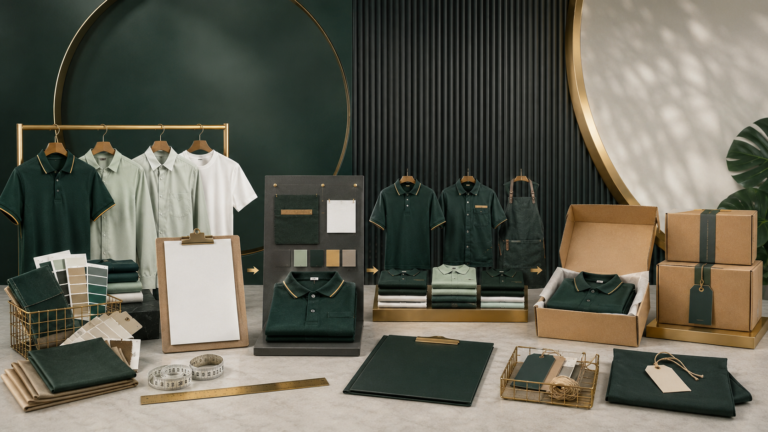
How to Organise Uniforms for New Staff
Define the Employee's Role
Confirm the department, work environment, customer contact and required uniform pieces.
Use the Approved Uniform Standard
Refer to the existing garment code, colour, logo setup and previous order where available.
Collect the Correct Size
Share the exact product chart and record the employee's final selection in one controlled sheet.
Confirm Branding and Personalisation
Check logo position, department wording, name spelling and any role-specific details.
Review the Required Receiving Date
Plan around the date the uniform must be received, checked and issued, not only the employee's first working day.
Approve the Final Order Details
Confirm quantity, sizes, colours, artwork, placement, delivery address and contact person before production.
Update the Staff Uniform Record
Keep the final product and order information for replacement pieces and future new hires.
Buyer scenarios
Onboarding Uniform Plans for Different Workplaces
New Sales and Admin Employees
Use one approved polo or button-up shirt, a standard chest logo and a documented size process so every new employee matches the existing team.
New Outlet or Branch Staff
Plan front-counter uniforms, support-team shirts and optional outerwear while keeping the colour and branding system consistent across locations.
Warehouse and Logistics Staff
Review quick-dry shirts, work shirts or jackets based on movement, heat, shift use and identification needs.
New Cafe, Restaurant or Catering Staff
Separate kitchen, service and supervisor garments while maintaining the same company colours and approved logo treatment.
Contract and Temporary Employees
Use clear, practical garments that identify the team without overcomplicating names or role details that may change frequently.
Role Colours with One Brand Identity
Use controlled colour or garment differences for departments while keeping the main logo, typography and placement consistent.
Common New Staff Uniform Ordering Mistakes
- Waiting until the employee's first day before starting the uniform order.
- Asking for a usual size without confirming the exact garment and size chart.
- Using a different garment colour or logo position from the existing team.
- Sending names, sizes and changes through several separate messages.
- Ordering every employee the same garment without checking their actual role.
- Approving artwork without checking spelling, department wording and placement.
- Failing to keep the product code, colour name and previous order reference.
- Choosing too many variations that make future onboarding difficult to manage.
- Planning only for current hires and not for replacements or future recruits.
Final checklist
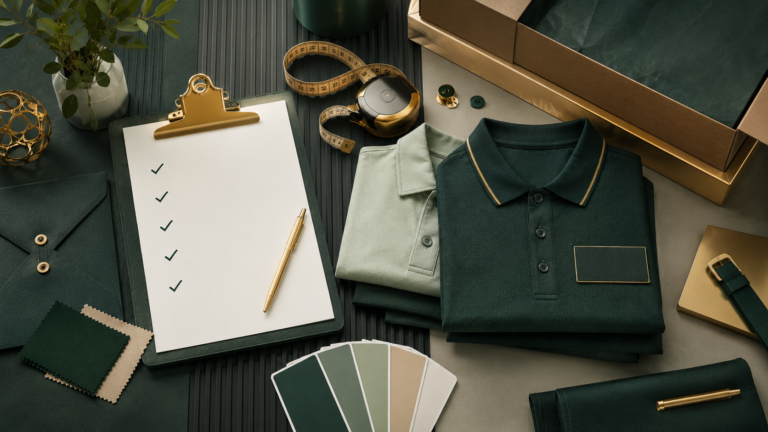
Information to Prepare for a New Staff Uniform Order
Employee and Role Details
- Employee role and department
- Start date and required receiving date
- Selected garment and colour
- Exact size from the correct size chart
- Quantity per uniform item
- Delivery location and contact person
Branding and Order References
- Approved logo artwork
- Front, back and sleeve positions
- Print or embroidery dimensions
- Name, role or department wording
- Previous garment code and colour
- Previous order reference when available
Frequently asked questions
New Staff Uniform Onboarding FAQs
When should uniforms be ordered for a new employee?
Start once the employee's role, start date, approved garment and size information are available. Plan around the receiving and checking date rather than waiting until the first working day.
What information should HR provide for a uniform order?
Provide the employee's role, garment type, colour, size, quantity, logo position, personalisation details, required receiving date and delivery location.
Can new staff uniforms match a previous order?
Matching is easier when the previous garment code, colour name, artwork, print dimensions, branding method and order reference are available. Product or colour availability may still need confirmation.
Should every department wear the same uniform?
Not necessarily. Different departments can use role-appropriate garments or controlled colour variations while maintaining the same company logo and design system.
How should a new employee choose the correct size?
Confirm the exact product first, provide its actual size chart and compare the measurements with a similar garment that fits the employee well.
Can employee names or job titles be added?
Personalisation may be possible depending on the garment and method. Consider whether the information will remain useful if the employee changes department or role.
What should be kept for future onboarding orders?
Keep the approved garment code, colour, size chart, source artwork, logo placement, print dimensions, customisation method and previous order record.
Can uniforms be delivered to Penang?
Uniform Penang can review delivery arrangements for Penang. Provide the complete receiving address, contact person, quantity and required receiving date for confirmation.
How can companies avoid colour mismatch in repeat orders?
Use the same product code and colour name, keep a master sample or previous order reference and confirm current availability before placing the reorder.
Prepare your onboarding order
Request a New Staff Uniform Quotation
Share the employee role, garment type, colour, quantity, size, logo file, branding positions, personalisation details, required receiving date and Penang delivery location. Include the previous order reference when the new uniform must match an existing team.
Useful Uniform Penang Resources
Uniform and Printing Services
Explore garment and customisation options for staff teams.
View services →Corporate Uniform Buying Guide
Plan garment selection, sizing, branding and repeat orders.
Open guide →DTF Printing in Penang
Review detailed logos, role wording and garment compatibility.
Open guide →Silk Screen Printing
Review repeated staff designs and group-order planning.
Open guide →Uniform Penang Blog
Browse more practical uniform and printing guides.
Browse blog →Contact Uniform Penang
Submit employee, garment, size and branding requirements.
Contact team →Our Regional Apparel and Printing Network
These websites belong to the same company or regional network.
JC Print Malaysia
Visit website →SelangorPrint
Visit website →Uniform Johor
Visit website →Uniform Sabah
Visit website →Uniform Singapore
Visit website →Uniform Hub Singapore
Visit website →Tanah Studio
Visit website →KitaPrint
Visit website →Disclosure: These are related company or regional network websites, not independent recommendations.