
Printed garment care guide
Why Printed Logos Crack, Peel or Fade
Printed logos usually fail because the printing method, garment fabric, production settings or washing routine do not match. Understanding the cause makes it easier to choose a better method and care for the garment correctly.
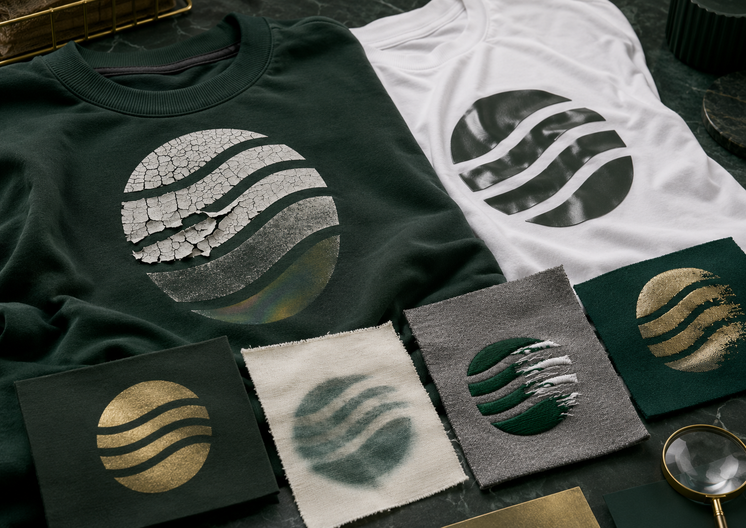
Direct answer: Logos crack when the printed layer becomes too stiff, too thick or repeatedly stretched. They peel when heat-transfer materials do not bond properly or are weakened by high dryer heat, direct ironing or unsuitable fabric. They fade when ink, dye or thread loses colour through strong detergent, bleach, sunlight, abrasion or repeated washing. The safest approach is to match the printing method to the exact garment, produce it correctly and follow suitable washing, drying and ironing instructions.
Cracking
Usually caused by stiffness, stretching, thick print layers or repeated flexing.
Peeling
Often linked to weak bonding, unsuitable heat settings or rough aftercare.
Fading
Can result from harsh chemicals, sunlight, abrasion or repeated washing.
Quick comparison
Compare the Main Types of Logo Damage
Different damage patterns usually point to different causes.
| Problem | Common cause | Most affected methods | Better prevention |
|---|---|---|---|
| Cracking | Thick print, fabric stretch or repeated folding | DTF, vinyl and some silkscreen applications | Reduce solid coverage and match the print to the fabric stretch |
| Peeling | Weak adhesive bond, incorrect pressing or high heat | DTF and heat-transfer vinyl | Use correct temperature, pressure and garment compatibility |
| Fading | Harsh detergent, bleach, sunlight or abrasion | DTG, silkscreen, embroidery thread and fabric colour | Wash gently, dry in shade and avoid chlorine bleach |
| Colour migration | Dye from polyester moves into the print | Transfers on some dark polyester garments | Use suitable low-bleed materials and correct production settings |
| Distortion | Embroidery too dense for thin fabric | Embroidery on lightweight shirts | Reduce stitch density and use suitable backing |
| Glossy or scorched marks | Excessive ironing or heat pressing | Polyester garments and transfers | Use the correct heat and protect the printed area |
Best diagnostic step: Identify whether the problem affects the print surface, adhesive edge, fabric colour or embroidery thread before deciding how to fix future orders.
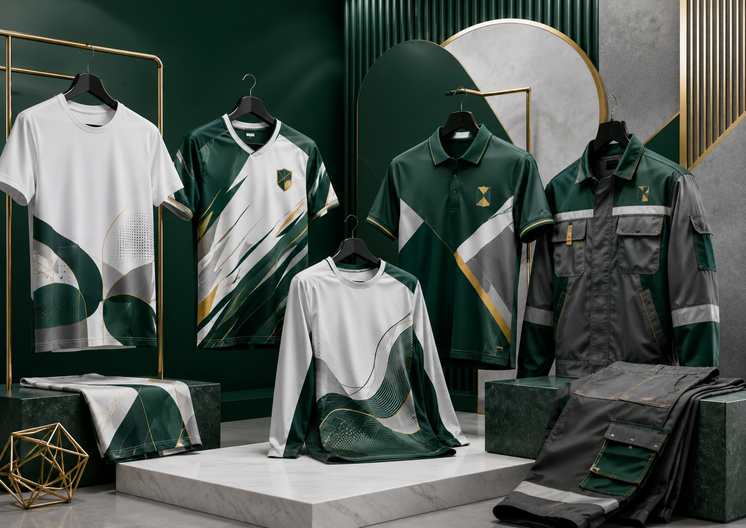
Uniform Penang product examples
Match the Product to the Printing Method
Many logo problems begin when the garment and printing method are selected separately instead of as one system.
Gildan T-Shirts
Suitable methods: Silkscreen, DTF and DTG on compatible models.
Use breathable artwork sizes and avoid excessive print thickness when the shirt will be folded or stretched frequently.
Oren Sport Jerseys and Shirts
Suitable methods: Sublimation, selected DTF and heat transfer.
Fully sublimated designs are ideal for compatible polyester jerseys because the artwork does not sit as a thick surface layer.
Crossrunner and Ultifresh
Suitable methods: Small embroidery, DTF or selected silkscreen applications.
Keep logos away from highly flexible areas and confirm that the fabric can support the chosen decoration.
North Harbour and Enzo
Suitable methods: Embroidery and refined DTF branding.
Structured polos often support embroidery well, but stitch density and backing should still match the garment weight.
Rightway and HYDT Workwear
Suitable methods: Durable silkscreen, selected embroidery and role printing.
Choose logo positions that avoid pockets, seams, equipment contact and repeated abrasion.
Heat-Transfer Vinyl
Suitable use: Individual personalisation on compatible sportswear.
Use suitable vinyl and keep the garment away from direct ironing and repeated high dryer heat.
Product rule: Confirm the brand, exact product code, fabric composition, stretch level, garment colour and logo position before approving the printing method.
Method-by-method guide
Why Different Printing Methods Fail
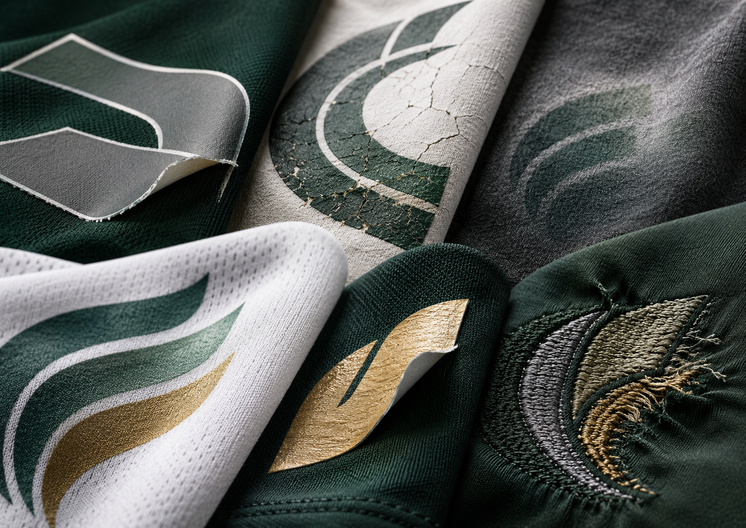
Each process has its own failure pattern, so the cause is easier to identify when the printing method is known.
DTF Printing
DTF may peel when pressure, temperature, time or adhesive bonding is incorrect. It may crack when the print is too large, too stiff or placed on a highly stretchy area.
Silkscreen Printing
Silkscreen may crack or fade if the ink is under-cured, over-cured, too thick or repeatedly exposed to abrasion and strong chemicals.
DTG Printing
DTG may fade when pretreatment, curing or washing care is inconsistent. It usually softens gradually rather than peeling in large sheets.
Sublimation
Sublimation normally does not peel or crack. Problems are more likely to involve wrong fabric, colour shifting, poor heat control or unsuitable base garment colour.
Heat-Transfer Vinyl
Vinyl may lift at the edges when pressure is uneven, the fabric rejects the adhesive or the garment is repeatedly overheated.
Embroidery
Embroidery does not peel like a transfer, but thread can fray, lose colour or distort the garment when stitch density and backing are unsuitable.
Quality control matters: A suitable method can still fail when production settings, material quality or garment preparation are inconsistent.
Material, colour and design guide
Six Factors That Affect Logo Durability
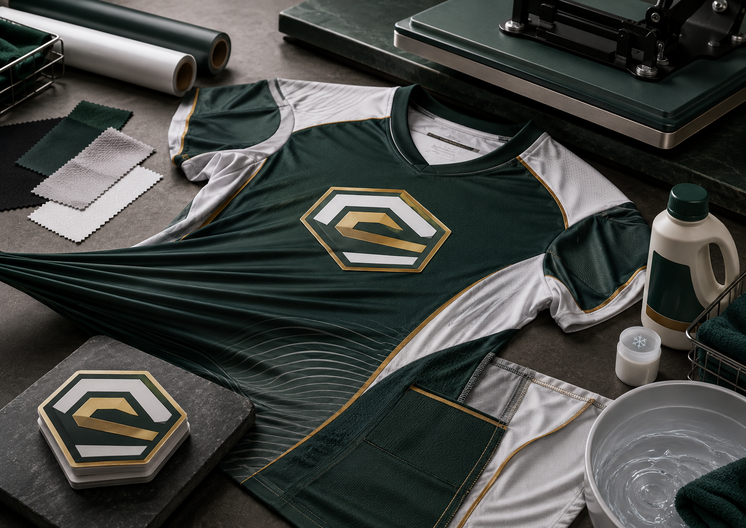
Most damage can be traced to one or more of these factors.
Fabric Stretch
Large rigid transfers crack more easily when placed on fabric that stretches repeatedly.
Print Thickness
Heavy solid coverage creates more stiffness, heat and stress than lighter or broken-up artwork.
Heat and Pressure
Incorrect production settings can weaken bonding, scorch polyester or leave parts of the transfer under-pressed.
Garment Colour
Dark polyester may release dye into some transfers unless suitable materials and settings are used.
Logo Placement
Areas near seams, pockets, waistbands or equipment contact experience more rubbing and folding.
Aftercare
Bleach, harsh detergent, direct ironing, high dryer heat and rough washing shorten the life of many printed logos.
Common Causes of Early Logo Damage
- Using the wrong printing method for the fabric
- Applying oversized solid prints to stretchy shirts
- Incorrect heat, pressure or curing time
- Placing logos across seams or high-friction areas
- Using chlorine bleach or strong stain chemicals
- Drying repeatedly at high heat
- Ironing directly over printed areas
Ordering process
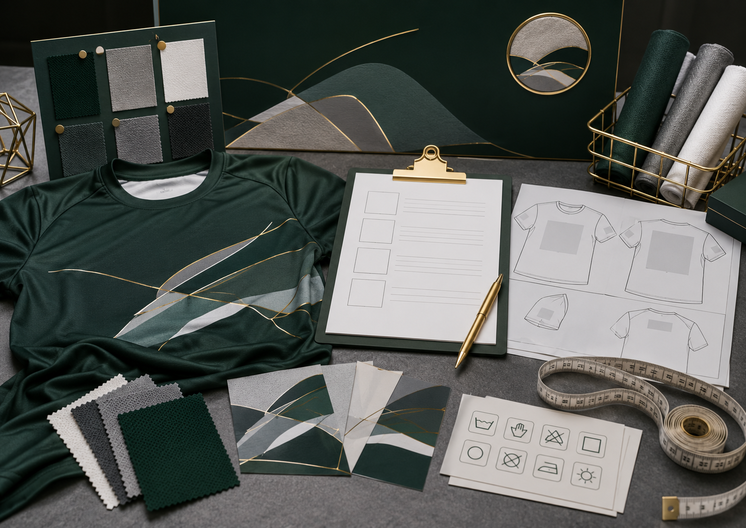
Prevent Cracking, Peeling and Fading Before Production
Good durability starts during planning, not after the first wash.
Choose the Exact Garment
Confirm the brand, product code, fabric, colour, weight and stretch level.
Review the Artwork
Check solid coverage, fine details, colour count, logo size and personalisation.
Select a Compatible Method
Match the garment to DTF, silkscreen, DTG, sublimation, vinyl or embroidery.
Choose a Safe Placement
Avoid seams, pockets, high-stretch zones and areas that rub against bags or equipment.
Approve the Production Sample
Check colour, feel, adhesion, stretch and placement before the full order proceeds.
Provide Care Instructions
Tell wearers how to wash, dry and iron the exact garment and decoration combination.
Keep the Approved Specification
Record the garment, method, artwork size and placement for repeat orders.
Buyer scenarios
Better Choices for Common Orders
Use Small Embroidery or Refined DTF
Better approach: Keep the chest logo compact and match stitch density or transfer flexibility to the polo fabric.
Use Silkscreen for Simple Artwork
Better approach: Use a bold design with suitable ink and proper curing instead of a heavy transfer across the full front.
Use Sublimation for Full Graphics
Better approach: Integrate names, numbers, sponsors and patterns into compatible polyester.
Use DTF With Controlled Coverage
Better approach: Keep the logo detailed but avoid unnecessary large solid blocks on highly flexible shirts.
Care checklist
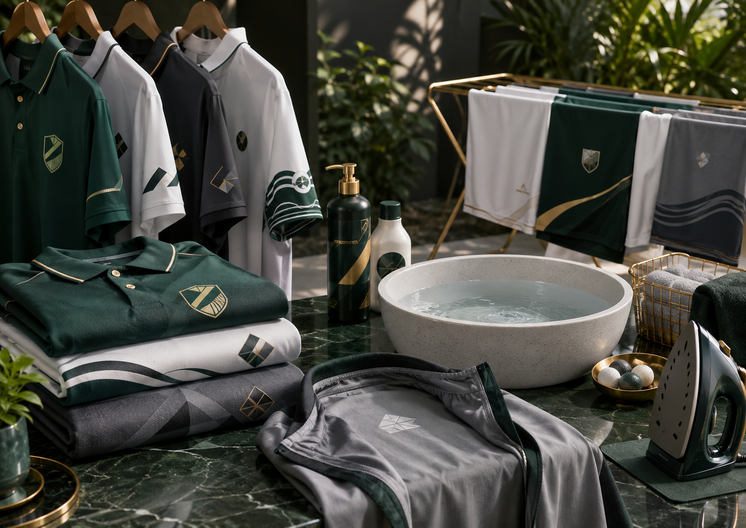
Help Printed Logos Last Longer
- Turn decorated garments inside out
- Wash with similar colours
- Use mild detergent
- Avoid chlorine bleach
- Use cool or lukewarm water
- Choose a gentle cycle where suitable
- Avoid high dryer heat
- Dry in a shaded ventilated area
- Never iron directly on the print
- Store only when fully dry
For company orders: Include one approved care instruction card with every uniform pack so all employees follow the same washing routine.
Frequently asked questions
Printed Logo Damage FAQ
Why does DTF printing peel?
Common causes include unsuitable fabric, weak adhesive bonding, incorrect pressure or temperature, repeated high heat and direct ironing.
Why does silkscreen printing crack?
It may crack when ink is too thick, improperly cured, repeatedly stretched or exposed to rough washing and abrasion.
Why do printed colours fade?
Strong detergent, chlorine bleach, sunlight, abrasion, poor curing and repeated hot washing can all accelerate fading.
Which method is least likely to peel?
Sublimation does not create a surface layer on compatible polyester, so it does not peel like a transfer. Embroidery also does not peel, though thread can still fray or fade.
Can cracked printing be repaired?
Minor damage may be difficult to restore permanently. Replacement or reprinting is often more practical than attempting to repair an old cracked area.
Does washing inside out help?
Yes. It reduces direct rubbing against the machine and other garments, helping protect the visible print surface.
Can different printing methods be combined?
Yes. For example, a team may use embroidered polos, sublimated jerseys and DTF-branded jackets while keeping the same identity.
Prevent early logo damage
Match the Printing Method to the Garment
Share the garment, fabric, artwork, quantity, working conditions and washing frequency. Uniform Penang can recommend a suitable method for durability, appearance and comfort.
Useful Uniform Penang resources
Compare Printing and Garment Options
Use these pages to review suitable printing methods, garment products and care guidance.
DTF Printing
Review DTF for detailed logos, names, gradients and mixed garment orders.
Explore DTF printing →Silkscreen Printing
Review durable printing for larger quantities and simpler artwork.
Explore silkscreen printing →Sublimation Printing
Review integrated graphics for compatible sports jerseys and teamwear.
Explore sublimation →Longest-Lasting Printing Methods
Compare sublimation, embroidery, silkscreen, DTF, DTG and heat transfer.
Open the durability guide →Printing Care Guide
Learn how to wash, dry and store different printed garments.
Open the care guide →Gildan Products
Compare cotton T-shirts and polos for different printing methods.
Explore Gildan →Oren Sport Products
Review quick-dry shirts, jerseys, polos, jackets and caps.
Explore Oren Sport →Contact Uniform Penang
Send the garment, artwork, quantity and intended use for review.
Go to the contact page →Our other company websites
Regional Uniform and Printing Support
Explore related company websites when the order involves another Malaysian region, Singapore, Australia, broader product sourcing or reseller support.
JC Print Malaysia
Corporate apparel, custom printing and broader garment sourcing support.
Visit JC Print Malaysia →Selangor Print
Uniform and custom printing enquiries for Selangor and the Klang Valley.
Visit Selangor Print →Uniform Johor
Uniform supply and delivery support for companies, schools, groups and events in Johor.
Visit Uniform Johor →Uniform Sabah
Custom apparel and uniform ordering support for customers throughout Sabah.
Visit Uniform Sabah →Uniform Singapore
Corporate uniforms, event apparel and custom printing support for Singapore customers.
Visit Uniform Singapore →Uniform Hub SG
Another Singapore-focused channel for uniform and customised apparel enquiries.
Visit Uniform Hub SG →Tanah Studio
Apparel and creative product support for customers seeking an Australia-based option.
Visit Tanah Studio →KitaPrint
Resources for agents and resellers interested in selling printed apparel online.
Visit KitaPrint →Product ranges, stock, colour availability, delivery coverage and service arrangements may vary by website and region. Confirm current requirements before ordering.