
Bayan Lepas Corporate Polos: Choosing Collar Construction for Production Teams
A corporate polo used around production, engineering or customer visits needs more than the right company colour. For teams based around Bayan Lepas, collar construction influences whether a shirt looks orderly after laundering and feels comfortable through repeated movement. This guide helps purchasing managers evaluate ribbed and self-fabric designs without assuming one collar type will automatically suit every department.
Start with the actual role, not the showroom image
A technician who bends, reaches and moves frequently will evaluate a collar differently from a front-desk employee. Discuss whether the polo is worn under an additional layer, used during customer meetings or issued for general operations. Collar height, stiffness and fastening can alter perceived formality. The right decision is a balance of intended appearance and garment mobility.
For the purchase approval, have employees wear sample collars during ordinary tasks rather than trying them only while standing. This is worth recording before the design is signed off, because choosing from a catalogue photograph can hide an uncomfortable neckline or unstable placket.
Compare knitted rib and self-fabric collars
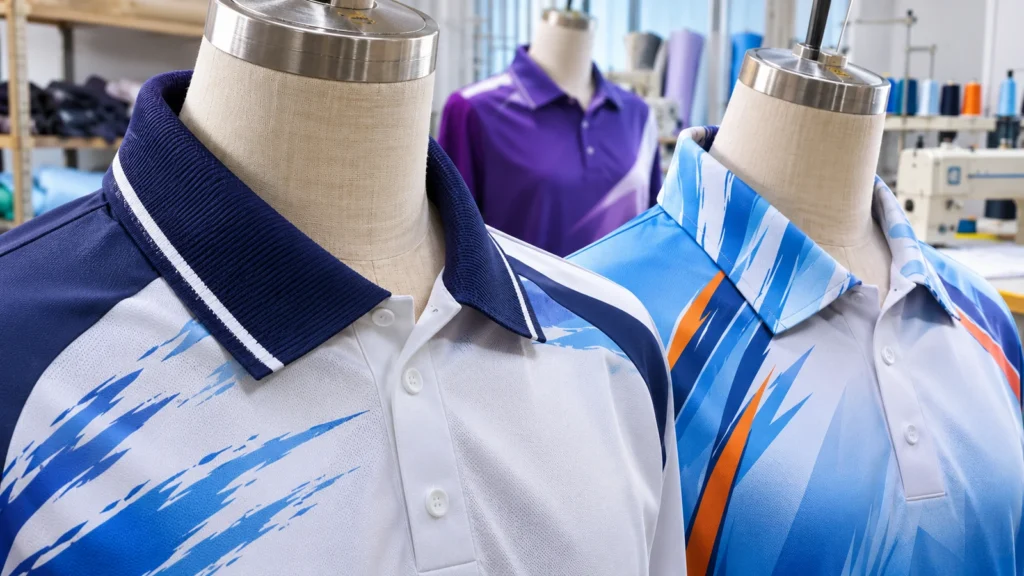
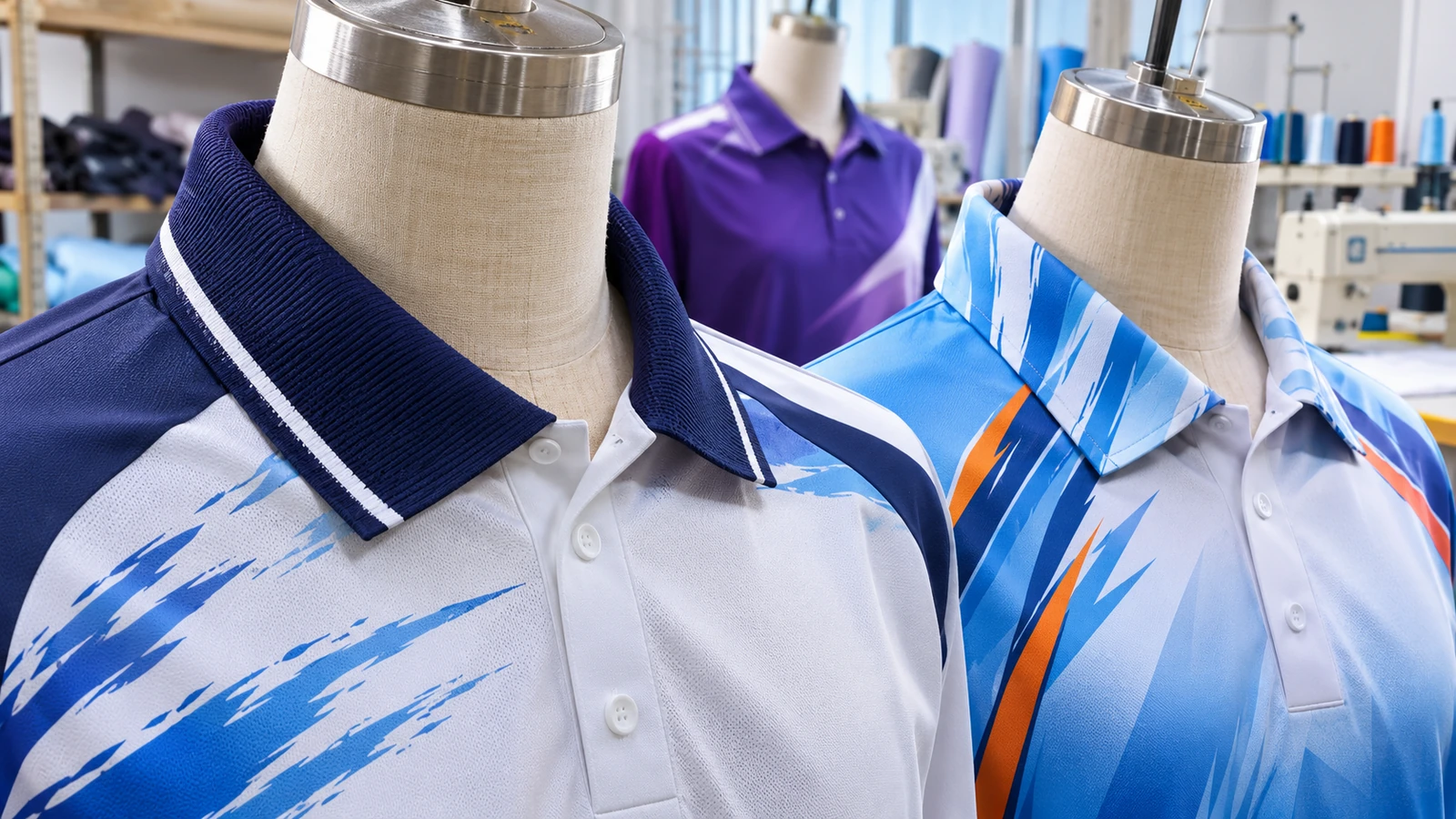
A ribbed collar uses a flexible knit construction that may retain a defined outline when properly matched to the body. A self-fabric collar uses the same or similar material as the shirt body and may support a coordinated print pattern. Neither label guarantees shape retention: interlining, cut direction, sewing and wash behaviour are important.
A useful verification step is to feel both collar edges, inspect stitch quality and compare after one normal wash. The practical reason for that check is that a heavy rib can dominate a lightweight polo, while unsupported self-fabric can curl.
Evaluate buttons and the placket under movement
Placket length, button spacing and edge reinforcement influence whether the neckline sits neatly when an employee reaches forward. Check for gaping, twisting and scratchy seam allowances, especially on fitted sizes. If a lanyard or identification card is worn, see whether it catches on buttons. A collar choice should be tested together with the actual fastening construction.
During the production review, have staff sit, bend and raise their arms while wearing the final sample. Skipping this step can cause a surprisingly expensive problem: an apparently straight placket may pull sideways under normal movement.
Plan embroidered logos around the collar line
A chest emblem should be positioned according to the finished garment’s proportions, not the collar photograph alone. A stiff collar may change how a badge or name appears relative to the opening. Discuss logo dimensions, stitch density and backing so lightweight fabric does not pucker. Printed designs need clearance from seam lines and placket folds.
The team should also inspect a complete decorated sample for both collar and logo balance. Treat this as part of the specification rather than an informal preference, since approving a blank polo before branding can miss distortion around the chest.
Use a sample wash to compare shape
Ask the supplier which fibre composition and construction were used. Wash and dry the decorated sample according to its instructions, then compare collar roll, placket alignment and fabric twist with the new condition. Test more than one size if grading or collar shape differs materially. A single photograph of a washed shirt is less useful than the garment itself.
Before a supplier prepares the final proof, record pre- and post-wash collar measurements and a standard front photo. The risk is operational as much as visual: if teams wash garments differently, a marginal construction may deteriorate inconsistently.
Write the collar into the reorder specification
The purchase sheet should name collar type, colour, rib or self-fabric material, button type, placket shape, garment model and decoration positions. Keep the physical approved sample to compare with future batches. Uniform Penang lists corporate uniforms, embroidery and printing, but specific construction options remain subject to order confirmation.
For a repeat order, check that the final quotation references the approved collar and sample rather than a generic polo. Keep the result with the approved sample, since a visually similar alternative can produce a different fit and laundering response.
Practical example: making the decision
Consider a Bayan Lepas engineering company choosing polos for technicians who sometimes host customer visits. A ribbed collar looks formal on the mannequin but feels bulky on one lightweight fabric sample. A self-fabric alternative keeps the visual style consistent with the shirt body yet curls after washing because its construction is insufficiently supported. The team does not decide by appearance alone. It requests a properly constructed sample of each option, has staff bend and reach in both, and compares placket alignment after laundering. The chosen model is documented with exact collar material, button colour, fabric composition and embroidery placement. When the next branch asks for the same uniform, procurement can provide a precise sample and measurements instead of sending a screenshot of a polo that merely looks similar. This is an illustrative procurement exercise, not a claim about an actual company order.
Additional approval considerations
Collar feel can change under warm working conditions, particularly where staff move between cooled rooms and outdoor loading areas. Ask wearers whether the edge feels abrasive after several hours, not only whether it looks smart for a photograph. Test the collar with any name lanyard or headset used during work, since these accessories can alter comfort.
Before choosing a contrast collar, ask whether its replacement colour will remain available for future orders. A collar made from a separate rib material may have its own stock and dye constraints. The purchasing record should identify both body and collar materials, allowing the supplier to flag a substitution instead of treating every dark-blue collar as interchangeable.
- Have employees wear sample collars during ordinary tasks rather than trying them only while standing.
- Feel both collar edges, inspect stitch quality and compare after one normal wash.
- Have staff sit, bend and raise their arms while wearing the final sample.
- Inspect a complete decorated sample for both collar and logo balance.
- Record pre- and post-wash collar measurements and a standard front photo.
- Check that the final quotation references the approved collar and sample rather than a generic polo.
Frequently asked questions
Is rib collar always more durable?
No. Quality depends on yarn, knit, reinforcement, seam construction and care.
Can sublimation artwork appear on the collar?
Some self-fabric constructions permit planned patterns; confirm the exact method and collar pattern.
What should a Bayan Lepas factory buyer test?
Try the polo during typical movements, then wash and compare the finished decorated sample.
Does Uniform Penang have a Bayan Lepas office?
Do not assume a local branch. Confirm service and delivery arrangements directly.
For a quotation based on the actual garment, print method, quantity and delivery location, review UniformPenang services and use the official enquiry page. Prices, methods, production schedules and minimum quantities must be confirmed for the specific job.