
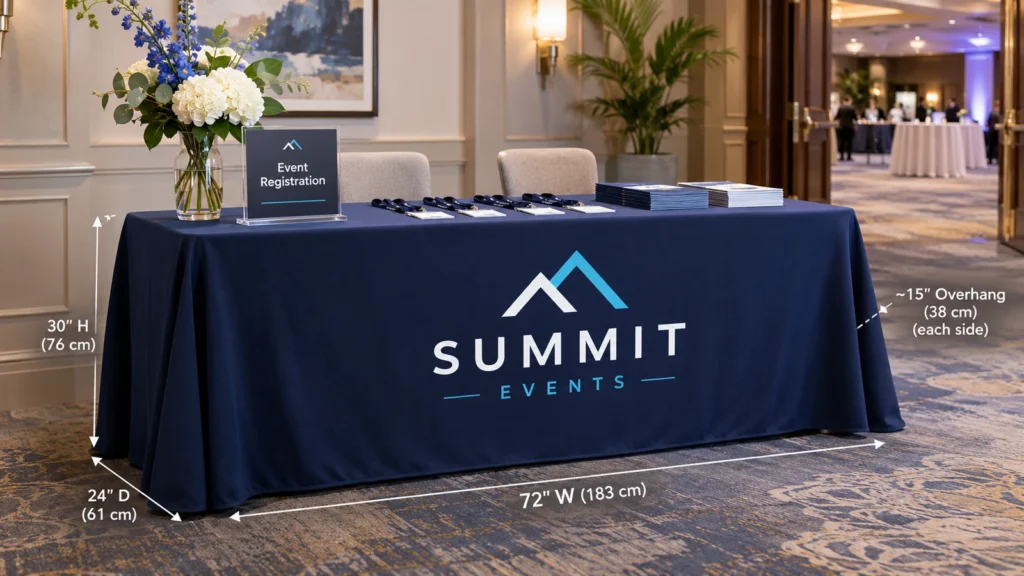
Table Runner vs Full Table Cover: Branding Choices for Registration Booths
Event teams often order a printed tablecloth because the front of a registration desk should look tidy in photographs. Yet a narrow table runner and a fully fitted table cover are different products. The best choice depends on the venue’s existing table, storage needs, cleaning and how much front-facing branding is actually required. This guide compares the two formats as working event equipment.
Measure the table and its purpose
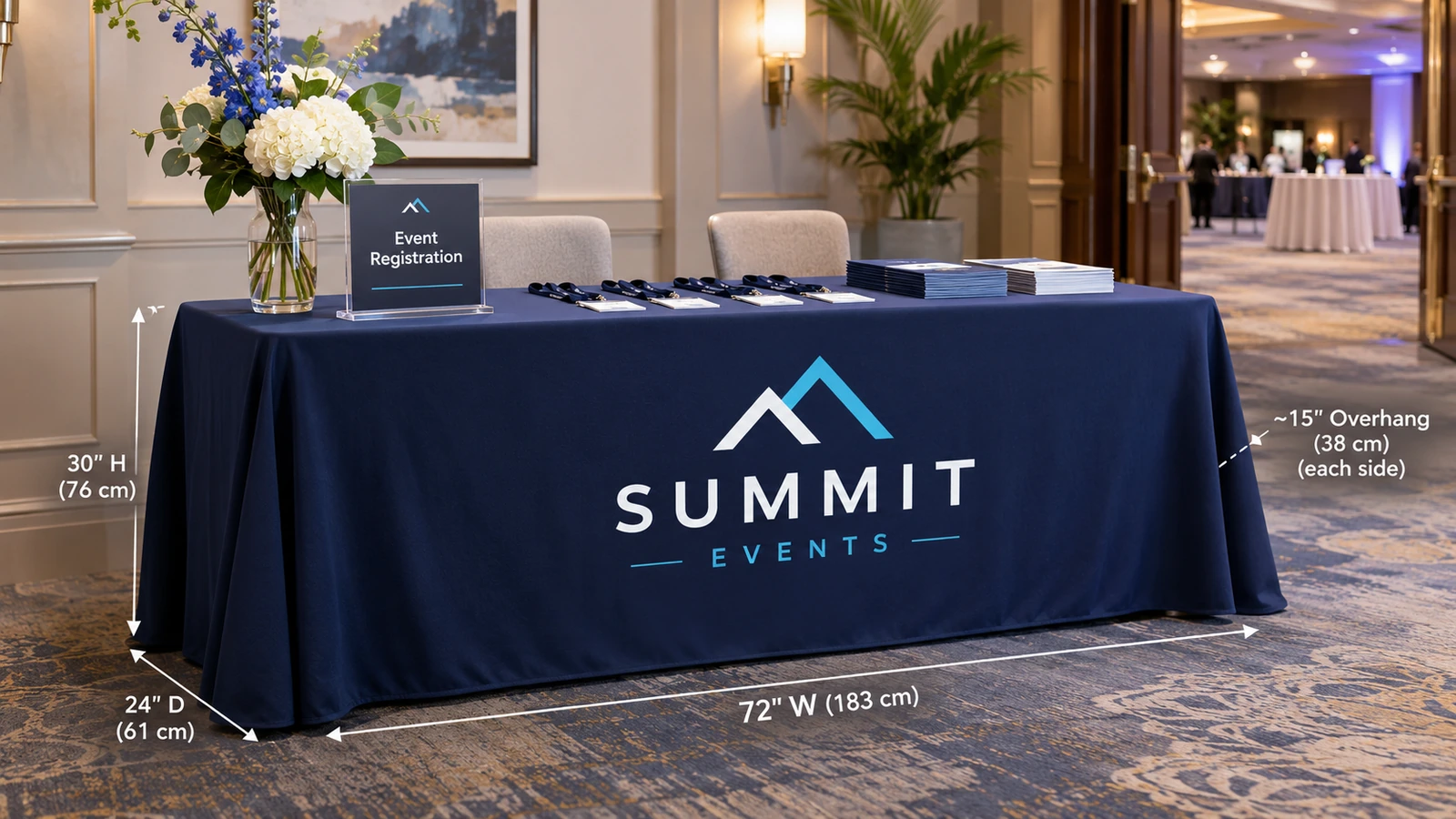
Start with the tabletop width, length, height and whether staff sit behind it. The branding should face guests without hanging into their knees or blocking a storage shelf. A full cloth may cover legs and clutter, while a runner can provide a focused logo strip over an existing neutral cover. Venue tables often differ from the dimensions remembered by organisers.
For the purchase approval, measure the actual hired table or obtain the venue’s specifications. This is worth recording before the design is signed off, because a cloth chosen for a photo backdrop may drag on the floor or leave the front exposed.
Understand runner and fitted-cover behaviour
A runner usually sits across the tabletop and drops down at the front, leaving some table sides visible. A fitted cover wraps the structure more completely and may use tailored seams or stretch fabric. The two options give different logo zones and laundering considerations. Consider whether the team needs access to boxes under the table during a busy event.
A useful verification step is to try a paper or spare-cloth mockup with staff seated and standing. The practical reason for that check is that a perfect front logo can become crumpled when staff continually lift the cloth.
Place logos in the visible safe area
Guests and cameras usually see the front drape more than the tabletop. Centre the logo within the portion that stays visible after the cloth is draped, not merely within the flat print file. A logo near the bottom may be cut off in photographs or hidden by luggage. Leave extra space for folds, hems and clips.
During the production review, photograph a full-size pinned mockup from attendee eye level. Skipping this step can cause a surprisingly expensive problem: a logo can be centred in the artwork yet look crooked once the fabric falls.
Consider fabric, method and repeated washing
Polyester cloth may support certain full-colour methods, while other fabrics call for different printing approaches. Determine whether the branding will survive frequent folding, stain cleaning and transport. Ask for the appropriate care instructions and approved technique for the selected material. Dark tables may also show through lightweight fabric if the cover is not sufficiently opaque.
The team should also wash and fold a decorated fabric swatch before confirming the order. Treat this as part of the specification rather than an informal preference, since an untested transfer may crack or lift after repeated event handling.
Plan transport and installation time
A runner is often quick to place but may need clips or weights to prevent sliding. A fitted cover takes more care to install but can present a consistent shape. Pack the item with its fastening accessories and a photograph of the correct setup. For outdoor events, wind and weather suitability must be evaluated separately.
Before a supplier prepares the final proof, have an unfamiliar colleague install the sample using only the written pack instructions. The risk is operational as much as visual: if setup requires improvisation, the brand display will look inconsistent between venues.
Make a cost comparison that includes reuse
Do not compare only the initial printed area. Include the base cloth, sewing, branding method, cleaning, replacement and number of events expected. A flexible runner may work across several table sizes; a fitted cover may look more controlled when a standard booth size is used repeatedly. Record both the visual and practical acceptance criteria.
For a repeat order, make the purchasing decision against the next three realistic event setups. Keep the result with the approved sample, since a cheap option becomes costly when it cannot adapt to the actual event furniture.
Practical example: making the decision
Imagine a school fundraising team using hired tables of differing widths across three venues. A full fitted tablecloth creates a tidy presentation at the first venue but is awkward to access from behind at the second. The team tests a printed runner over the venues' existing neutral cloth and finds that it gives sufficient front-facing branding while allowing easier access to storage. They approve a front drop that keeps the emblem visible above typical chairs and delivery boxes. The printed sample is folded, washed according to its label and packed with two clips and a setup photograph. For future events, the organiser records which tables accept the runner and when a fitted cover would still be preferable. This avoids buying one inflexible fabric size for a variety of event furniture.
Additional approval considerations
Installation details can change the print outcome. A runner that slips forward may make the front logo sit lower, while tight clips may pull the fabric out of shape. Use subtle fastening methods that do not pierce or permanently damage the cloth. Include accessories in the supplier and event-team checklists, even when the printed piece itself is technically correct.
Take an attendee-eye-level photograph after the first event and compare it with the approved setup. Record whether the logo is visible when staff sit behind the desk and whether the cloth covers cable access. These observations offer concrete improvements for the next event, far more than a broad comment that the table looked nice.
- Measure the actual hired table or obtain the venue’s specifications.
- Try a paper or spare-cloth mockup with staff seated and standing.
- Photograph a full-size pinned mockup from attendee eye level.
- Wash and fold a decorated fabric swatch before confirming the order.
- Have an unfamiliar colleague install the sample using only the written pack instructions.
- Make the purchasing decision against the next three realistic event setups.
Frequently asked questions
Can a runner fit different tables?
Often, but verify the front drop and width for each table.
Will a full cover hide storage boxes?
It may, but access and folds depend on the construction and fastening.
What print method should be used?
Ask for a fabric-and-artwork-specific recommendation and physical sample.
Should logos go on top or front?
Use the most visible guest-facing area while keeping enough clearance for folds and hems.
For a quotation based on the actual garment, print method, quantity and delivery location, review UniformPenang services and use the official enquiry page. Prices, methods, production schedules and minimum quantities must be confirmed for the specific job.