
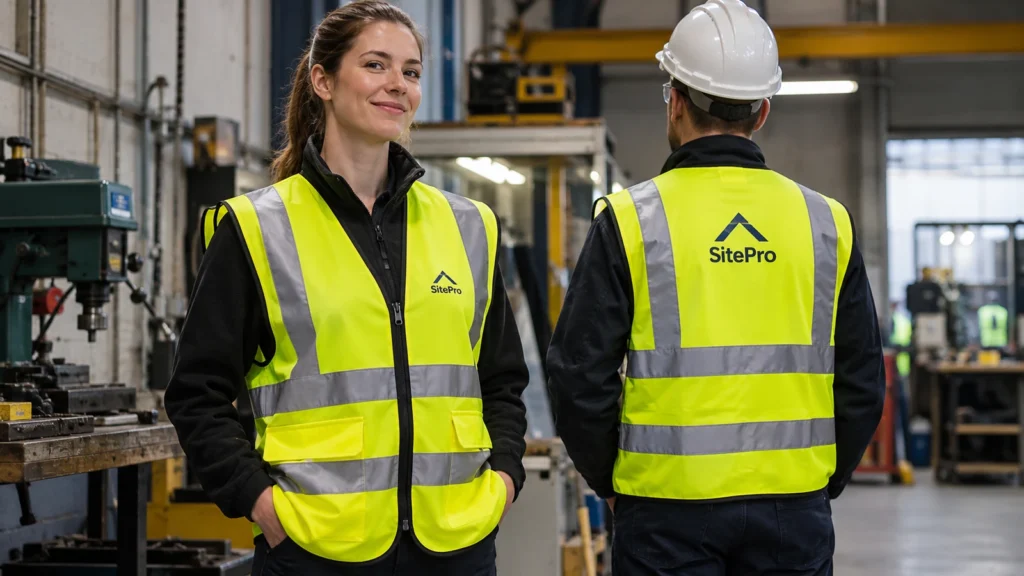
Butterworth Warehouse Visibility Vests: Sizing and Responsible Logo Planning
Warehouse purchasing near Butterworth often involves several groups: goods-receiving staff, drivers, supervisors and visitors. A high-visibility vest may need size flexibility and identification, but branding must not displace functional reflective elements. This guide explains how to collect sizes, plan names and place logos while keeping the real safety assessment in the hands of the employer and qualified suppliers.
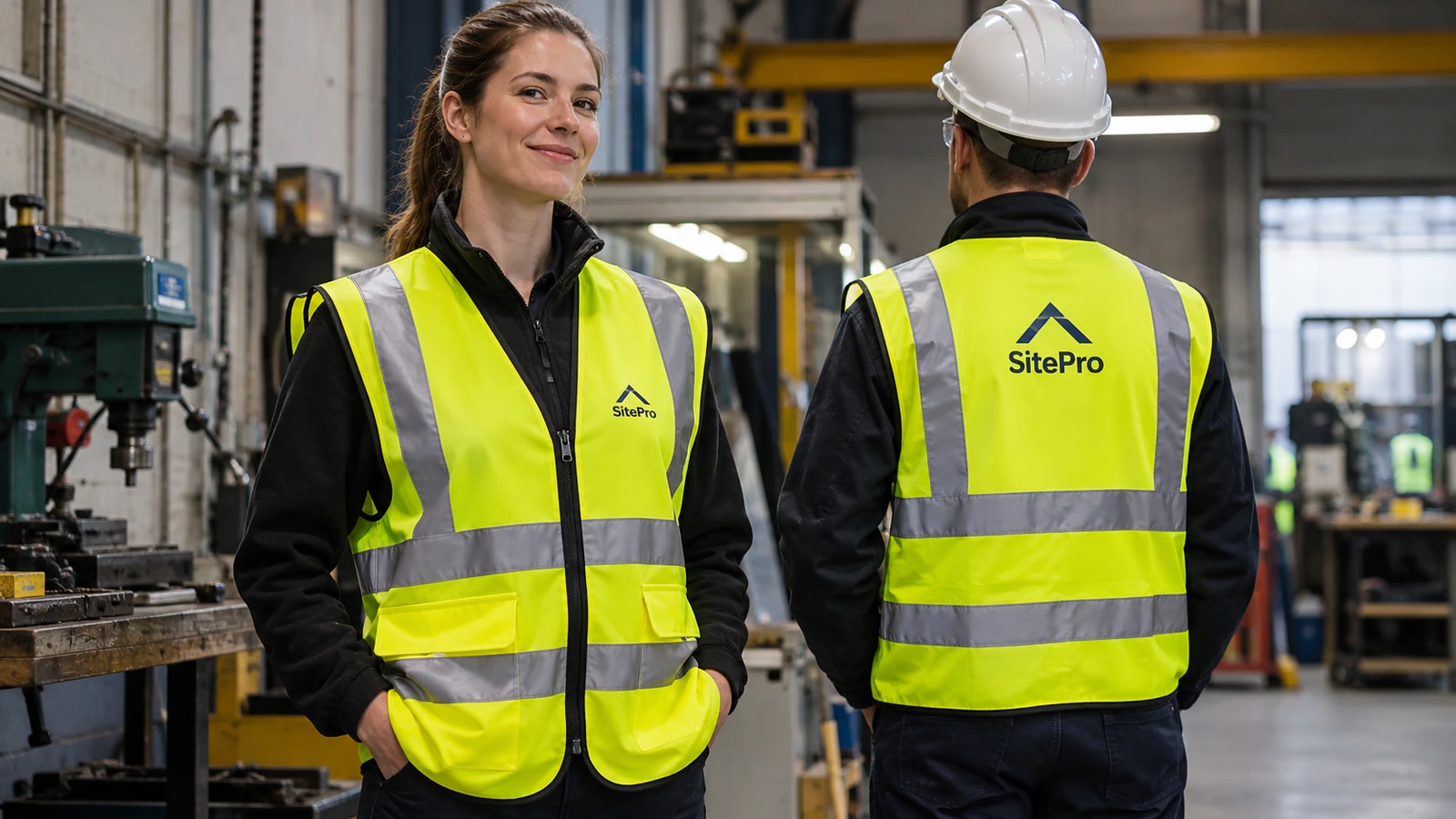
Identify the relevant hazards and garment standard
First establish whether the item is safety-rated high-visibility clothing or merely a bright event vest. Employers should consult their site risk assessment and applicable certified specification before customisation. Colours, tape configuration, coverage and visible surface area can matter to the chosen class. A printer cannot infer compliance from a picture of a neon garment.
For the purchase approval, obtain the garment model, certification information and permitted alteration instructions. This is worth recording before the design is signed off, because decorating or altering a certified vest without approval can compromise its intended classification.
Size over the actual work clothing
A vest for warehouse use may be worn over a thin polo, heavy jacket or rain layer. Waist and chest measurements should be checked with those garments on. Try sitting in a vehicle, bending and reaching to see whether closures ride up or interfere. Visitors may need adjustable sizes, while permanent employees can use individually issued stock.
A useful verification step is to record the intended underlayer and a size test for each staff category. The practical reason for that check is that selecting one generic free size can create loose fabric or restricted movement.
Protect reflective bands and visible fluorescent areas
Logo artwork should not cover retroreflective strips or materially reduce required fluorescent background areas. Avoid placing a dense transfer or patch across seams, pockets or fastening hardware. The safest location cannot be selected from marketing preference alone; check the vest manufacturer’s decoration guidance and workplace standard.
During the production review, mark forbidden decoration zones on a physical sample before artwork approval. Skipping this step can cause a surprisingly expensive problem: a high-quality print can still be the wrong choice if it affects safety performance.
Make role identification legible without overbranding
Security, supervisor and visitor labels can help coordination, but their colour and size must remain suitable for the garment. Keep identification short and test reading distance under the actual work lighting. Embroidered name badges or prints on removable pieces may be possible depending on the approved design, but no technique should be assumed safe without review.
The team should also ask a colleague to identify the role from realistic aisle distance and angles. Treat this as part of the specification rather than an informal preference, since oversized role labels can crowd the garment and conceal high-visibility material.
Think about closure and pocket access
Zips, hook-and-loop tabs and pockets must function after logo application. Some printing processes apply heat and pressure that can affect coated fabrics or nearby reflective components. Verify the decoration process with the vest manufacturer and supplier. Trial the actual finished article before authorising a long run, especially when a special safety standard applies.
Before a supplier prepares the final proof, inspect each closure and reflective tape edge after a decorated sample is produced. The risk is operational as much as visual: a correct mockup does not confirm that thermal processing preserved the vest.
Keep a compliance and issue record
Document garment supplier, model, applicable standard, decoration approval, approved sample and staff issue date. Train employees to inspect damage and follow garment care instructions. A logo does not replace routine maintenance or site safety rules. Uniform Penang offers corporate uniform and embroidery services, but any safety-rated customisation requires separate confirmation.
For a repeat order, arrange a review with the site safety officer before placing the final order. Keep the result with the approved sample, since a missing approval trail makes it hard to verify that all issued vests match specification.
Practical example: making the decision
A Butterworth distribution facility is considering role-labelled high-visibility vests for staff and visitors. The original design places a large dark company logo across a reflective band on the rear. Before any printing, the site safety officer reviews the garment's certification and manufacturer instructions, and the proposal is withdrawn. The team checks authorised areas for any permitted branding and creates a shorter role label that does not mask functional components. They fit vests over both polos and approved outer layers, verifying that closures and straps remain accessible. A qualified supplier is asked to confirm whether its decoration process is suitable for the certified garment. The final file records model, approved position and issuing instructions; photographs are supporting documentation, not proof of compliance. The example shows why safety review must precede the visual design decision.
Additional approval considerations
Printed company names should never be used as evidence that a garment meets a particular visibility standard. Compliance concerns the complete certified item, its condition and the working environment. If staff work around traffic or moving equipment, the safety representative should make the final decision on clothing and identification. Marketing preferences remain subordinate to that assessment.
Training can address what printing cannot: staff need to close the vest correctly, keep tape unobstructed and report damage. Even a correctly decorated vest can become less effective when worn open, covered by a bag or heavily soiled. Include maintenance reminders in the staff issue notes rather than expecting the supplier's logo placement to solve the entire visibility problem.
- Obtain the garment model, certification information and permitted alteration instructions.
- Record the intended underlayer and a size test for each staff category.
- Mark forbidden decoration zones on a physical sample before artwork approval.
- Ask a colleague to identify the role from realistic aisle distance and angles.
- Inspect each closure and reflective tape edge after a decorated sample is produced.
- Arrange a review with the site safety officer before placing the final order.
An additional control is to obtain the garment model, certification information and permitted alteration instructions. Combine that check with a final handover step: arrange a review with the site safety officer before placing the final order. Keep both results with the dated approval sample so a replacement order uses the same reference. Where the material, delivery address or production technique changes, ask for a fresh confirmation rather than assuming that an old quotation covers the new combination.
Frequently asked questions
Can a logo be printed across reflective tape?
Do not do this without explicit manufacturer and standards approval; normally keep tape clear.
Is fluorescent colour alone sufficient?
No. Applicable safety performance depends on the complete certified garment and use case.
Should visitors use free-size vests?
Only when the adjustable fit is appropriate for their clothing and work environment.
Can I order safety-rated customisation directly?
Discuss the garment standard and decoration limits with a qualified supplier before approval.
For a quotation based on the actual garment, print method, quantity and delivery location, review UniformPenang services and use the official enquiry page. Prices, methods, production schedules and minimum quantities must be confirmed for the specific job.