
Embroidery Backing for Lightweight Polos: Choosing Support Without Stiffness
For a Penang office buyer evaluating embroidered logos on thin or stretch-knit uniforms, an accurate order needs more than an attractive sample photograph. Small details tend to cause the largest problems after distribution, especially when the final item must be repeated for new staff or teams. The five decisions below focus on what to compare, what to measure and which omissions usually cause avoidable rework. Uniform Penang describes production coordinated from Selangor; confirm destination freight and an order-specific schedule rather than assuming the quoted production time includes transport.
Read the fabric before deciding on backing
A soft knit with substantial stretch responds differently to needle tension than a firm interlock. This becomes important when approval comes from an administrator but the finished item is worn or handled by someone else. The finished logo is a structure of stitches, not a photograph. Digitisation converts artwork into an embroidery plan that must suit the scale and fabric. Ask for the relevant material, dimensions or artwork details rather than an unsupported assurance of quality.
Have the embroiderer test on the exact supplied garment. Ask an independent reviewer to compare the proof against the original requirement. Backing selected for another shirt can create rippling. Document what was checked and keep the proof alongside the order. A verbal agreement is much harder to audit when another batch is needed.
Match support to the stitch design
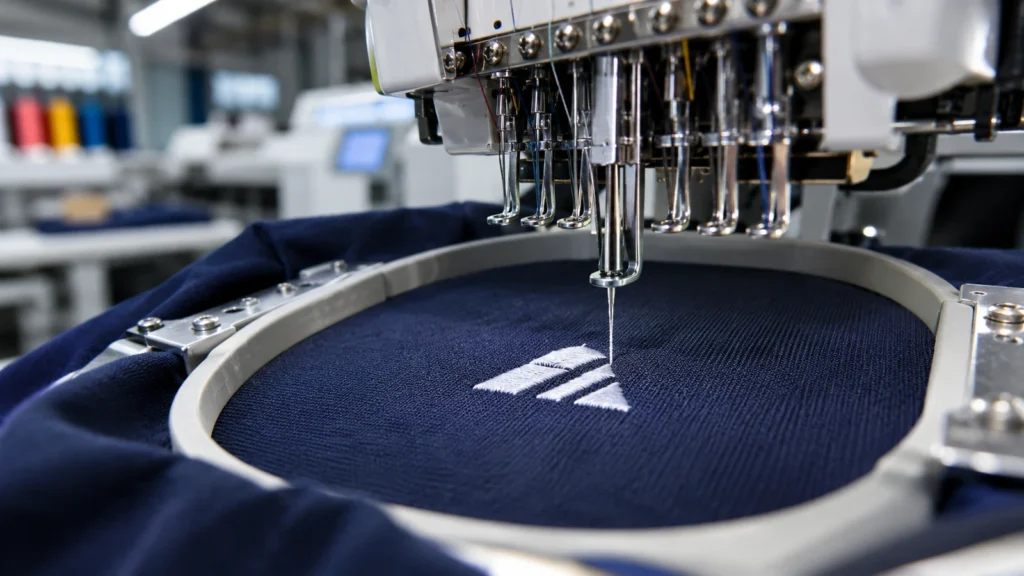
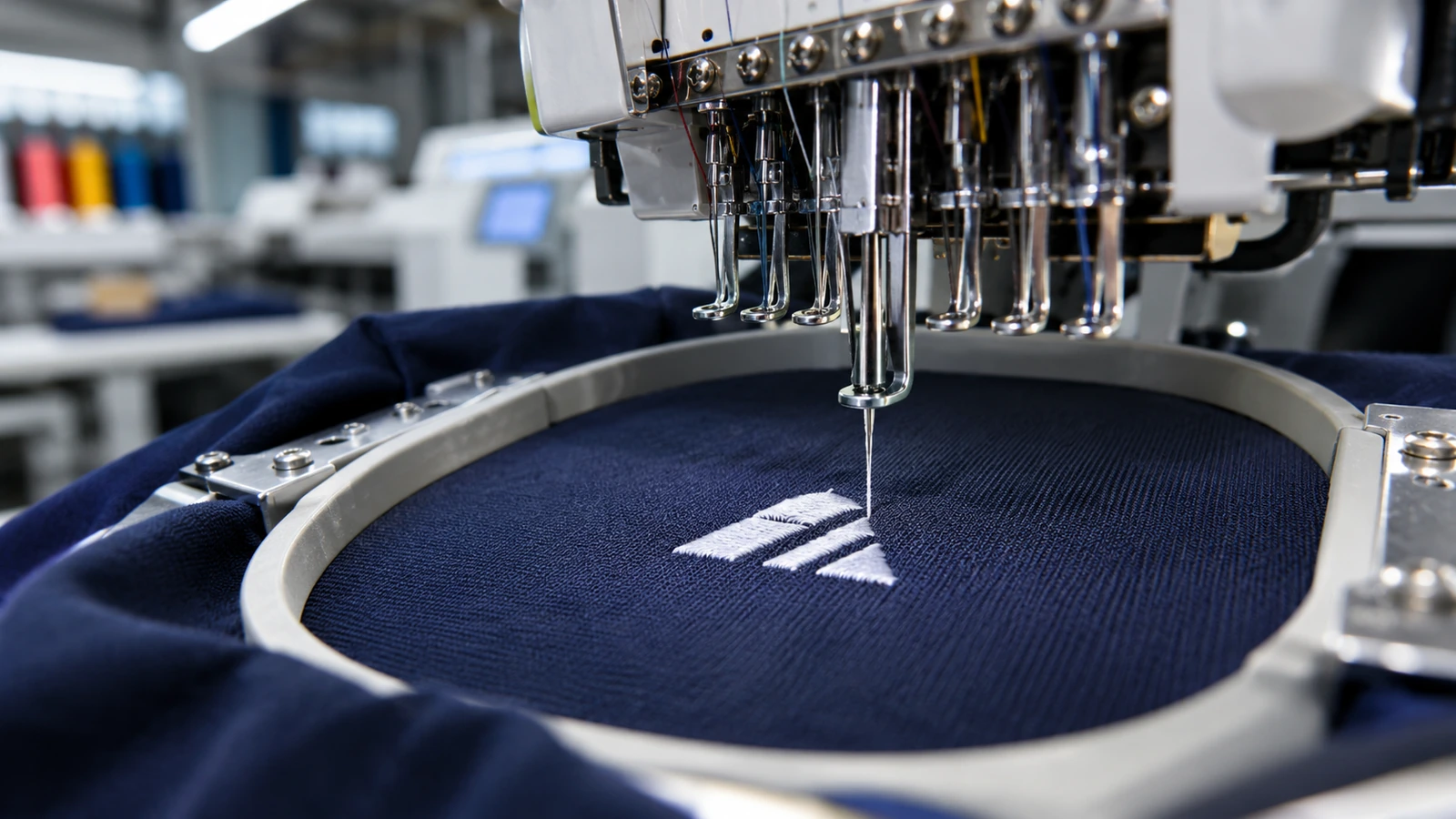
A common gap in the initial brief is match support to the stitch design. Dense fill areas may need more stabilisation than a small open-line logo. Backing and hooping support the garment during stitching. Their suitability changes with knit stability, logo density and the amount of stretch. This distinction is useful for both first-time orders and replacements to an existing uniform programme.
Review stitch count, fabric tension and backing after the embroidery sample is complete. Keep a dated photograph or annotated sample with the sign-off rather than relying on memory. More backing is not automatically better. The point of this check is to make the decision reproducible: another person should be able to read the approval and obtain the same result.
Inspect the inside against wearer comfort
Before choosing a specification, look at the role that the item must perform. A scratchy or rigid reverse surface can irritate users during a long working day. Thread colours are physical materials viewed against a particular fabric shade. An on-screen approximation cannot prove how they will look under workplace lighting. This distinction is useful for both first-time orders and replacements to an existing uniform programme.
The most direct check is simple: ask volunteers to wear the embroidered sample under ordinary conditions. Record the observed result and who approved it. Appearance approval alone cannot confirm comfort. If the result is marginal, change the specification now rather than asking the production team to improvise during the final run.
Check small lettering in textured fabric
Loops in piqué may reduce visual clarity where type is narrow and tightly spaced. This becomes important when approval comes from an administrator but the finished item is worn or handled by someone else. A stable placement landmark such as the shoulder seam or placket can improve repeatability, but pockets and seam thickness must also be considered. Ask for the relevant material, dimensions or artwork details rather than an unsupported assurance of quality.
Test an actual-size logo with the intended thread and backing. Ask an independent reviewer to compare the proof against the original requirement. A tiny tagline may close up when converted into stitches. The point of this check is to make the decision reproducible: another person should be able to read the approval and obtain the same result.
Approval and order checklist
Before the final approval, ask one person who was not involved in the artwork preparation to follow the same checklist and locate the evidence for every item. For a Penang office buyer evaluating embroidered logos on thin or stretch-knit uniforms, the final record should identify the selected product or material, the artwork version, the exact quantity by variant, and the receiving address or responsible collector. A sample is useful only if it corresponds to the version that will be made.
- Have the embroiderer test on the exact supplied garment.
- Review stitch count, fabric tension and backing after the embroidery sample is complete.
- Ask volunteers to wear the embroidered sample under ordinary conditions.
- Test an actual-size logo with the intended thread and backing.
- Save thread colours, backing reference, position from shoulder and approved sample photographs.
Uniform Penang describes production coordinated from Selangor; confirm destination freight and an order-specific schedule rather than assuming the quoted production time includes transport. Retain the supplier reply, signed sample images and dated item list for replacements or later batches. If a requested change affects garment sizing, decoration or packing, ask for the revised specification before approving production, rather than treating it as an informal message.
Frequently asked questions
Why can tiny text be hard to embroider?
A soft knit with substantial stretch responds differently to needle tension than a firm interlock. Have the embroiderer test on the exact supplied garment. Backing selected for another shirt can create rippling. Keep the final decision in the approved order so that a later team member can check it without guessing.
How is the logo position measured?
Dense fill areas may need more stabilisation than a small open-line logo. Review stitch count, fabric tension and backing after the embroidery sample is complete. More backing is not automatically better. Keep the final decision in the approved order so that a later team member can check it without guessing.
Should thread colours be approved on screen?
A scratchy or rigid reverse surface can irritate users during a long working day. Ask volunteers to wear the embroidered sample under ordinary conditions. Appearance approval alone cannot confirm comfort. Keep the final decision in the approved order so that a later team member can check it without guessing.