
Penang Gotong-Royong Shirt Planning Guide
Gotong-Royong Shirts Penang: Complete Buying Guide
Plan comfortable, easy-to-identify custom shirts for school clean-ups, neighbourhood programmes, workplace CSR activities, community projects and volunteer events in Penang.
Direct answer: Choose gotong-royong shirts according to the activity, weather, location, wearer age range, visibility needs and artwork. Quick-dry shirts are often worth reviewing for active outdoor work, while cotton T-shirts may suit lighter or shorter programmes. Polo shirts can help committee members look more structured. DTF, silk screen, embroidery and sublimation should be compared only after the garment, design, quantity and print positions are confirmed.
Start with the activity
Plan the Shirt Around the Actual Gotong-Royong Work
A gotong-royong programme may involve sweeping, lifting, painting, gardening, waste collection, drain clearing, beach cleaning, school maintenance or neighbourhood beautification. The shirt should support movement and help organisers identify volunteers, committees, zones or work teams.
Before selecting a garment, confirm whether the programme is indoors or outdoors, how long it will run, whether participants will work under direct sun, and whether children, adults and senior participants need the same product.

Quick comparison
Which Gotong-Royong Shirt Fits Each Programme?
Use this table as a practical starting point. Final suitability depends on the activity, garment fabric, artwork, quantity, required sizes, stock availability and receiving date.
| Programme Setting | Garment to Review | Method to Assess | Main Planning Focus |
|---|---|---|---|
| School or campus clean-up | Quick-dry or cotton round-neck T-shirt | DTF or silk screen printing | Student sizes, house or class colours, teacher identification and easy distribution. |
| Neighbourhood or residents’ programme | Comfortable T-shirt or polo for committee members | DTF, silk screen or embroidery | Block, zone or committee identification and mixed adult sizing. |
| Company CSR activity | Quick-dry T-shirt, polo or long-sleeve activity shirt | DTF, silk screen or embroidery | Company logo, event identity, department groups and participant comfort. |
| Beach, park or river clean-up | Quick-dry shirt, long sleeve or suitable jersey | Sublimation, DTF or suitable silk screen arrangement | Heat, moisture, movement, sun exposure and clear volunteer visibility. |
| Kampung or community beautification | Cotton-blend T-shirt, quick-dry shirt or polo | DTF or silk screen printing | Wide age range, local committee roles, sponsor marks and practical sizing. |
| Large multi-team programme | One core shirt with controlled team-colour variations | Silk screen, DTF or sublimation | Zone colours, team labels, packing, distribution and one approval process. |

Garment options
Shirts and Apparel to Consider for Gotong-Royong
The best option depends on physical activity, weather, expected washing, appearance, participant age range and whether the garment will be reused after the programme.
Cotton Round-Neck T-Shirts
Cotton T-shirts may suit shorter programmes, indoor tasks, school activities and community events with moderate movement.
Review: fabric weight, shrinkage care, colour availability, fit and total printed coverage.
Quick-Dry T-Shirts
Quick-dry or microfiber shirts can be considered for sweeping, gardening, outdoor cleaning, beach work and longer active sessions.
Review: ventilation, opacity, fabric feel, cutting and compatibility with the intended method.
Polo Shirts
Polo shirts may give organisers, supervisors, sponsors or company representatives a more structured appearance.
Review: collar construction, logo size, embroidery area, colour range and extended sizes.
Long-Sleeve Activity Shirts
Long sleeves may be reviewed for outdoor work, sun exposure, gardening and participants who prefer additional coverage.
Review: fabric warmth, sleeve movement, cuff style, breathability and print position.
Sublimation Jerseys
Sublimation jerseys may suit large community programmes that need strong team colours, zone graphics, sponsor logos or full-colour patterns.
Review: polyester fabric, cutting, artwork hierarchy, colour contrast and full-size range.
Vests and Lightweight Layers
Selected vests or lightweight outer layers may help identify committees, first-aid teams, traffic coordinators or zone leaders.
Review: intended role, garment availability, heat, movement and whether certified protective equipment is separately required.
Printing and identification
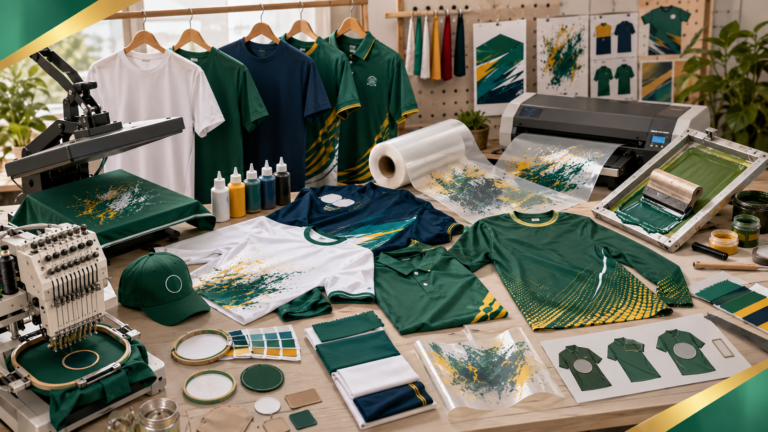
Choose the Right Method for the Gotong-Royong Shirts Design
Select the method after confirming the garment fabric, artwork detail, number of colours, print positions, quantity and whether participants need individual names or team labels.
DTF Printing
DTF can be reviewed for colourful community logos, illustrations, sponsor marks, small lettering and several design variations.
Assess for: front chest logos, full-back event graphics, committee wording and smaller mixed orders.
Silk Screen Printing
Silk screen printing may suit a repeated, simpler design used across a larger coordinated volunteer order.
Assess for: event names, bold slogans, simple logos, zone marks and identical group shirts.
Embroidery
Embroidery may suit compact logos on polos, caps, jackets and organiser apparel where a stitched finish supports a neater appearance.
Assess for: committee emblems, company logos, small organisation marks and supervisor garments.
Sublimation Printing
Sublimation may support suitable polyester jerseys with broad colour coverage, zone patterns, sponsor placement and integrated graphics.
Assess for: large community campaigns, multi-zone teams and reusable volunteer jerseys.
Name and Role Personalisation
Selected methods may support individual names, committee roles, work zones, departments or team identifiers.
Assess for: Organiser, Volunteer, First Aid, Zone A, School Team or Department labels.
Mixed Methods
An order may use one method for the shared event design and another for individual roles or committee apparel.
Assess for: silk screen group shirts with DTF role labels, or embroidered committee polos with printed volunteer shirts.

Material, colour and design
Design Gotong-Royong Shirts for Comfort and Visibility
The design should help participants recognise the programme and each other without making the shirt uncomfortable or difficult to reuse.
Match the Fabric to the Work
Consider heat, moisture, movement, washing and whether the programme involves paint, soil, water or outdoor exposure.
Choose a Clear Colour System
Use colours that separate volunteers, committees or zones clearly while maintaining good contrast with the printed design.
Keep the Main Message Readable
Prioritise the programme name, organisation or event identity instead of placing too many slogans, dates and sponsor marks in one area.
Plan Every Print Position
State whether artwork appears on the left chest, front centre, full back or sleeves, and identify any role labels separately.
Control Sponsor and Partner Logos
Collect approved files early and agree on logo order, relative size and placement before the final proof is prepared.
Plan for Reuse After the Event
A cleaner design and practical colour may allow participants to reuse the shirt for future community or volunteer activities.
Size planning
Collect Volunteer Sizes Without Confusion
Confirm the Product
Select the actual garment, colour and cutting before sharing a size chart with participants.
Use One Master List
Record name, role, team, garment colour, size and quantity in one controlled spreadsheet.
Freeze the Final List
Set an approval deadline and confirm all changes through one authorised organiser before production.

Ordering process
How to Plan a Gotong-Royong Shirt Order
Define the Programme
State the location, activity, event date, required receiving date, participant groups and expected conditions.
Choose the Garment Direction
Compare cotton, quick-dry, polo, long-sleeve, jersey or selected outer layers according to the work and wearer roles.
Confirm Teams and Roles
Decide whether all participants use one shirt or whether committees, zones, schools or departments require controlled variations.
Prepare the Artwork
Provide the organisation logo, event name, sponsor files, role wording and intended print positions in clear files.
Collect Quantities and Sizes
Use the selected product’s size chart and one final spreadsheet for every participant, role and garment variation.
Review the Proof Carefully
Check spelling, colours, logo placement, sponsor order, print dimensions, team labels and every personalised detail.
Confirm Packing and Penang Delivery
Provide the full address, receiving contact, required date and whether shirts should be grouped by size, class, block, zone or department.
Buyer scenarios
Gotong-Royong Shirt Plans for Different Organisers
Student and Teacher Identification
Use one controlled design with clear class, house, committee or teacher distinctions where needed.
Neighbourhood Zone Colours
Keep one shared event identity while using simple colour or role variations for blocks, streets or committees.
Company and Community Branding
Balance company logos, partner organisations, volunteer roles and practical outdoor comfort.
Reusable Volunteer Apparel
Consider a design that works for the current programme and future clean-up or outreach activities.
Clear Team Visibility
Use strong colour contrast and role labels while separately following any site-specific safety requirements.
Different Garments, One Identity
Allow adults, children and seniors to use suitable garment types while maintaining the same colour system and artwork.
Common Gotong-Royong Shirt Ordering Mistakes
- Choosing a shirt before confirming the actual work, weather and participant age range.
- Collecting sizes before selecting the exact garment and size chart.
- Using too many colours, slogans, dates, partner marks and sponsor logos in one print area.
- Sending low-resolution logos copied from messaging apps or social media.
- Allowing several committee members to submit separate artwork and size changes.
- Approving the design without checking programme spelling, dates, zones and sponsor order.
- Using shirt and print colours with weak contrast.
- Creating too many garment variations that complicate packing and distribution.
- Planning around the activity date instead of the earlier date when the shirts must be received.
Final checklist
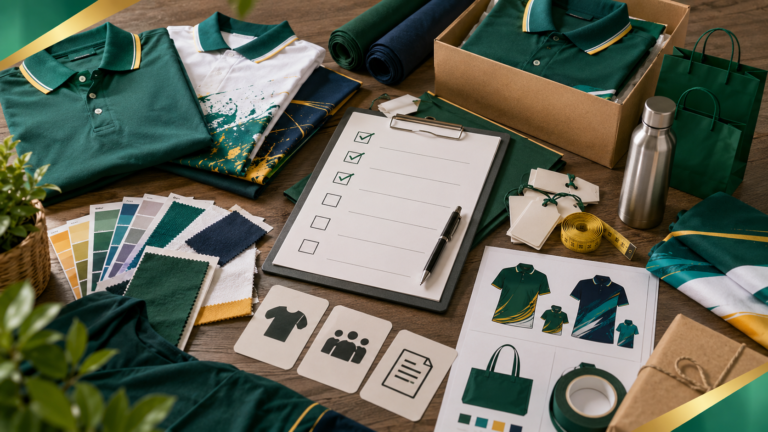
Information to Prepare Before Requesting a Quotation
Programme Details
- Gotong-royong location and activity
- Event date and required receiving date
- Estimated participant quantity
- Schools, zones, blocks, teams or departments
- Penang delivery location and contact person
Garment and Artwork Details
- Preferred shirt type and colour
- Required adult and child size range
- Front, back and sleeve print positions
- Organisation, sponsor and event logo files
- Role, team, zone or name variations
Frequently asked questions
Gotong-Royong Shirt FAQs
Which fabric is suitable for a gotong-royong shirt?
It depends on the activity. Cotton may suit lighter or shorter programmes, while quick-dry fabric may be more practical for active outdoor work. Review heat, moisture, movement and expected washing before deciding.
Can children and adults use the same design?
Yes. The same visual identity can be adapted across adult and child garments, but print dimensions and placement may need adjustment for smaller sizes.
Can each zone or team use a different colour?
Yes, subject to garment colour and size availability. Keep the main artwork, typography and event identity consistent so every team remains part of the same programme.
Can committee roles be printed on the shirts?
Role personalisation may be possible depending on the garment and method. Prepare one final checked list for organiser, volunteer, first-aid, zone leader or other approved roles.
Which method suits a colourful event logo?
DTF may be worth reviewing for detailed multicolour artwork. Sublimation may suit suitable polyester jerseys with broad colour coverage. The actual artwork and garment should be assessed before confirmation.
When should silk screen printing be considered?
Silk screen is commonly assessed when the same simpler artwork is repeated across a coordinated group order. The number of colours and print positions affects preparation.
Can committee members wear polos while volunteers wear T-shirts?
Yes. Different garments can share one colour system and artwork identity, provided each garment and print position is confirmed separately.
How should organisers collect sizes?
Select the exact garment first, distribute its actual size chart and collect all responses in one controlled spreadsheet. Do not rely only on age, height or another brand’s size label.
Can gotong-royong shirts be delivered to Penang?
Uniform Penang can review apparel supply and delivery arrangements for Penang. Provide the complete receiving address, contact person, required date and packing instructions for confirmation.
Prepare your community order
Request a Gotong-Royong Shirt Quotation
Share the programme date, activity, estimated quantity, preferred garments, colours, size range, artwork, role variations and Penang delivery location. The team can review the available arrangement and suitable customisation direction.
Useful Uniform Penang Resources
Uniform and Printing Services
Explore plain apparel and customisation methods.
View services →DTF Printing in Penang
Review detailed artwork and garment considerations.
Open guide →Silk Screen Printing
Review repeated artwork and coordinated group orders.
Open guide →Corporate Uniform Buying Guide
Plan team garments, sizing and event apparel.
Open guide →Uniform Penang Blog
Browse more apparel and printing guides.
Browse blog →Contact Uniform Penang
Submit garment, colour, size and quantity requirements.
Contact team →Our Regional Apparel and Printing Network
These websites belong to the same company or regional network.
JC Print Malaysia
Visit website →SelangorPrint
Visit website →Uniform Johor
Visit website →Uniform Sabah
Visit website →Uniform Singapore
Visit website →Uniform Hub Singapore
Visit website →Tanah Studio
Visit website →KitaPrint
Visit website →Disclosure: These are related company or regional network websites, not independent recommendations.