Workwear and uniform guide
Professional Workwear for Different Jobs
Professional-looking clothes should match the job, workplace and daily duties. A polished office outfit may not suit a workshop, while a practical factory uniform may feel too casual for a front-desk role. The right workwear balances appearance, comfort, movement, safety and brand consistency.
Direct answer: Professional workwear depends on the job. Office and sales teams often need collared shirts, polos, blouses, trousers or lightweight jackets. Retail and hospitality staff may use coordinated polos, aprons, tunics or waistcoats. Factory, warehouse and technical teams usually need durable shirts, quick-dry polos, long sleeves, cargo trousers or safety-visible layers. Healthcare, beauty and service teams may require scrubs, lab coats, tunics or clean structured tops. The best choice should support the employee's duties while presenting a clear and consistent company image.
Match the Job
The outfit should suit the employee's movement, environment, customer contact and level of formality.
Keep the Team Consistent
Shared colours, logo placement and garment styles help the company look more organised.
Prioritise Practical Comfort
Professional clothing should remain comfortable enough for the employee to perform the job properly.
Quick comparison
Examples of Workwear for Different Jobs
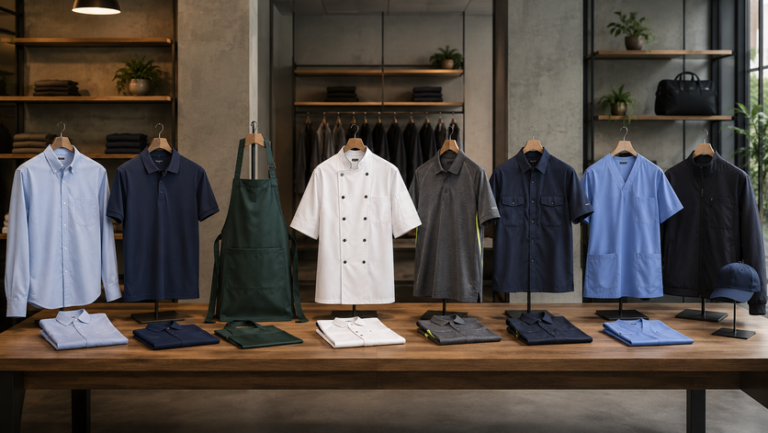
Use this table as a practical starting point. The final uniform should still be adjusted to the workplace, climate, safety needs and company image.
| Job or industry | Professional clothing examples | Why it suits the role | Useful branding option |
|---|---|---|---|
| Office and administration | Oxford shirt, blouse, polo shirt, tailored trousers, cardigan or lightweight blazer | Creates a clean, organised and approachable appearance | Small embroidered chest logo |
| Sales and property agents | Collared shirt, smart polo, blouse, chinos, formal trousers or branded jacket | Looks presentable during meetings, site visits and customer appointments | Embroidery on chest or sleeve |
| Retail and showroom staff | Polo shirt, button-up shirt, apron, waistcoat or coordinated T-shirt | Easy for customers to recognise while supporting movement | Name embroidery or removable badge |
| Cafe and restaurant staff | Front-of-house polo, blouse, apron, chef coat, kitchen shirt or headwear | Separates service and kitchen roles while keeping the team coordinated | Logo embroidery on apron or chest |
| Factory and warehouse staff | Quick-dry polo, long-sleeve work shirt, cargo trousers, safety vest or work jacket | Supports movement, durability and clearer department identification | Department print or embroidered role |
| Workshop and technical staff | Mechanic shirt, work polo, coverall, cargo trousers or utility jacket | Practical for tools, movement and hands-on work | Name and company logo embroidery |
| Clinic and healthcare staff | Scrub top, lab coat, tunic, polo shirt or modest long-sleeve top | Looks clean and helps patients identify staff roles | Name and short role embroidery |
| Beauty, spa and wellness staff | Tunic, blouse, apron, tailored trousers or coordinated polo | Creates a calm, polished and service-focused image | Subtle chest embroidery |
| Event and exhibition crew | Branded T-shirt, polo, lightweight jacket, cap or lanyard | Makes the crew easy to identify in busy venues | Large back print with front logo |
| Hotel and front-desk staff | Blazer, waistcoat, blouse, formal shirt, skirt, trousers or premium polo | Supports a formal and welcoming guest experience | Small logo embroidery or name badge |
Practical rule: The more customer-facing the role, the more structured and polished the outfit should look. The more active or technical the job, the more important comfort, durability and freedom of movement become.
Professional clothing options
Common Clothes Used for Professional Uniforms
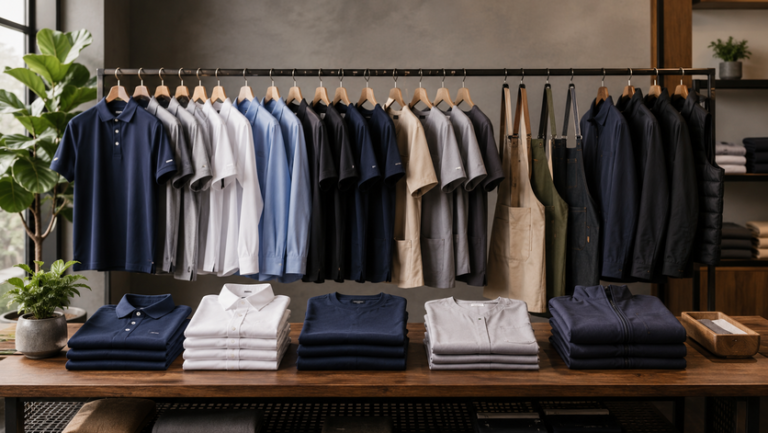
Most workplaces can build a professional uniform system from a small number of practical garment types.
Polo Shirts
Suitable for offices, retail, sales, logistics, events and service teams. A polo looks more structured than a T-shirt while remaining comfortable.
Button-Up Shirts
Useful for administration, sales, property, hotel and front-desk staff. They support a more polished business image.
Premium T-Shirts
Suitable for creative teams, event staff, retail crews and modern workplaces that want a clean but less formal appearance.
Aprons and Tunics
Common for cafe, restaurant, beauty, spa, bakery and retail roles where protection and role recognition are important.
Quick-Dry Workwear
Useful for outdoor sales, warehouse, factory, delivery, maintenance and event teams working in warm or active conditions.
Jackets and Waistcoats
Suitable for supervisors, front-desk staff, exhibitions, property teams and customer-facing roles needing a stronger visual hierarchy.
Simple uniform system: Many companies use one main polo or shirt for daily work, then add a jacket, apron, safety layer or role badge only where the job requires it.
Printing and branding
Choose Branding That Matches the Garment
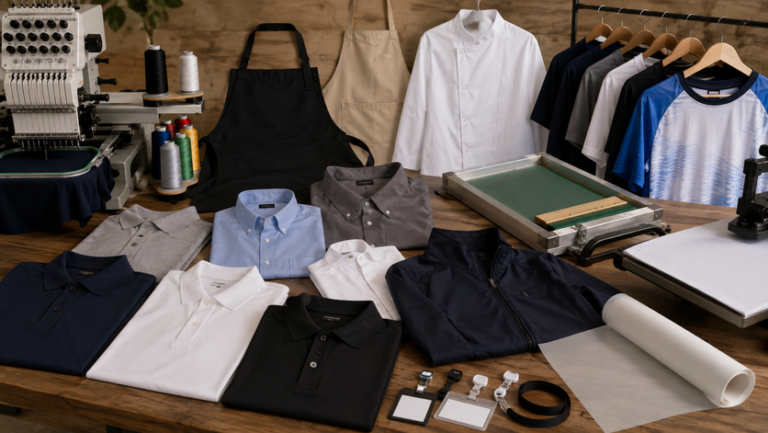
The branding method should support the professional image without making the uniform look crowded or uncomfortable.
Embroidery
Embroidery suits polos, button-up shirts, jackets, aprons and workwear. It is commonly used for chest logos, staff names and short role labels.
DTF Printing
DTF suits colourful logos, event artwork, back designs and detailed graphics on selected garments.
Silkscreen Printing
Silkscreen can be practical for larger quantities with simple, bold artwork and a limited number of colours.
Sublimation
Sublimation works on suitable polyester garments and can support team colours, patterns and integrated event graphics.
Name and Role Labels
Use embroidered names, department wording or removable badges when staff need to be identified clearly.
Keep Logos Proportionate
A small chest logo often looks more professional than a very large front print for office, sales and hospitality roles.
Branding rule: Use the company logo to support the garment, not overpower it. Large back prints are best reserved for crew, operational or event roles where visibility matters.
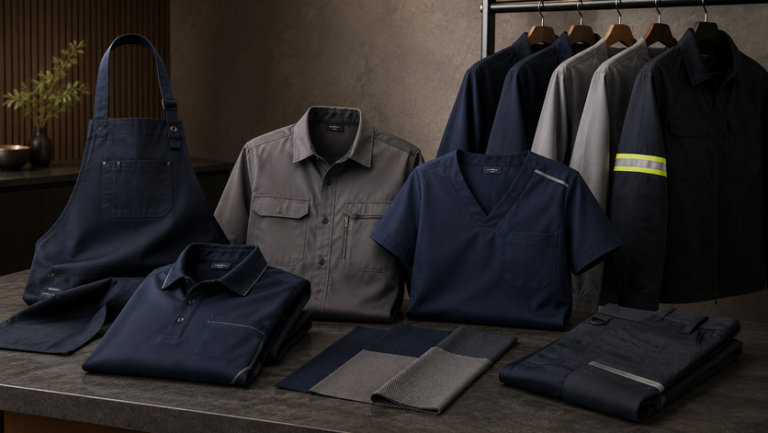
Material, colour and design guide
What Makes Workwear Look Professional?
A professional uniform is not only formal. It looks intentional, fits the job and remains consistent across the team.
Clean Fit
The garment should allow movement without looking excessively tight, oversized or uneven across the team.
Controlled Colours
Use two or three coordinated colours instead of too many competing shades. Neutral colours often support a more polished look.
Suitable Fabric
Office shirts need structure, while outdoor and technical roles need breathable, durable or quick-drying materials.
Consistent Logo Placement
Keep the company logo in the same position and size across matching garments whenever possible.
Role-Appropriate Details
Aprons, pockets, reflective elements, long sleeves or name badges should be added only when the job benefits from them.
Easy Care
Wrinkle resistance, colour stability and practical washing requirements help staff maintain a professional appearance.
Common Workwear Mistakes
- Using the same outfit for every department without considering duties
- Choosing formal clothes that restrict movement
- Selecting thin fabric that looks untidy or becomes transparent
- Using too many shirt colours and logo variations
- Making the front logo too large for customer-facing roles
- Ignoring larger sizes, modest options or female cutting requirements
- Choosing garments that are difficult for staff to wash and maintain
Ordering process
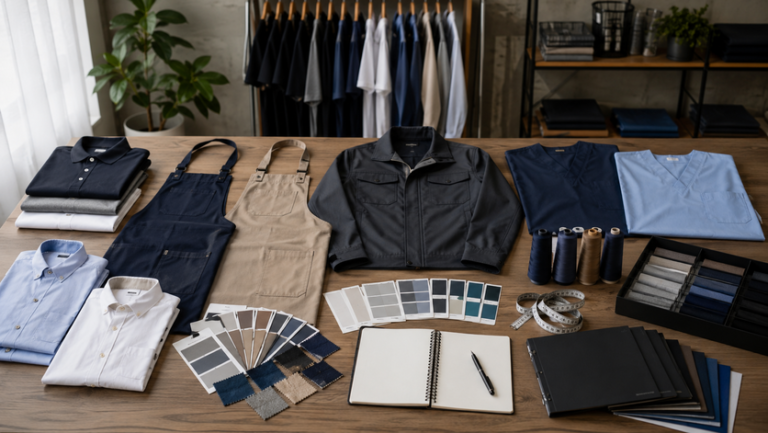
A Practical Workwear Planning Process
Plan the uniform by job role before choosing the garment. This prevents the company from selecting clothing based only on appearance.
List Every Job Role
Separate office, sales, service, production, warehouse, technical, front-desk and management duties.
Review the Work Environment
Identify indoor, outdoor, air-conditioned, hot, active, customer-facing and safety-sensitive areas.
Set the Required Formality
Decide whether each team needs formal, smart casual, active, technical or safety-focused workwear.
Select the Garments
Choose polos, shirts, T-shirts, aprons, tunics, jackets or workwear according to the role.
Choose Colours and Branding
Confirm the company colours, logo placement, names, departments and printing or embroidery method.
Collect Accurate Sizes
Use the exact chart for each garment and include unisex, ladies, modest and larger-size options where required.
Approve and Record the Specification
Keep the garment codes, colours, artwork, thread or print references and size records for repeat orders.
Buyer scenarios
Example Uniform Plans for Different Teams
Smart Polo and Button-Up System
Suggested approach: Use polos for daily office work and button-up shirts or lightweight jackets for meetings, exhibitions and client visits.
Front and Back-of-House Uniforms
Suggested approach: Use coordinated polos or blouses with aprons for service staff and practical chef or kitchen uniforms for food preparation teams.
Durable Department Workwear
Suggested approach: Use quick-dry polos or work shirts with department identification, then add long sleeves, jackets or safety layers where needed.
Clean Role-Based Uniforms
Suggested approach: Use scrubs, tunics or clean polos in coordinated colours with names or short role labels for easy identification.
Buyer checklist
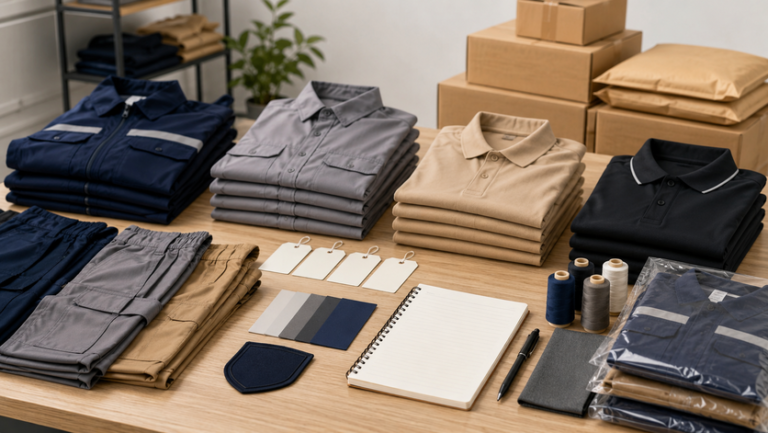
Confirm These Details Before Ordering
- Job roles and department responsibilities
- Indoor, outdoor and customer-facing conditions
- Required formality and company image
- Garment type, fabric and colour
- Adult, ladies, modest and larger-size needs
- Logo, name and department placement
- Printing or embroidery method
- Quantity required per employee
- Care, replacement and reorder requirements
- Packing, delivery and required date
Useful quotation information: Share the industry, job roles, work environment, preferred garments, colours, quantity, size range, logo file, branding positions and required date.
Frequently asked questions
Professional Workwear FAQ
What clothes make employees look professional?
Clothes look professional when they fit properly, use coordinated colours, suit the job and remain consistent across the team. Polos, button-up shirts, blouses, tunics, aprons, jackets and structured workwear can all look professional when matched to the role.
Does professional workwear have to be formal?
No. A clean polo, premium T-shirt or quick-dry work shirt can look professional when it suits the workplace and carries consistent branding.
Should every department wear the same uniform?
Not always. The company can keep the same colours and logo while adjusting garments for office, warehouse, service or technical duties.
Which jobs usually need embroidered names?
Retail, hospitality, clinic, technical service and front-desk roles often benefit from names because customers need to identify staff easily.
What is the best uniform for hot workplaces?
Lightweight, breathable or quick-dry fabrics are usually more practical. The final choice should also consider durability, safety and printing compatibility.
How can a company keep repeat orders consistent?
Record the garment brand and code, colour, fabric, logo size, placement, thread or print references and size list for every approved uniform.
Plan your professional uniforms
Choose Workwear Around the Actual Job
Share the industry, job roles, work environment, preferred garments, colours, size range, quantity and branding requirements. Uniform Penang can review the information and recommend a practical workwear arrangement.
Useful Uniform Penang resources
Continue Planning the Workwear Order
Use these related pages to compare printing methods, garment options and uniform support before confirming the professional workwear.
DTF Printing Guide
Review DTF for detailed logos, colourful graphics and selected workwear designs.
Explore DTF printing →Silkscreen Printing Guide
Learn where simple artwork and larger uniform quantities may suit silkscreen printing.
Explore silkscreen printing →Gildan Shirt Guide
Review garment options for office, retail, event and company teams.
Explore Gildan shirts →Oren Sport Guide
Review polo, quick-dry and activewear options for staff teams.
Explore Oren Sport →Uniform Penang Services
View current staff uniform, workwear and custom printing support.
Visit Uniform Penang →Contact Uniform Penang
Send the job roles, garment details, quantity, artwork and deadline for review.
Go to the contact page →Our other company websites
Regional Uniform and Printing Support
Explore related company websites when the order involves another Malaysian region, Singapore, Australia, broader product sourcing or reseller support.
JC Print Malaysia
Corporate apparel, custom printing and broader garment sourcing support.
Visit JC Print Malaysia →Selangor Print
Uniform and custom printing enquiries for Selangor and the Klang Valley.
Visit Selangor Print →Uniform Johor
Uniform supply and delivery support for companies, schools, groups and events in Johor.
Visit Uniform Johor →Uniform Sabah
Custom apparel and uniform ordering support for customers throughout Sabah.
Visit Uniform Sabah →Uniform Singapore
Corporate uniforms, event apparel and custom printing support for Singapore customers.
Visit Uniform Singapore →Uniform Hub SG
Another Singapore-focused channel for uniform and customised apparel enquiries.
Visit Uniform Hub SG →Tanah Studio
Apparel and creative product support for customers seeking an Australia-based option.
Visit Tanah Studio →KitaPrint
Resources for agents and resellers interested in selling printed apparel online.
Visit KitaPrint →Product range, stock, delivery coverage and service arrangements may vary by website and region. Confirm current requirements with the relevant team before ordering.