Hot-weather rider uniform guide
Uniforms for Delivery Riders in Hot Weather
Delivery riders spend long hours moving between roads, buildings and outdoor collection points. Their uniforms should help them stay comfortable in warm and humid conditions while remaining easy to identify, practical for repeated washing and suitable for company branding.
Direct answer: The most practical delivery rider uniform is usually a lightweight quick-dry polyester or polyester-rich polo or T-shirt with good airflow, a comfortable fit and clear company identification. Long sleeves can provide additional coverage for riders who prefer them, while removable outer layers can help during rain or cooler periods. Choose mid-tone or high-visibility colour combinations, avoid overly heavy fabric and large solid print areas, and provide enough uniform pieces for frequent washing. Uniform clothing should complement—not replace—appropriate riding safety equipment.
Control Heat and Moisture
Lightweight quick-dry fabric is more practical when riders move continuously in warm conditions.
Keep Riders Recognisable
Consistent colours, logos and role labels help customers identify the delivery team quickly.
Support Daily Washing
Easy-care garments and adequate uniform rotation make it easier to maintain a clean professional appearance.

Quick comparison
Compare Common Rider Uniform Options
The best garment depends on route duration, rider activity, branding needs and whether the team works mostly outdoors or moves between indoor and outdoor locations.
| Uniform option | Best suited for | Main strengths | Important consideration |
|---|---|---|---|
| Quick-dry round-neck T-shirt | High-movement routes and casual delivery teams | Lightweight, simple and fast drying | May look less structured than a polo |
| Quick-dry polo shirt | Customer-facing riders and branded company fleets | More professional appearance with good movement | Choose a breathable collar and suitable fabric weight |
| Long-sleeve performance shirt | Riders who prefer more arm coverage | Additional coverage while remaining lightweight | Sleeves should not be tight, heavy or excessively loose |
| Lightweight rider jersey | Teams wanting a sporty or fully customised design | Supports colour blocking, team identity and sublimation | Use a practical design rather than excessive dark coverage |
| Reflective or visible outer layer | Low-light routes, roadside stops and busy delivery zones | Improves visual identification when correctly designed | Must not restrict movement or replace proper safety equipment |
| Lightweight rain shell | Changing weather and wet delivery conditions | Removable protection without changing the base uniform | Ventilation and fit are important in warm conditions |
Best all-round system: Use a breathable quick-dry polo or T-shirt as the daily base uniform, then add a removable visible or rain-resistant outer layer when the route conditions require it.
Uniform and garment options
Build a Practical Rider Uniform System
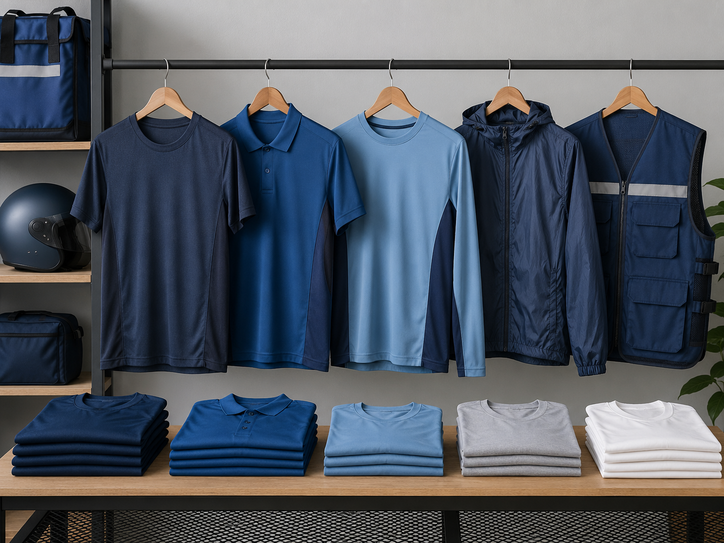
One garment may not cover every situation. A simple base-and-layer system helps riders adapt to heat, rain, customer contact and different delivery environments.
Lightweight Quick-Dry Shirt
Suitable for regular delivery rounds, food collection, parcel delivery and last-mile routes. Select a smooth fabric that dries quickly and supports repeated movement.
Performance Polo Shirt
A polo can help the team look more organised at reception counters, offices, hotels and customer locations while remaining comfortable outdoors.
Long-Sleeve Quick-Dry Top
Useful for riders who prefer more arm coverage. Choose a light fabric and verify that the sleeve length does not interfere with gloves or controls.
Packable Rain Jacket
A lightweight removable shell can protect the base uniform during wet conditions. Look for a practical fit, ventilation and room for normal riding movement.
Branded Vest or Outer Layer
A visible outer layer can carry larger branding, department wording or rider identification without covering the comfort of the base shirt.
Multiple Daily Uniform Pieces
Riders who work long shifts or wash uniforms frequently may need several shirts so clean garments are always available.
Keep the system simple: One main shirt model, one optional long-sleeve version and one removable outer layer are usually easier to manage than many unrelated garments.

Printing and branding methods
Choose Branding That Stays Comfortable
Rider uniforms need visible branding, but large or heavy decoration can reduce flexibility and airflow in the printed area.
DTF Printing
DTF can suit colourful logos, rider numbers and detailed artwork. Keep the print coverage controlled so the shirt remains comfortable during long shifts.
Silkscreen Printing
Silkscreen can be practical for bold company logos and simple wording across larger rider quantities.
Sublimation
Sublimation works with suitable polyester garments and can integrate team colours, patterns and branding into the fabric design.
Embroidery
Small embroidery can suit polos or jackets, but dense stitching should be kept away from areas that need maximum flexibility.
Rider Numbers and Names
Use short names, rider IDs or department labels where operational identification is useful. Verify every detail before production.
Visible Contrast and Reflective Details
High-contrast colour blocking or reflective elements may support recognition in low-light environments when used appropriately.
Branding rule: Use a clear front logo and a readable back identity without covering the entire torso in one heavy print layer.

Material, colour and design guide
Choose Fabric and Colours for Hot Routes
The garment should manage heat, repeated movement, road dust, perspiration and frequent washing while keeping the rider easy to recognise.
Use Lightweight Fabric
A lighter performance fabric can reduce bulk during long shifts, but it should still provide enough structure and coverage.
Prioritise Airflow
Breathable knit structures and ventilated panels can improve comfort when the rider moves between traffic, buildings and outdoor stops.
Avoid Excessively Dark Coverage
Very dark colours can feel warmer under direct sun. Use lighter panels, visible accents or balanced colour blocking where suitable.
Choose Practical Mid-Tones
Grey, blue, green and mixed-tone designs can hide road dust and minor marks better than very light garments.
Allow Comfortable Movement
The shoulders, sleeves and torso should move freely without excess fabric catching or bunching during riding.
Check Washing Durability
Rider shirts may be washed frequently, so colour stability, seam quality and shape retention are important.
Common Rider Uniform Mistakes
- Choosing heavy fabric for long outdoor routes
- Using one large solid print that reduces flexibility
- Selecting very dark colours without lighter balancing panels
- Ignoring long-sleeve and larger-size requirements
- Using loose garments that bunch during riding
- Providing too few shirts for frequent washing
- Treating uniforms as a replacement for proper riding safety equipment

Ordering process
A Practical Rider Uniform Planning Process
Review the actual routes, shift patterns and customer contact before choosing the garment and branding method.
Review the Delivery Environment
Identify route length, outdoor exposure, waiting time, indoor collection points and common weather conditions.
List the Rider Tasks
Consider riding, lifting, walking, collecting food or parcels, entering offices and serving customers.
Select the Base Garment
Compare quick-dry T-shirts, performance polos and long-sleeve options using actual fabric samples where possible.
Plan the Colour System
Choose company colours, visible contrast and practical shades that remain presentable through the shift.
Confirm Branding and Identification
Set the logo size, front and back positions, rider IDs, department wording and any visible outer-layer details.
Collect Accurate Sizes
Use the exact chart and account for the fit required under rain shells, vests or other riding equipment.
Set the Uniform Rotation
Decide how many shirts each rider needs according to shift frequency, washing access and replacement planning.
Buyer scenarios
Example Uniform Plans for Delivery Teams
Quick-Dry Polo With Back Branding
Suggested approach: Use a lightweight polo with a small front logo, clear back identity and enough shirts for frequent washing.
Performance Shirt and Visible Vest
Suggested approach: Use a breathable base shirt with a removable branded outer layer for roadside and building access.
Lightweight Jersey System
Suggested approach: Use a sublimated polyester jersey with controlled dark areas, rider numbers and a comfortable regular fit.
Base Shirt Plus Packable Shell
Suggested approach: Keep the daily shirt light and add a separate weather layer rather than using a heavy all-day uniform.

Buyer checklist
Confirm These Details Before Ordering
- Route length and outdoor exposure
- Food, parcel or document delivery duties
- Preferred T-shirt, polo or long-sleeve style
- Fabric weight, airflow and drying performance
- Adult, ladies and larger-size requirements
- Company colours and visible contrast
- Front, back and sleeve branding
- Rider names, numbers or department labels
- Quantity needed for uniform rotation
- Delivery date and replacement plan
Useful quotation information: Share the rider count, route type, garment preference, fabric, colours, artwork, size range, quantity per rider and required date.
Frequently asked questions
Delivery Rider Uniform FAQ
What fabric is best for delivery riders in hot weather?
Lightweight quick-dry polyester or a polyester-rich performance blend is usually a practical starting point because it dries faster and supports active movement.
Should riders wear polo shirts or T-shirts?
T-shirts are simple and lightweight, while polos provide a more structured customer-facing appearance. The best choice depends on brand image and route activity.
Are long sleeves suitable in hot weather?
They can be, provided the fabric is lightweight, breathable and comfortable. The sleeve fit should not interfere with movement or other riding equipment.
Which shirt colours are practical for riders?
Mid-tone colours with clear contrasting accents can balance visibility, heat and stain appearance. Very dark all-over designs may feel warmer under direct sun.
How many uniforms should each rider receive?
The quantity should reflect shift frequency, washing access and how quickly a clean replacement is needed. Daily riders usually benefit from several shirts in rotation.
Can reflective details be added to rider uniforms?
Reflective or high-contrast details may be added where suitable. They should be planned around the garment and should not be treated as a substitute for required riding safety equipment.
Plan your rider uniforms
Choose Lightweight Workwear for Long Routes
Share the rider count, route conditions, preferred garment, colours, artwork, size range and quantity per rider. Uniform Penang can review the requirements and recommend a practical uniform arrangement.
Useful Uniform Penang resources
Continue Planning the Rider Uniform Order
Use these related pages to compare printing methods, garment options and ordering support before confirming the delivery rider uniforms.
DTF Printing Guide
Review DTF for detailed rider logos, names and smaller mixed orders.
Explore DTF printing →Silkscreen Printing Guide
Learn where simple branding and larger rider quantities may suit silkscreen printing.
Explore silkscreen printing →Gildan Shirt Guide
Review garment options for delivery support, events and staff teams.
Explore Gildan shirts →Oren Sport Guide
Review breathable quick-dry, polo and activewear options for outdoor work.
Explore Oren Sport →Uniform Penang Services
View current workwear, uniform and custom printing support.
Visit Uniform Penang →Contact Uniform Penang
Send the rider count, garment details, artwork, quantity and deadline for review.
Go to the contact page →Our other company websites
Regional Uniform and Printing Support
Explore related company websites when the order involves another Malaysian region, Singapore, Australia, broader product sourcing or reseller support.
JC Print Malaysia
Corporate apparel, custom printing and broader garment sourcing support.
Visit JC Print Malaysia →Selangor Print
Uniform and custom printing enquiries for Selangor and the Klang Valley.
Visit Selangor Print →Uniform Johor
Uniform supply and delivery support for companies, schools, groups and events in Johor.
Visit Uniform Johor →Uniform Sabah
Custom apparel and uniform ordering support for customers throughout Sabah.
Visit Uniform Sabah →Uniform Singapore
Corporate uniforms, event apparel and custom printing support for Singapore customers.
Visit Uniform Singapore →Uniform Hub SG
Another Singapore-focused channel for uniform and customised apparel enquiries.
Visit Uniform Hub SG →Tanah Studio
Apparel and creative product support for customers seeking an Australia-based option.
Visit Tanah Studio →KitaPrint
Resources for agents and resellers interested in selling printed apparel online.
Visit KitaPrint →Product range, stock, delivery coverage and service arrangements may vary by website and region. Confirm current requirements with the relevant team before ordering.