
Polo Shirt Fit & Sizing
How Should a Polo Shirt Fit?
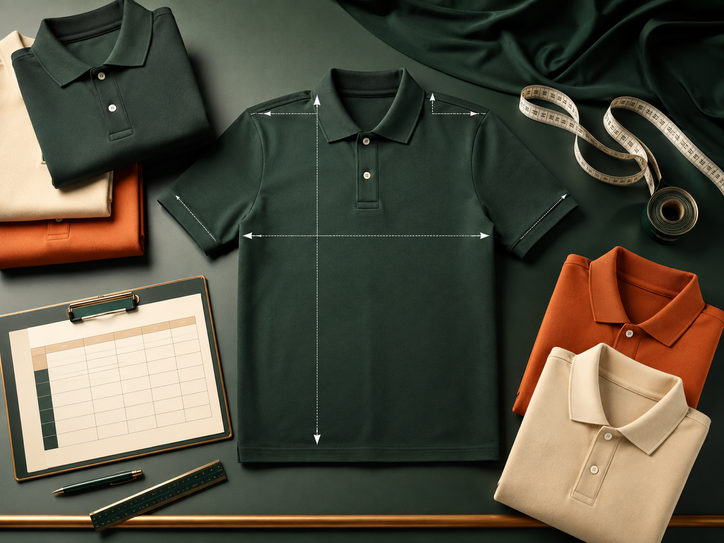
A good polo shirt should look neat without feeling restrictive. The shoulder seams should sit close to the natural shoulder edge, the chest should have enough room to move without pulling, and the hem should fall cleanly over the hips without looking excessively long or baggy.
Direct answer: A polo shirt should follow the shape of your upper body without clinging to it. The collar should sit flat, the shoulder seams should align near the ends of your shoulders, the button placket should not gape, and the sleeves should allow comfortable arm movement. Around the waist and hips, the fabric should fall smoothly rather than stretching across the body or hanging like an oversized T-shirt. Always compare your body or garment measurements with the brand's size chart because polo cuts vary between models.
Check the Shoulders
The shoulder seams should sit near your natural shoulder edge instead of dropping far down the arm or pulling inward.
Check the Chest
You should be able to move, reach and sit comfortably without the fabric pulling or the button placket opening.
Check the Length
The hem should cover the waistband cleanly and stay balanced whether the polo is worn untucked or tucked for work.
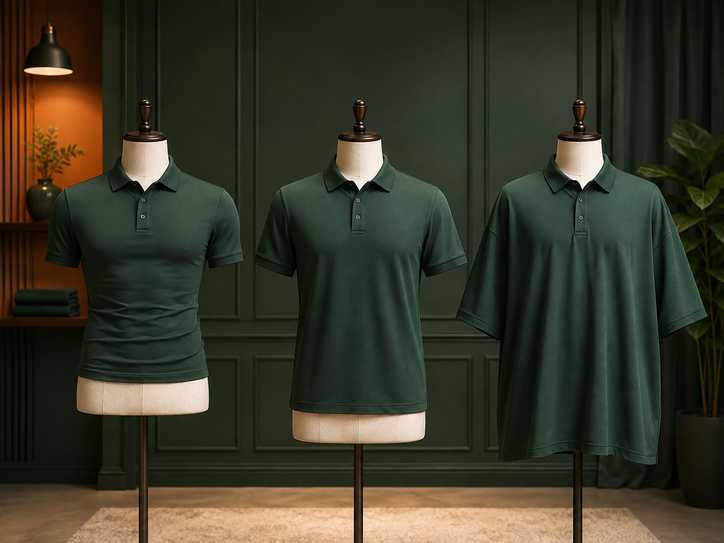
Quick comparison
Correct Fit vs Too Tight vs Too Loose
| Fit area | Good fit | Too tight | Too loose |
|---|---|---|---|
| Shoulders | Seams sit near the shoulder edge | Seams pull inward toward the neck | Seams drop well onto the upper arm |
| Chest | Fabric falls smoothly with room to move | Buttons or placket pull and fabric stretches | Large folds of excess fabric around the torso |
| Sleeves | Comfortable around the upper arm | Restricts movement or grips the bicep | Looks wide, long or floppy |
| Waist | Clean shape without clinging | Fabric stretches across the stomach | Body shape disappears inside excess fabric |
| Length | Covers the waistband and stays balanced | Rides up easily when reaching | Extends too far down and can look untidy |
Best rule: judge the whole shirt, not just the chest. A polo can feel acceptable around the body but still look wrong if the shoulders, sleeves or overall length are off.

Polo shirt options
Different Polo Cuts Fit Differently
No single fit is correct for every wearer or purpose. Uniform buyers should choose the cut based on comfort, movement, appearance and how consistently it can fit a group.
Regular-Fit Polo
A practical choice for company uniforms and events because it normally gives more room through the chest and waist. It is easier to fit across a team with different body shapes.
Slim-Fit Polo
Designed to sit closer to the body with less excess fabric. It can look sharper, but the correct size is important so the placket and armholes do not pull.
Quick-Dry Sports Polo
Often cut for movement and made from lighter polyester. A comfortable sports fit should allow reaching and arm movement without the shoulders or sleeves binding.
Women's Polo Cut
Some models use different shaping through the shoulders, bust, waist and hips. Compare the specific women's size chart instead of assuming the same size as a unisex polo.
Do Not Order by S, M or L Alone
Size labels are not standard across every brand. A Medium in one polo model can fit differently from a Medium in another, so check the actual garment measurements before bulk ordering.
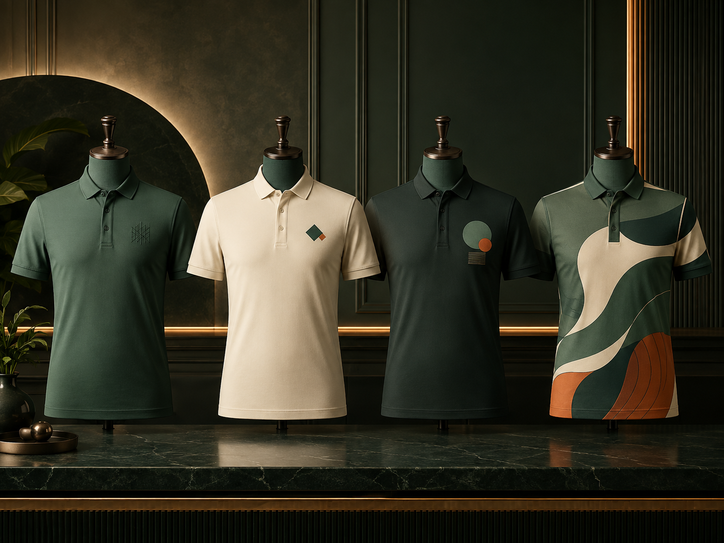
Printing and branding
Why Polo Fit Matters for Logo Placement
Left-Chest Embroidery
Embroidery is common on corporate polos. A correctly fitted chest keeps the logo sitting flat and helps prevent the fabric from stretching or folding around dense stitching.
Silkscreen Printing
Silkscreen works well for larger logos or event graphics. Excessively tight fabric can distort a print when worn, while an oversized shirt can cause the artwork to fold into loose fabric.
DTF Transfers
DTF is useful for detailed multicolour logos. The shirt should have enough ease so the transfer is not constantly stretched across the chest or back during normal movement.
Sublimation Sports Polos
Sublimation can cover large areas of polyester fabric. Choose a cut that allows the full design to sit naturally on the body without excessive wrinkling or tension.
For uniforms: confirm the polo model and size range before finalising logo size and placement. A sample fitting can help prevent artwork from looking too large or too small across different garment sizes.
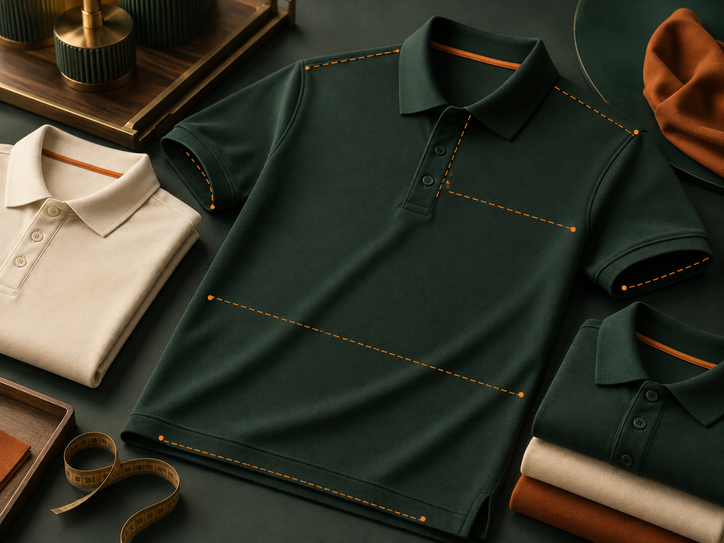
Fabric and design
How Fabric Changes the Way a Polo Fits
Cotton Pique
Cotton pique usually has more body and texture. It can give a structured corporate look, but the wearer still needs enough room for movement and possible natural shrinkage according to the care instructions.
Polyester Quick-Dry
Polyester polos are often lighter and smoother. They can drape closer to the body, so check that the chest and stomach areas do not look stretched or clingy.
Cotton-Poly Blend
Blends can balance structure, comfort and easier care. The exact fit still depends on the knit, weight and pattern used by the manufacturer.
Stretch Fabric
Stretch can improve movement, but it should not be used to compensate for a polo that is fundamentally too small. Constant tension may make the garment look tight.
Light Colours
Light colours can make pulling, wrinkles and transparency more noticeable. A slightly cleaner, less clingy fit may look more professional for uniforms.
Dark Colours
Dark polos can visually look slimmer, but sizing should still be based on measurements rather than appearance alone.
| Use case | Suggested fit direction | Why |
|---|---|---|
| Office uniform | Regular or neat semi-fitted | Professional appearance with comfortable all-day wear |
| Sales and retail staff | Clean regular fit | Easy movement while keeping a tidy customer-facing look |
| Outdoor event | Slightly relaxed performance fit | Better comfort during heat and movement |
| Sports or active team | Movement-friendly quick-dry fit | Reduces restriction during activity |
| Promotional giveaway | Regular unisex fit | Easier to cover a broad range of wearers |
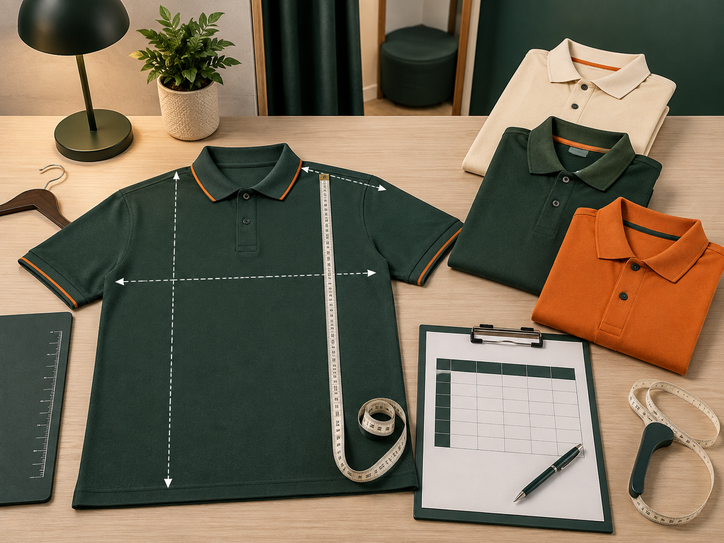
Step-by-step sizing
How to Choose the Right Polo Shirt Size
Choose the Exact Polo Model
Do not measure first and choose the brand later. Different models use different cuts, fabrics and size charts.
Measure a Polo That Already Fits Well
Lay a comfortable polo flat and compare its chest, shoulder and length measurements with the supplier's chart.
Check the Shoulder Position
Make sure the new size will not pull inward at the shoulder or drop excessively down the arm.
Allow for Movement
Consider reaching, driving, lifting, sitting and other tasks the wearer performs during work or events.
Check Tucked and Untucked Length
If the uniform will be tucked in, confirm there is enough length to stay secure. If worn untucked, make sure it does not look excessively long.
Sample Before a Large Order
For company or team uniforms, try sample sizes on several body types before confirming the final size breakdown.
Common buyer scenarios
Which Polo Fit Works for Different Groups?
Office and Management Team
Choose a neat regular or semi-fitted polo that sits cleanly under a jacket and remains comfortable through a full workday.
Sales and Frontline Staff
A consistent regular fit usually works well because staff need to move, bend and reach while still looking presentable.
Large Event Crew
Regular unisex sizing can simplify distribution. Order a broad size range and use the model's actual measurement chart for allocation.
Outdoor and Sports Teams
Prioritise shoulder and arm movement. A performance polo should not pull across the back or ride up when the wearer raises their arms.
Quick checklist
Polo Shirt Fit Checklist
A Good Polo Fit Should
- Have shoulder seams close to the natural shoulder edge
- Let the collar sit flat without pulling
- Keep the button placket smooth instead of gaping
- Allow comfortable movement through the chest and back
- Give the sleeves room without looking excessively wide
- Cover the waistband and remain balanced at the hem
Common Fit Problems
- Shoulder seams dropping too far down the arm
- Buttons pulling apart across the chest
- Sleeves gripping tightly around the upper arm
- Fabric stretching across the stomach or back
- Large folds of excess fabric at the sides
- Hem riding up or hanging much too low
Frequently asked questions
Polo Shirt Sizing FAQ
Should a polo shirt be tight or loose?
Neither extreme is ideal for most uniforms. A polo should follow the body comfortably without pulling, while avoiding large amounts of loose fabric around the chest and waist.
Where should the shoulder seam sit on a polo?
It should generally sit close to the natural edge of the shoulder. If it drops far onto the upper arm, the shirt may be too large; if it pulls inward, it may be too small.
How long should a polo shirt be?
The hem should comfortably cover the waistband. The correct length also depends on whether the polo is designed to be tucked, untucked or used as a work uniform.
How should polo sleeves fit?
Sleeves should allow free arm movement without gripping tightly. Sleeve length varies by design, so comfort and proportion are more useful than one fixed measurement.
Should I size up for a polo shirt?
Only if the current size pulls or restricts movement. Check the model's actual measurements first because sizing up can also make the shoulders and length too large.
Do cotton and polyester polos fit the same?
Not necessarily. Fabric weight, knit structure, stretch and garment pattern all affect how a polo sits on the body even when the size label is the same.
What is the best polo fit for company uniforms?
A regular or neat semi-fitted cut is usually practical because it balances professional appearance with movement and makes it easier to fit a wider range of staff.
How do I choose sizes for a bulk polo order?
Select the exact polo model, use its size chart, compare with a well-fitting sample garment and let staff try sample sizes where possible before confirming the quantity by size.
Plan your polo shirt order
Need Polo Shirts for Your Company or Event?
Uniform Penang can help you compare polo shirt cuts, fabrics, size ranges and logo application methods for corporate uniforms, events, schools, clubs and active teams.
Useful Uniform Penang resources
More Uniform and T-Shirt Information
Polo Shirt vs Round Neck T-Shirt
Compare two common uniform styles for work, events and casual teams.
Open article →Why Do Clothes Shrink After Washing?
Learn how heat, fibre type and washing conditions can affect garment dimensions.
Open article →What Temperature Should You Wash Clothes At?
Choose a suitable washing temperature for fabric, colour and soil level.
Open article →Common T-Shirt Washing Mistakes
Avoid common washing habits that can affect fit, colour and garment life.
Open article →Pros and Cons of Silkscreen Printing
Understand where silkscreen works well for uniform and event apparel.
Open article →Contact Uniform Penang
Share your preferred polo, quantity, sizes, logo and required date.
Go to contact →Our other company websites
Regional Apparel and Printing Support
JC Print Malaysia
Regional apparel and printing support.
Visit website →Selangor Print
Regional apparel and printing support.
Visit website →Uniform Johor
Regional apparel and printing support.
Visit website →Uniform Sabah
Regional apparel and printing support.
Visit website →Uniform Singapore
Regional apparel and printing support.
Visit website →Uniform Hub SG
Regional apparel and printing support.
Visit website →Tanah Studio
Regional apparel and printing support.
Visit website →KitaPrint
Regional apparel and printing support.
Visit website →Product ranges, stock, colours, delivery coverage and service arrangements may vary by region.