
Laundry & Fabric Care
How to Remove Grease Stains From T-Shirts
Cooking oil, butter, sauces, automotive grease and other oily marks can cling to T-shirt fibres even after a normal wash. The key is to remove excess grease, pre-treat the oily area and keep the shirt away from dryer heat until the stain is completely gone.
Direct answer: Gently scrape or blot away excess grease without spreading it. Apply a small amount of liquid laundry detergent, a laundry stain remover, or a mild grease-cutting dishwashing liquid that is safe for the fabric. Work it gently into the stained area, allow it to sit according to the product directions, then wash at the warmest temperature permitted by the care label. Check the stain before drying and repeat the treatment if needed. Do not tumble-dry or iron the shirt while any oily mark remains.
Remove Excess Grease
Blot or lift away as much oil as possible before adding water or detergent so the stain does not spread further.
Pre-Treat the Oil
Grease usually needs direct pre-treatment because a normal wash alone may not break down the oily residue.
Check Before Drying
Dryer heat can make a remaining grease mark much harder to remove, so inspect the shirt while it is still damp.
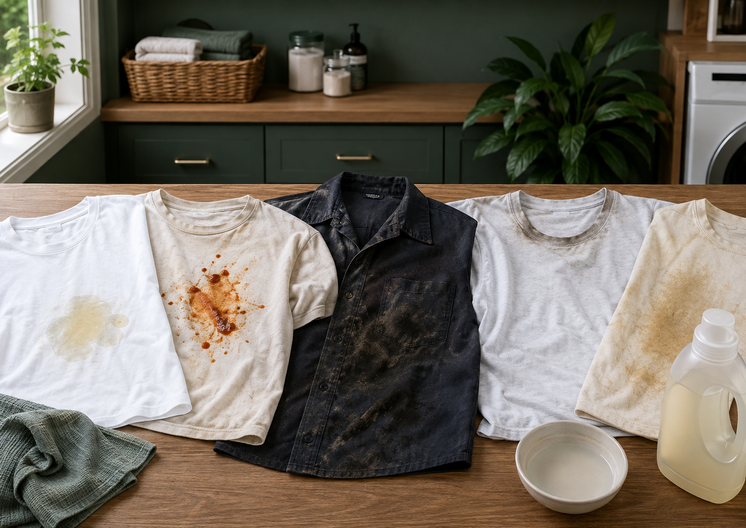
Quick comparison
Best First Step for Different Grease Stains
| Grease stain | Typical situation | Recommended first step |
|---|---|---|
| Fresh cooking oil | Oil splatter from frying or food preparation | Blot excess oil, then pre-treat with liquid detergent or a fabric-safe grease-cutting cleaner |
| Butter or oily sauce | Food spill with both oil and coloured ingredients | Lift away solids first, then treat the oily residue before washing |
| Old grease stain | Mark has already been washed or dried | Pre-treat again and allow more treatment time; several gentle cycles may be needed |
| Automotive or machine grease | Dark, heavy oily residue from tools or equipment | Remove excess carefully and use a laundry product designed for oily stains; avoid flammable solvents |
| Polyester sports shirt | Oil or body-oil residue on synthetic fabric | Use a detergent suitable for synthetics and wash promptly to reduce oily buildup |
| Printed or embroidered T-shirt | Grease is close to a logo or transfer | Keep strong treatment and aggressive rubbing away from the decorated area |
Useful clue: A grease stain may look darker when wet and can seem to disappear temporarily. Check the shirt again after washing and before using heat. If the darker patch is still visible, treat it again.
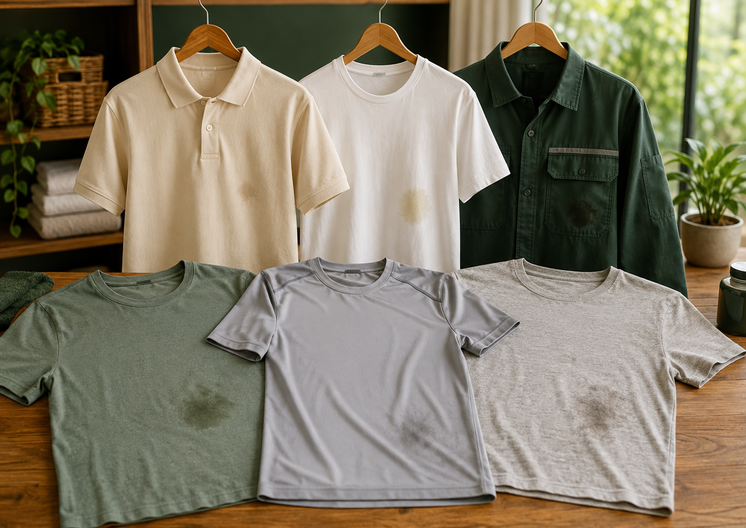
Fabric differences
How Fabric Type Changes Grease Stain Removal
100% Cotton T-Shirts
Cotton can absorb oil deeply into the fibres. Gentle pre-treatment with liquid laundry detergent is usually a practical first step, but wash temperature and drying should still follow the care label to reduce shrinkage or colour damage.
Polyester Quick-Dry T-Shirts
Polyester can attract and hold oily soil even though it dries quickly. Prompt treatment and a detergent suitable for synthetic sportswear are helpful, while unnecessary high heat should be avoided.
Cotton-Polyester Blends
Blended shirts may respond differently from pure cotton. Use a moderate treatment, spot-test stronger products and follow the care label rather than assuming the garment can tolerate hot water or bleach.
Sports and Work Shirts
Uniforms and performance shirts may collect cooking grease, machinery oil, sunscreen and body oils. Treat oily marks soon after wear and avoid storing dirty garments in a warm, closed bag.
Use the Gentlest Effective Treatment
Fibre content, colour, finishes and decoration all matter. Always read the garment label and the stain-removal product instructions, and test unfamiliar products on a hidden area first.
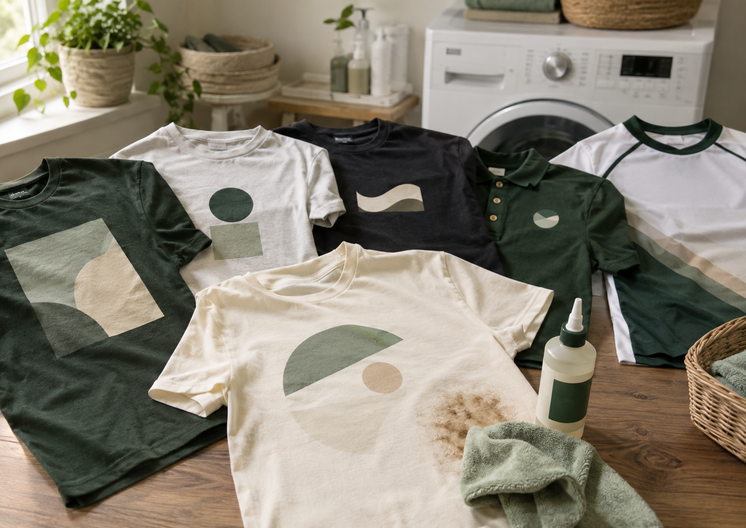
Printing and branding
Removing Grease From Printed and Branded Shirts
Silkscreen Printing
Pre-treat the stained fabric without scrubbing directly across the print. Wash the shirt inside out when appropriate and avoid strong heat that can affect both the stain and the printed surface.
DTF Transfers
DTF sits on the garment surface. Apply stain treatment to the fabric rather than saturating the transfer, and avoid brushes, twisting or harsh rubbing over the design.
Sublimation Printing
Sublimated shirts are commonly polyester. Use a synthetic-safe detergent and avoid aggressive chemical treatment or excessive heat even though the design itself is integrated into the fibres.
Embroidery
Treat the greasy fabric carefully without soaking the embroidered logo more than necessary. Rinse well and allow thicker stitched areas to dry fully before storage.
Avoid Dangerous Solvents
Do not use petrol, gasoline, kerosene or other flammable solvents to remove grease from clothing. Use laundry products intended for garments, follow their safety directions and keep stain-treatment products away from children and ignition sources.
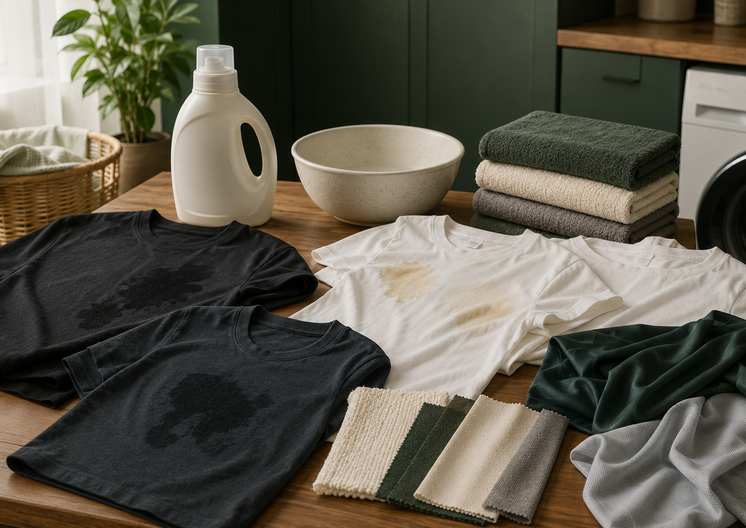
Identify the stain first
Common Grease Stains and What to Watch For
Cooking Oil
Usually leaves a translucent or darker patch. Blot quickly and pre-treat before the oil has time to spread through the fibres.
Butter and Margarine
These combine fat with food residue. Scrape away excess gently before treating the oily mark that remains.
Oily Sauces
Curry, gravy, chilli oil and dressings may contain both grease and coloured pigments, so more than one gentle treatment may be needed.
Machine Grease
Heavy dark grease can contain dirt and metal residue. Remove excess first and use a garment-safe oily-stain treatment rather than household fuel or solvent.
Body Oil and Sunscreen
These can create dull oily areas around collars and sportswear. Regular washing and pre-treatment help prevent buildup.
Heat-Set Stains
A stain that has been tumble-dried may be harder to remove. Repeated gentle pre-treatment is safer than immediately using stronger chemicals.
White and Light T-Shirts
Grease may show as a yellow, grey or translucent patch. Treat the oil first before considering any whitening product, and only use bleach if the care label permits it.
Dark and Coloured T-Shirts
Oil can deepen the fabric colour around the stain. Choose a colour-safe treatment and spot-test to reduce the risk of fading.
Prevention helps: Wear an apron or protective outer layer for cooking, workshop and maintenance work. Treat accidental spills before they go through a full wash-and-dry cycle.
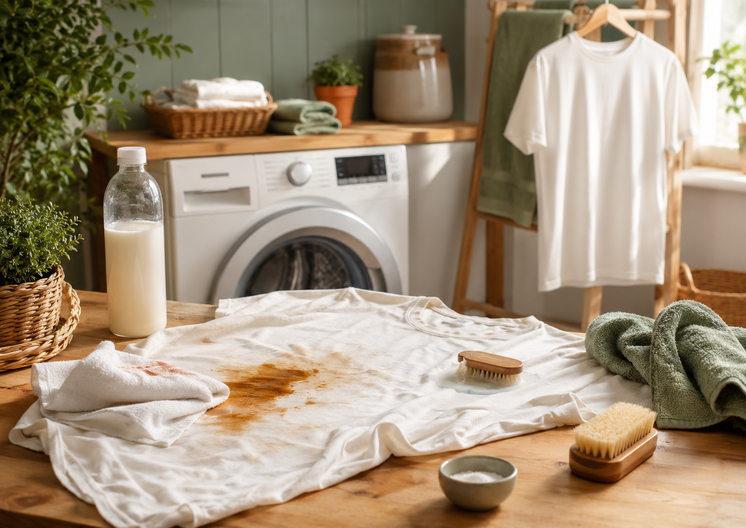
Step-by-step stain removal
How to Remove Grease Stains Step by Step
Check the Care Label
Confirm the fabric type, permitted wash temperature and any restrictions on bleach, soaking, stain removers or tumble drying.
Lift Away Excess Grease
Use a spoon, dull edge or clean absorbent cloth to remove surface oil or food residue. Blot rather than rubbing the stain outward.
Apply a Grease-Cutting Pre-Treatment
Use liquid laundry detergent, a suitable stain remover or a small amount of mild dishwashing liquid that is safe for the garment. Keep treatment away from sensitive prints when possible.
Allow Time to Work
Leave the treatment on for the time stated on the product label. Older stains may need another treatment instead of aggressive scrubbing.
Wash According to the Label
Wash at the warmest temperature permitted by the garment using the correct amount of detergent and enough space for thorough rinsing.
Inspect Before Drying
Check the stained area while the shirt is still damp. If any oily shadow remains, repeat the treatment and avoid tumble drying or ironing until it is gone.
Common situations
Grease Stains on Work, Food and Event Shirts
Kitchen and Restaurant Shirts
Cooking oil and sauces are common. Pre-treat stains after the shift and avoid letting greasy uniforms sit for several days before washing.
Maintenance and Mechanical Work
Machine grease may be heavier and dirtier than food oil. Remove excess carefully and use a laundry treatment intended for oily workwear stains.
Quick-Dry and Training Shirts
Sunscreen, body oil and food can leave oily patches on polyester. Wash soon after wear and avoid unnecessary high dryer heat.
Printed T-Shirts After Events
Check for food spills before storing the shirt. Cleaning the stain before long-term storage reduces the chance of an old oily mark becoming difficult to remove.

Quick checklist
Do's and Don'ts for Grease Stains
Do
- Check the care label before treatment
- Blot or lift away fresh grease quickly
- Pre-treat oily stains before washing
- Use products designed for laundry or fabric care
- Spot-test stronger treatments on coloured shirts
- Check the stain before tumble drying or ironing
Avoid
- Rubbing fresh oil across a larger area
- Scrubbing DTF or silkscreen prints aggressively
- Using chlorine bleach as the first solution for grease
- Drying a visible oily mark on high heat
- Using petrol, gasoline or other flammable solvents
- Mixing household cleaning chemicals together
Frequently asked questions
Grease Stain Removal FAQ
What is the fastest way to remove a fresh grease stain?
Blot or lift away excess grease first, then apply a suitable liquid laundry detergent or stain remover directly to the oily area. Wash according to the care label and check the stain before drying.
Can dishwashing liquid remove grease from a T-shirt?
A small amount of mild hand-dishwashing liquid can help break down food grease on some washable fabrics. Spot-test first, use only a small amount and rinse or wash thoroughly. Do not use automatic dishwasher detergent on clothing.
Can I remove a grease stain after the shirt has been dried?
Sometimes, but heat-set stains are usually harder to remove. Reapply a suitable pre-treatment, allow enough time to work and repeat the wash if necessary before using dryer heat again.
Should I use hot water on a grease stain?
Use only the warmest water temperature permitted by the garment care label. Hotter is not always better because excessive heat can shrink fabric, fade colour or affect printed decoration.
Can bleach remove grease stains?
Bleach is not the first choice for oily residue because it does not replace grease-cutting pre-treatment. Chlorine bleach can also damage colours, fibres and prints. Use it only when the garment label and bleach product both permit it.
How do I remove grease from a black or coloured T-shirt?
Use a colour-safe laundry pre-treatment, spot-test it on a hidden area and avoid chlorine bleach. Check the garment after washing before applying any heat.
Is grease harder to remove from polyester?
Polyester can hold oily soils strongly. Prompt treatment with a detergent suitable for synthetics and avoiding high heat until the mark is gone can improve the result.
How can I remove grease without damaging a printed logo?
Treat the fabric around the stain gently, keep concentrated chemicals away from the print where possible, avoid brushes or hard rubbing over the decoration and follow the printer's washing instructions.
Choose practical shirts for repeated wear
Need T-Shirts for Work, Sports or Events?
Uniform Penang can help you compare cotton, polyester and blended T-shirts together with suitable printing methods for company uniforms, F&B teams, schools, sports teams, events and group orders.
Useful Uniform Penang resources
More T-Shirt Washing and Care Information
How to Remove Deodorant Stains From Shirts
Learn how to deal with white marks, yellow underarm stains and product buildup.
Open article →Common T-Shirt Washing Mistakes
See the everyday habits that can affect fabric, fit, colour and decoration.
Open article →How to Wash White T-Shirts
Use a simple routine to reduce dullness, staining and colour transfer.
Open article →Can You Use Bleach on T-Shirts?
Learn when bleach may be suitable and when it may damage a garment.
Open article →Why Do Clothes Smell After Washing?
Find common causes of musty or sweaty smells that remain after laundry.
Open article →Contact Uniform Penang
Share your fabric, colour, quantity, artwork and required date.
Go to contact →Our other company websites
Regional Apparel and Printing Support
JC Print Malaysia
Regional apparel and printing support.
Visit website →Selangor Print
Regional apparel and printing support.
Visit website →Uniform Johor
Regional apparel and printing support.
Visit website →Uniform Sabah
Regional apparel and printing support.
Visit website →Uniform Singapore
Regional apparel and printing support.
Visit website →Uniform Hub SG
Regional apparel and printing support.
Visit website →Tanah Studio
Regional apparel and printing support.
Visit website →KitaPrint
Regional apparel and printing support.
Visit website →Product ranges, stock, colours, delivery coverage and service arrangements may vary by region.