
Laundry & Fabric Care
Why Do Clothes Smell After Washing?
Freshly washed clothes can still smell musty, sour or sweaty when odour-causing residues are not fully removed, laundry stays damp too long, the washing machine needs cleaning, or detergent and softener build up in the fabric. The fix usually starts with better washing, faster drying and a cleaner machine.
Direct answer: Clothes often smell after washing because sweat, body oils, detergent residue or microbes remain in the fabric, or because clean laundry stays damp long enough for musty odours to develop. Overloading the washer, using too much detergent, leaving clothes in the drum, slow indoor drying and a dirty washing machine can all make the problem worse.
Residue Can Stay Behind
Sweat, skin oils, detergent and softener can remain when the load is too large or the wash routine is not suitable.
Damp Clothes Smell Faster
Leaving wet laundry in the washer or drying it slowly in poor airflow can create a stale or musty smell.
The Washer Matters Too
Residue around the drum, gasket, detergent drawer or filter can transfer unpleasant odours back to clean clothes.
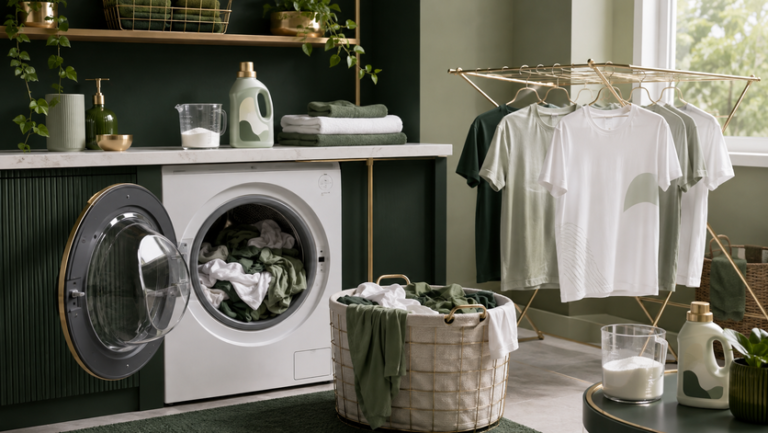
Quick comparison
Common Reasons Clothes Smell After Washing
| Possible cause | What you may notice | What to try |
|---|---|---|
| Wet laundry left in the washer | Musty or sour smell soon after washing | Remove the load promptly and dry it with good airflow |
| Washer overloaded | Sweaty areas still smell; detergent may not rinse well | Use a smaller load so clothes can move freely |
| Too much detergent | Heavy fragrance at first, then stale smell after drying or wearing | Measure detergent for the load size and water conditions |
| Fabric softener buildup | Fabric feels coated and odour returns quickly | Reduce or skip softener when the garment care allows |
| Dirty washing machine | Several different loads develop the same musty smell | Clean the machine using the manufacturer's instructions |
| Slow indoor drying | Clothes smell fine wet but musty when almost dry | Improve ventilation, spacing and drying speed |
| Heavy sweat or oily soil | Underarms, collars or sportswear keep a lingering odour | Pre-treat problem areas with a product suitable for the fabric |
Useful clue: If every load has the same musty smell, check the washing machine and drying area. If only certain shirts smell, the issue is more likely to be trapped sweat, oils, fabric buildup or a garment-specific care problem.

Fabric differences
Why Some T-Shirts Hold Odour More Easily
100% Cotton T-Shirts
Cotton absorbs moisture readily. It can feel comfortable for everyday wear, but a thick cotton shirt that stays damp for a long time may develop a stale smell if it is not dried thoroughly.
Polyester Quick-Dry T-Shirts
Polyester dries quickly, which is useful for sports and outdoor work. However, oily body soils can cling to synthetic fibres, so sports shirts may need prompt washing and careful rinsing when odour keeps returning.
Cotton-Polyester Blends
Blended T-shirts combine properties of both fibres. Their drying speed and odour retention depend on the fibre ratio, fabric construction and how heavily the shirt is used.
Performance and Team Shirts
Sportswear is exposed to more sweat and body oils than many casual shirts. Washing soon after use, avoiding a packed laundry basket and drying completely can make a noticeable difference.
Fabric Type Is Only Part of the Story
A shirt that smells after washing is not automatically made from a poor fabric. Detergent dosage, load size, machine condition, drying time, repeated sweat exposure and storage all influence how fresh a garment stays.

Printing and branding
How to Wash Branded T-Shirts Without Damaging Them
Silkscreen Printing
Turn the shirt inside out and follow the garment and print supplier's care instructions. Avoid using extra heat just because the shirt smells, because repeated high heat can stress both the fabric and print.
DTF Transfers
DTF decoration sits on the shirt surface. Use a suitable wash cycle, avoid aggressive scrubbing directly on the transfer and dry according to the recommended care instructions.
Sublimation Printing
Sublimation is commonly used on polyester sportswear. The design is integrated with the polyester surface, but the shirt still benefits from prompt washing, good rinsing and complete drying after sweaty use.
Embroidery
Pay attention to collars, underarms and areas near thick embroidery where moisture can take longer to evaporate. Make sure the entire garment is dry before folding or storing it.
Do Not Use Harsh Cleaning Methods by Default
If a printed or embroidered shirt smells, start with the care label and a proper wash routine. Strong bleach, very hot water, aggressive scrubbing or direct high heat may damage colours, fibres or decoration and may not solve the underlying cause.

Where the smell comes from
Five Places to Check When Clean Clothes Still Smell
The Fabric
Sweat, skin oils and previous detergent buildup may remain in the fibres, especially around underarms, collars and sportswear contact areas.
The Washer
Residue can collect in the detergent drawer, rubber gasket, drum and filter. A machine that smells musty can make clean laundry smell musty too.
The Wash Load
Clothes need room to move. A tightly packed drum can reduce cleaning and rinsing performance.
The Drying Area
Low airflow and crowded drying racks keep clothes damp longer, giving stale or musty odours more time to develop.
The Storage Area
Even clean laundry can pick up odour when it is folded before fully dry or stored in a humid cupboard with poor ventilation.
The Detergent Routine
More detergent is not always better. Excess product can be difficult to rinse out and may trap soils or leave a coating over time.
Musty Smell
Often points to dampness, slow drying, storage humidity or a washing machine that needs cleaning.
Sweaty or Sour Smell
Often points to body soils that were not fully removed, particularly in sportswear, work shirts, collars and underarm areas.
Colour is not the main reason clothes smell. White, black and coloured T-shirts can all develop odour. Fabric, sweat exposure, washing, drying and storage conditions are more important.
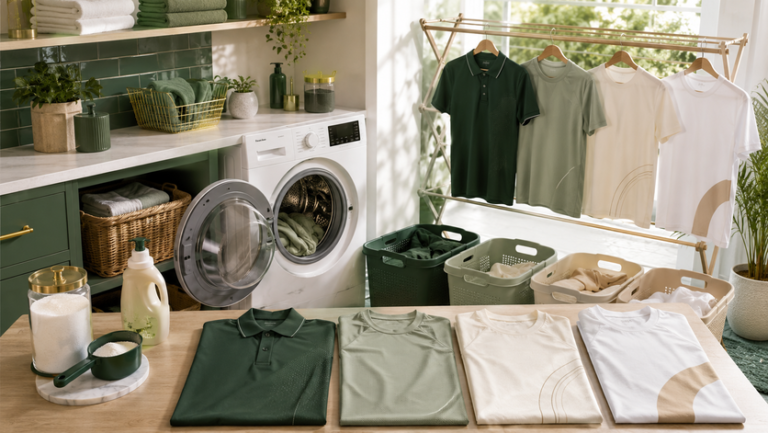
Practical care steps
What to Do When Clothes Smell After Washing
Rewash Promptly
Do not hide a musty smell with fragrance. Rewash the garment using the care-label instructions and a correctly sized load.
Measure Detergent
Use the detergent amount recommended for your load size and water conditions rather than automatically adding extra.
Give Clothes Space
Avoid packing the washer too tightly so water and detergent can circulate and rinse through the garments.
Dry Immediately
Move wet clothes out of the washer as soon as possible and dry them with enough airflow until they are fully dry.
Clean the Washer
If many loads smell, clean the detergent drawer, gasket, filter and machine according to the manufacturer's maintenance instructions.
Pre-Treat Heavy Soil
For collars, underarms or sportswear, use a pre-treatment that is suitable for the fabric and decoration before washing.
Common situations
Odour Problems in Work, Sports and Event Shirts
Work Shirts Worn All Day
Long shifts create sweat and body-oil buildup around the collar, chest and underarms. Wash uniforms regularly and avoid leaving damp shirts in bags after work.
Quick-Dry Shirts After Training
Do not leave sweaty polyester shirts rolled up in a gym bag. Air them out or wash them soon after use, then dry completely.
Shirts Stored Before Fully Dry
Large batches can be folded too early. Check seams, collars and thicker areas before packing shirts into cupboards, boxes or class sets.
Bulk Laundry After an Event
Split very large loads instead of overfilling the washer. This helps cleaning, rinsing and drying stay more consistent across the whole batch.
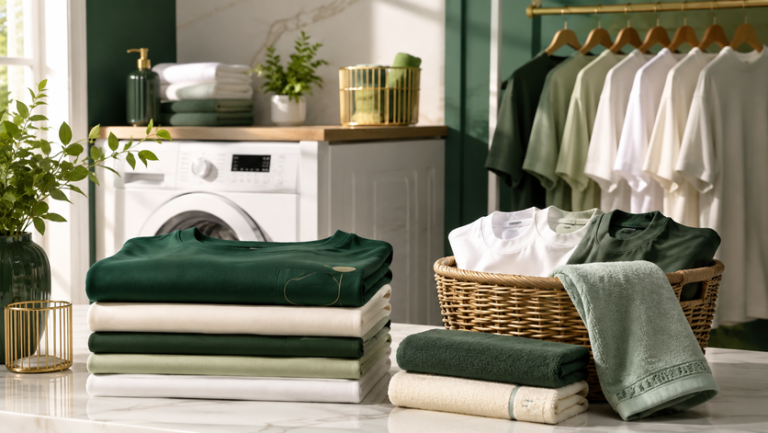
Quick checklist
Do's and Don'ts for Fresher T-Shirts
Do
- Remove wet laundry from the washer promptly
- Measure detergent for the actual load
- Leave enough space for clothes to move
- Dry every part of the shirt completely
- Clean the washing machine regularly
- Wash sweaty sportswear soon after use
Avoid
- Leaving wet shirts overnight in the drum
- Overloading the washing machine
- Using extra detergent to cover an odour
- Folding clothes while they are still damp
- Storing sweaty shirts in a closed bag for long periods
- Using harsh bleach or high heat without checking the care label
Frequently asked questions
Clothes Smell After Washing FAQ
Why do clothes smell musty even after washing?
Musty odour often develops when laundry stays damp too long, dries slowly, is stored before fully dry or is washed in a machine with residue buildup.
Why do my shirts smell fine after washing but smell again when I wear them?
Body oils, sweat residue or product buildup may still be trapped in the fabric. Heat and moisture from your body can make the lingering odour noticeable again.
Can too much detergent make clothes smell?
Yes. Excess detergent can be difficult to rinse away and may leave residue that traps soil or makes the fabric feel coated. Follow the detergent dosage for the load and water conditions.
Why does polyester sportswear keep smelling?
Polyester dries quickly but oily body soils can cling to synthetic fibres. Prompt washing, suitable pre-treatment, correct detergent dosage and thorough rinsing can help.
Should I wash smelly clothes in very hot water?
Not automatically. Use the temperature allowed by the garment's care label. Excessive heat can shrink some fabrics, set certain stains or damage prints and trims.
Does fabric softener remove bad smells?
Fragrance may temporarily mask an odour, but it does not replace proper cleaning. Heavy softener use can also leave a coating on some fabrics, so use it only when suitable for the garment.
How do I know if the washing machine is the problem?
If different types of laundry develop the same musty smell, inspect and clean the machine's drawer, gasket, filter and drum according to the manufacturer's instructions.
Can I store shirts as soon as they feel dry?
Check thicker areas such as collars, seams and embroidered sections. If any part is still damp, allow more drying time before folding or storing the garment.
Choose practical shirts for repeated wear
Need T-Shirts for Work, Sports or Events?
Uniform Penang can help you compare cotton, polyester and blended T-shirts together with suitable printing methods for company uniforms, schools, sports teams, events and group orders.
Useful Uniform Penang resources
More T-Shirt Washing and Care Information
Common T-Shirt Washing Mistakes
See the everyday habits that can affect fabric, fit, colour and decoration.
Open article →Why Do Clothes Shrink After Washing?
Learn how fibre type, heat and drying can change garment dimensions.
Open article →How to Wash White T-Shirts
Use a simple routine to reduce dullness, staining and colour transfer.
Open article →Can You Use Bleach on T-Shirts?
Learn when bleach may be suitable and when it may damage a garment.
Open article →DTF Printing
Explore colourful logo printing for company and event T-shirts.
Explore DTF →Contact Uniform Penang
Share your fabric, colour, quantity, artwork and required date.
Go to contact →Our other company websites
Regional Apparel and Printing Support
JC Print Malaysia
Regional apparel and printing support.
Visit website →Selangor Print
Regional apparel and printing support.
Visit website →Uniform Johor
Regional apparel and printing support.
Visit website →Uniform Sabah
Regional apparel and printing support.
Visit website →Uniform Singapore
Regional apparel and printing support.
Visit website →Uniform Hub SG
Regional apparel and printing support.
Visit website →Tanah Studio
Regional apparel and printing support.
Visit website →KitaPrint
Regional apparel and printing support.
Visit website →Product ranges, stock, colours, delivery coverage and service arrangements may vary by region.