Embroidery in Penang
Pros and Cons of Embroidery for Custom Shirts
Embroidery creates a stitched logo directly on the garment. It is not technically a printing method, but it is one of the most popular customisation choices for polos, jackets, caps, aprons and selected T-shirts.
Direct answer: Embroidery is best when you want a premium, durable and professional-looking logo. It works especially well for small chest logos, names and compact branding on polos, jackets, caps and thicker fabrics. Its disadvantages are higher cost for large stitch areas, limited detail in very small artwork, extra weight on thin fabric and the possibility of puckering when the garment, backing or stitch density is unsuitable.
Premium Appearance
Thread gives logos a raised and textured finish.
Strong Durability
Suitable embroidery can remain presentable through repeated wear.
Best for Compact Logos
Small chest logos and names usually give the cleanest result.

Quick comparison
Embroidery Advantages and Disadvantages
| Area | Advantages | Disadvantages |
|---|---|---|
| Appearance | Premium, textured and professional | May look too formal for casual graphic designs |
| Durability | Thread can last well with suitable care | Loose threads can occur if the design or garment is unsuitable |
| Artwork detail | Excellent for bold logos and simple lettering | Very small text and fine gradients are difficult |
| Fabric suitability | Works well on polos, jackets, caps and thicker garments | Thin or stretchy fabric may pucker or distort |
| Cost | Good value for compact premium branding | Cost usually rises with stitch count and design size |
| Comfort | Small logos are usually comfortable | Large dense designs can feel heavy or stiff |
| Colour | Thread colours remain rich and visible | Exact colour matching can be limited by available thread shades |
Best use: Embroidery gives the strongest result when the logo is compact, the fabric is stable and the design is prepared specifically for stitching.

Suitable garment options
Which Shirts Work Best With Embroidery?
Polo Shirts
Honeycomb, pique and structured performance polos usually provide a stable surface for a left-chest logo.
Jackets and Windbreakers
Compact embroidery can create a premium appearance on the chest, sleeve or upper back.
Caps and Hats
Embroidery is a popular option for front logos, side details and simple wording.
Aprons
Small embroidered logos can give aprons a more finished and organised appearance.
Heavy Cotton T-Shirts
Medium or heavyweight cotton can support small embroidery more effectively than very thin fabric.
Lightweight Quick-Dry Shirts
Small logos may work, but thin performance fabric needs suitable backing and controlled stitch density.
Product selection rule: Choose the garment first, then approve the embroidery size. The same logo may need different stitch density and backing on a polo, jacket and lightweight shirt.
Method comparison
Embroidery vs Other Customisation Methods
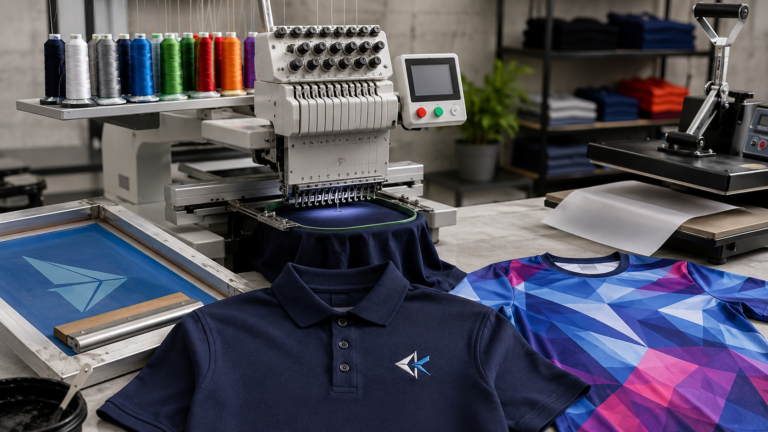
Best for Premium Small Logos
Use it for polos, jackets, caps, names and compact chest branding.
Best for Detailed Multicolour Artwork
Choose DTF for gradients, fine details, colourful graphics and larger design areas.
Best for Bold Bulk Designs
Choose silkscreen for larger quantities using simple repeated artwork.
Best for Full-Colour Polyester
Choose sublimation for jerseys, patterns and all-over compatible polyester designs.
Best for Names and Numbers
Choose heat transfer for personalisation that would be too large or complex to embroider.
Combine Embroidery and Printing
Use a small embroidered front logo with a larger printed back design when both premium branding and visual impact are needed.
Decision rule: Choose embroidery for texture and premium appearance. Choose printing when the artwork is large, highly detailed, photographic or gradient-heavy.
Artwork and design guide
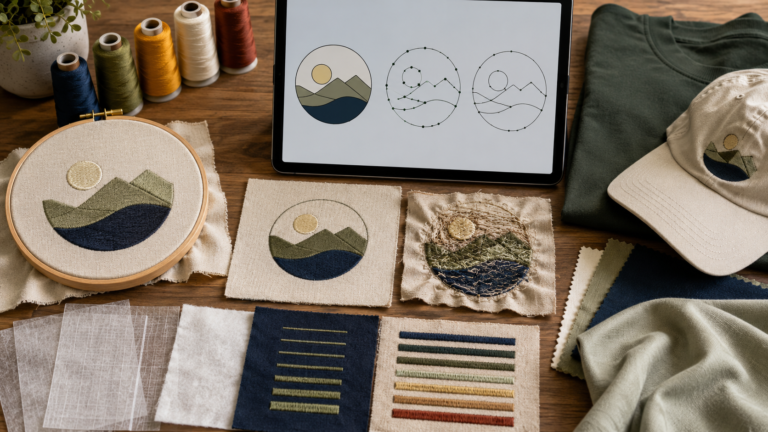
Six Factors That Affect Embroidery Quality
Logo Size
Very small logos can lose detail, while oversized embroidery becomes heavy and expensive.
Stitch Density
Too many stitches can stiffen or distort the fabric.
Thread Colour
Choose thread colours that remain visible against the garment.
Fabric Stability
Structured garments generally support embroidery better than thin stretchy fabric.
Backing Material
Suitable backing helps keep the logo stable and reduces puckering.
Digitised Artwork
The embroidery file must be prepared specifically for stitch direction, sequence and density.
Common Embroidery Mistakes
- Using very small text that cannot stitch clearly
- Choosing a large dense design for thin fabric
- Expecting photographic gradients to look like printing
- Using too many thread colours in a small logo
- Placing embroidery over seams, pockets or zips
- Ignoring backing and fabric stretch
- Approving artwork without a stitch-out sample
Ordering process
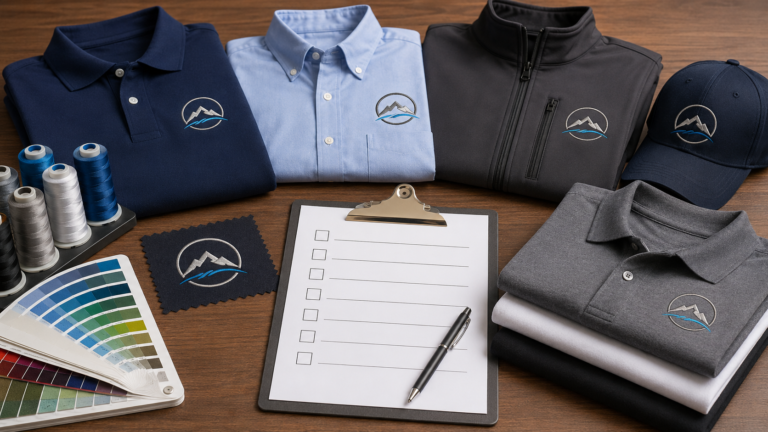
Order Embroidered Shirts Step by Step
Choose the Garment
Select the exact polo, jacket, cap, apron or shirt before approving the logo size.
Prepare the Artwork
Provide a clear vector logo or the best available original artwork.
Confirm Logo Size
Measure the actual width and height instead of estimating from a screen.
Choose Thread Colours
Select practical thread shades that contrast with the garment.
Approve a Stitch-Out
Review detail, thread, density and shape before bulk production.
Confirm Names and Sizes
Check every spelling, role, garment size and placement.
Store the Approved File
Keep the final embroidery reference for future repeat orders.
Buyer scenarios
When Embroidery Is the Better Choice
Use a Small Left-Chest Logo
Why: Embroidery gives polos a clean and professional finish.
Use Compact Name Embroidery
Why: Names remain neat and easy to identify when the font is suitable.
Choose DTF Instead
Why: Printing handles gradients, fine details and large artwork more efficiently.
Use Small Embroidery or Printing
Why: Large dense stitching can distort thin performance fabric.
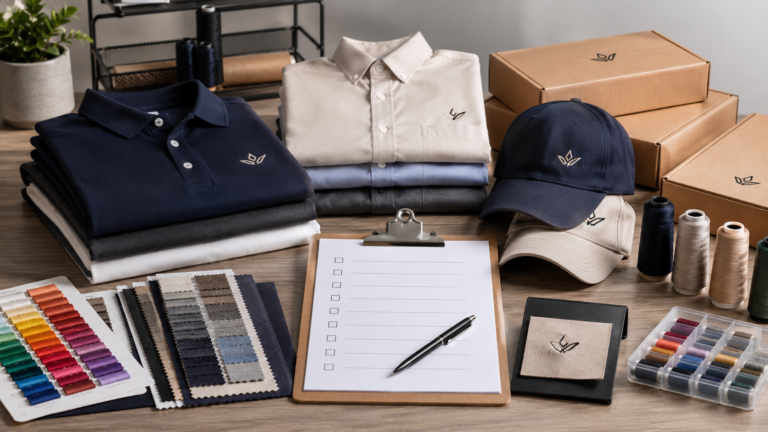
Buyer checklist
Information to Prepare Before Ordering
- Exact garment model
- Garment colour and fabric
- Logo artwork file
- Logo width and height
- Preferred thread colours
- Placement location
- Names or roles
- Total quantity
- Size breakdown
- Required delivery date
Frequently asked questions
Embroidery FAQ
Is embroidery considered printing?
No. Embroidery uses thread and stitches, while printing applies ink, film or dye to the garment.
Which garments are best for embroidery?
Polos, jackets, caps, aprons and other stable garments usually give the best results.
Can T-shirts be embroidered?
Yes, especially medium or heavyweight T-shirts. Thin fabric needs controlled stitch density and suitable backing.
Why does embroidery cost more for large logos?
Large logos require more stitches, thread and machine time.
Can embroidery reproduce gradients?
Not in the same way as printing. Thread can create shading effects, but photographic gradients are better suited to printing.
What is a stitch-out sample?
It is a test embroidery used to check thread colour, shape, size, density and detail before bulk production.
Can embroidery and printing be combined?
Yes. A common combination is a small embroidered front logo with a larger printed back design.
Choose a premium branding method
Request Custom Embroidery in Penang
Share the garment, quantity, sizes, artwork, logo dimensions, thread colours and required date. Uniform Penang can help review whether embroidery is suitable for the design.
Useful Uniform Penang resources
Compare Embroidery With Other Methods
DTF Printing
Review DTF for colourful logos, gradients and larger designs.
Explore DTF →Silkscreen Printing
Review silkscreen for repeated bold artwork and larger quantities.
Explore silkscreen →Sublimation Printing
Review full-colour printing for compatible polyester garments.
Explore sublimation →Longest-Lasting Printing Method
Compare embroidery, silkscreen, DTF and sublimation durability.
Open the durability guide →Printing Care Guide
Learn how to wash embroidered and printed garments.
Open the care guide →Embroidery Thread Colours
Learn how to choose visible thread colours for different garments.
Open the thread guide →Staff Name Embroidery
Review the advantages and drawbacks of adding individual names.
Open the name guide →Contact Uniform Penang
Send the garment, quantity, artwork and logo dimensions.
Go to contact →Our other company websites
Regional Apparel and Printing Support
JC Print Malaysia
Corporate apparel and custom printing support.
Visit website →Selangor Print
Uniform and custom printing support in Selangor.
Visit website →Uniform Johor
Uniform supply and delivery support in Johor.
Visit website →Uniform Sabah
Custom apparel support for customers in Sabah.
Visit website →Uniform Singapore
Corporate uniforms and custom printing in Singapore.
Visit website →Uniform Hub SG
Singapore-focused uniform and apparel support.
Visit website →Tanah Studio
Apparel support for Australia-based customers.
Visit website →KitaPrint
Printed-apparel resources for agents and resellers.
Visit website →Product ranges, stock, colours, delivery coverage and service arrangements may vary by website and region.