
Laundry & Fabric Care
Can You Wash Towels With Clothes?
You can sometimes wash towels with clothes, but separating them is usually better. Towels are heavier, create more lint, absorb more water and often need a stronger wash cycle than T-shirts, sportswear and lightweight everyday clothing.
Direct answer: Yes, towels can be washed with some clothes when the colours, wash temperature and care labels are compatible. However, it is usually safer to wash towels separately because their rougher texture, lint and heavier wet weight can affect lightweight T-shirts, quick-dry sportswear and delicate or printed garments. If you must combine them, wash similar colours together, avoid overloading the machine and choose a cycle that is safe for the most delicate item in the load.
Match the Colours
Keep white towels with suitable whites and dark towels with similar dark clothing to reduce dye transfer.
Check the Fabric
Heavy cotton towels are not always a good match for lightweight polyester, stretch fabric or delicate shirts.
Avoid Overloading
Towels become heavy when wet, so leave enough space for water and detergent to circulate through the load.
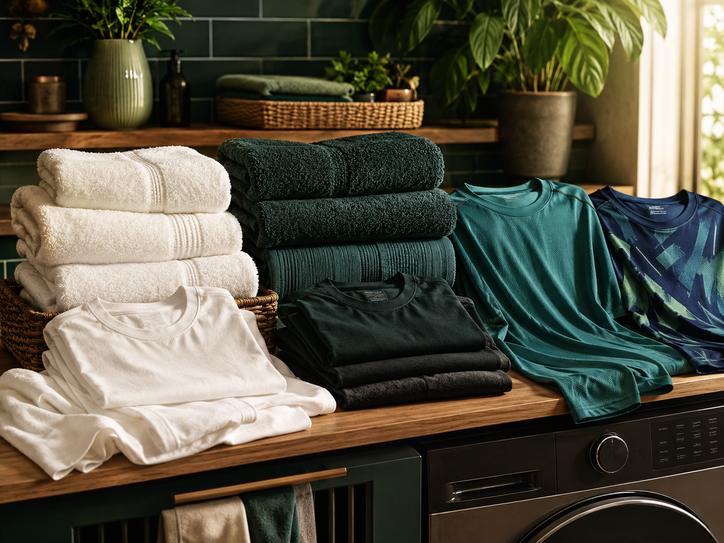
Quick comparison
Which Clothes Can Be Washed With Towels?
| Item | Wash with towels? | Main consideration |
|---|---|---|
| Plain cotton T-shirts | Sometimes | Match colours and care labels; expect some towel lint |
| Quick-dry sports shirts | Better separate | Light synthetic fabric can collect lint and may need gentler conditions |
| Printed T-shirts | Better separate | Reduce abrasion against rough towel loops and protect decoration |
| Jeans and heavy cotton | Sometimes | Compatible only when colours and wash settings match |
| Delicate clothing | No | Heavy towels can cause friction, stretching or snagging |
| Underwear and socks | Sometimes | Use a suitable hygienic wash temperature permitted by every care label |
Simple rule: If the clothing is lightweight, delicate, stretchy, heavily printed or lint-sensitive, keep it out of the towel load.

Fabric and garment types
How Towels Affect Different Clothes
Cotton T-Shirts
Plain cotton shirts can sometimes share a load with cotton towels when colours and care labels match. Use enough space in the drum because wet towels add considerable weight.
Polyester Sports Shirts
Quick-dry polyester is better washed separately from towels. Synthetic fabric can attract towel lint, and sportswear often benefits from a gentler wash with less heat.
Cotton-Polyester Blends
Blended shirts may tolerate a mixed load, but separate them when they are lightweight, printed or stretch-based. Follow the most restrictive care label in the machine.
Thin or Stretchy Shirts
Keep delicate, lightweight and elastane-rich garments away from towels. Heavy wet towels can create extra friction, stretching and tangling during the wash.
Black and Dark T-Shirts
Dark shirts should not be mixed with new or light-coloured towels that may shed lint. Dark towel fibres are less visible on dark clothing, but dye transfer is still possible.
White T-Shirts
White shirts can be washed with white towels only when the wash temperature and care instructions are compatible. Do not mix them with coloured towels that may release dye.
New Towels Need Extra Care
New towels can release more lint and sometimes excess dye during their first few washes. Washing them separately at first can help protect shirts from lint and colour transfer.
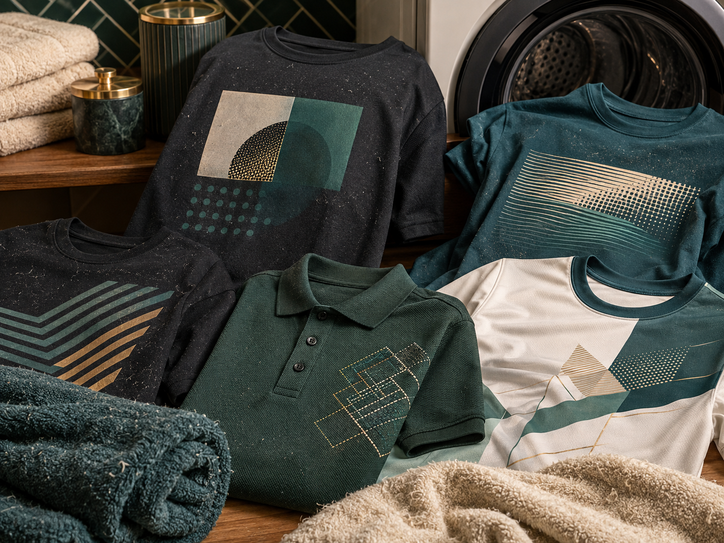
Printing and branding
Should Printed Shirts Be Washed With Towels?
Silkscreen Printing
Screen-printed shirts are usually better separated from towels. Turning the shirt inside out and washing it with similar lightweight garments reduces rubbing across the printed surface.
DTF Transfers
Keep DTF-decorated shirts away from heavy towel loads where possible. Less abrasion can help protect transfer edges and the printed surface through repeated washing.
Sublimation Printing
Sublimation colour is dyed into polyester, but the lightweight sports fabric can still collect lint from towels. A separate synthetic or sportswear load is usually more suitable.
Embroidery
Embroidered shirts can be durable, but towel loops may catch on loose threads or textured details. Washing embroidered garments separately reduces snagging risk.
Do Not Choose the Towel Setting Automatically
Towels may tolerate warmer water, stronger agitation or longer drying than decorated shirts. When a mixed load is unavoidable, use settings that are safe for the most delicate garment.

Why separation can help
What Can Happen When Towels and Clothes Mix?
Lint Transfer
Towels can shed fibres that stick to black shirts, polyester sportswear and other smooth fabrics.
Extra Friction
Thick towel loops rub against lighter garments and may increase wear on fabric surfaces and prints.
Uneven Drying
Towels hold much more water than T-shirts, so lighter clothes may dry earlier and stay in heat longer than necessary.
Colour Transfer
New or strongly coloured towels can release dye that may dull white or light-coloured shirts.
Heavy Loads
Wet towels become heavy and can reduce washing performance when the machine is packed too tightly.
Different Care Needs
Towels and lightweight clothing may require different temperatures, cycles and drying conditions.
| Sorting factor | Best practice | Avoid |
|---|---|---|
| Colour | Group whites, lights and darks separately | New dark towels with white shirts |
| Weight | Pair towels with other sturdy items | Heavy towels with delicate tops |
| Lint | Keep lint-sensitive garments separate | Black sportswear with lint-shedding towels |
| Drying | Dry towels separately when possible | Overdrying lightweight shirts while towels finish |
For most T-shirts: a separate clothing load gives you better control over lint, friction, temperature and drying time.

Step-by-step washing
How to Wash Towels With Clothes Safely
Read Every Care Label
Make sure the towels and clothes can use the same water temperature, cycle and drying method.
Sort by Colour
Keep whites, lights and darks separate, and wash new strongly coloured towels on their own first.
Remove Delicate Items
Take out lightweight sportswear, stretch garments, delicate fabrics and heavily decorated shirts.
Do Not Pack the Drum
Leave enough room for heavy wet towels to move freely so water and detergent can circulate.
Use a Compatible Cycle
Choose the gentler or cooler setting required by the most sensitive item rather than the strongest towel setting.
Separate for Drying if Needed
Light shirts often dry faster than towels. Removing them earlier can reduce unnecessary heat exposure and shrinkage risk.
Common situations
When Should You Separate the Load?
Towels and Quick-Dry Shirts
Wash separately where possible. Sports shirts can attract lint and often need a lower-temperature, gentler cycle than thick bath towels.
Towels and Polo Shirts
Plain sturdy cotton polos may tolerate the same load, but printed, embroidered or blended polos are better protected in a clothing-only wash.
White Towels and White T-Shirts
They can sometimes be combined if every care label permits the same temperature and there are no delicate prints or stretch fabrics.
New Towels and Everyday Clothes
Keep them separate for the first few washes because new towels may release more lint or excess dye than older towels.
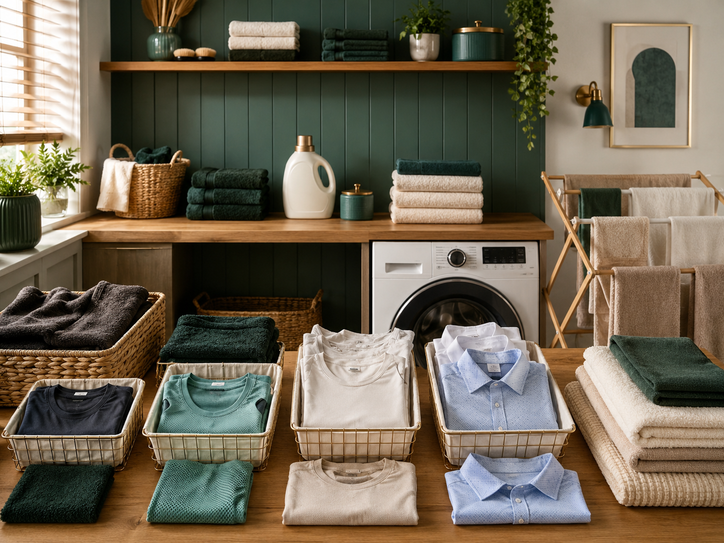
Quick checklist
Do's and Don'ts for Mixed Towel Loads
Do
- Check the care labels before combining items
- Sort towels and clothes by colour
- Wash new towels separately at first
- Keep the machine comfortably below full
- Use settings safe for the most delicate item
- Remove lightweight clothes earlier when drying
Avoid
- Mixing towels with delicate or stretchy clothing
- Putting dark new towels with white shirts
- Washing lint-sensitive sportswear with towels
- Using a harsh towel cycle for printed shirts
- Overloading the machine with heavy wet towels
- Overdrying T-shirts while waiting for towels
Frequently asked questions
Washing Towels With Clothes FAQ
Can I wash towels and T-shirts together?
Yes, when the colours, fabrics and care labels are compatible. Plain sturdy cotton shirts are the easiest match, but separating towels is still preferable for lint control and gentler clothing care.
Can I wash white towels with white clothes?
Usually, if every item can use the same wash temperature and cycle. Separate delicate, printed or stretch garments even when the colours match.
Why do towels leave lint on my clothes?
Towel loops shed small fibres during washing and drying. New towels often shed more, and lint shows especially clearly on black or smooth synthetic clothing.
Can I wash gym towels with sports shirts?
It is better to separate them. Quick-dry polyester can collect lint, and sportswear often benefits from cooler water and gentler washing than thick towels.
Can I wash jeans with towels?
Sometimes. Both are relatively heavy fabrics, but match colours carefully and make sure the machine is not overloaded.
Should new towels be washed separately?
Yes, especially for the first few washes. New towels may release more lint and, depending on the dye, some excess colour.
Can towels damage printed T-shirts?
Repeated rubbing against thick towel fabric can add unnecessary abrasion. Washing printed shirts inside out with similar lightweight garments is generally better.
Can I dry towels and clothes together?
You can, but towels normally take longer to dry. Lightweight shirts may be exposed to heat longer than necessary, so separating them or removing dry clothes early is preferable.
Choose shirts that suit regular washing
Need T-Shirts for Work, Sports or Events?
Uniform Penang can help you compare cotton, polyester and blended shirts together with suitable printing methods for company uniforms, schools, sports teams, events and group orders.
Useful Uniform Penang resources
More T-Shirt Washing and Care Information
What Temperature Should You Wash Clothes At?
Compare common wash temperatures for different clothing and fabric types.
Open article →How Long Should You Soak Clothes?
Learn when a short pre-soak can help and why soaking too long can cause problems.
Open article →Common T-Shirt Washing Mistakes
See washing habits that can affect fabric, fit, colour and decoration.
Open article →Should You Separate Whites and Colours?
Learn when separating laundry can reduce dye transfer and dull-looking whites.
Open article →Why Do Clothes Smell After Washing?
Find common reasons musty or sweaty smells remain after washing.
Open article →Contact Uniform Penang
Share your fabric, colour, quantity, artwork and required date.
Go to contact →Our other company websites
Regional Apparel and Printing Support
JC Print Malaysia
Regional apparel and printing support.
Visit website →Selangor Print
Regional apparel and printing support.
Visit website →Uniform Johor
Regional apparel and printing support.
Visit website →Uniform Sabah
Regional apparel and printing support.
Visit website →Uniform Singapore
Regional apparel and printing support.
Visit website →Uniform Hub SG
Regional apparel and printing support.
Visit website →Tanah Studio
Regional apparel and printing support.
Visit website →KitaPrint
Regional apparel and printing support.
Visit website →Product ranges, stock, colours, delivery coverage and service arrangements may vary by region.