
Laundry & Fabric Care
What Clothes Need a Laundry Bag?
A mesh laundry bag can reduce tangling, stretching, snagging and rubbing inside the washing machine. It is especially useful for small, delicate, stretchy or decorated garments that need more protection than ordinary T-shirts and heavier everyday clothing.
Direct answer: Use a mesh laundry bag for delicate fabrics, small items, stretch garments, clothes with hooks or small zippers, lightweight knits, and garments with details that may snag or rub. Printed and embroidered shirts may also benefit from a bag when they are washed with other lightweight items. However, a laundry bag does not replace correct sorting, temperature selection or care-label instructions.
Protect Delicates
Mesh bags reduce direct rubbing and help delicate or stretchy garments keep their shape during washing.
Control Small Items
Socks, small accessories and lightweight pieces are easier to keep together when placed inside a zipped mesh bag.
Reduce Snagging
Hooks, small zippers, embroidery and textured details are less likely to catch on other clothes when contained.

Quick comparison
Which Clothes Should Go in a Laundry Bag?
| Clothing type | Laundry bag? | Main reason |
|---|---|---|
| Delicate or lightweight garments | Recommended | Reduces rubbing, pulling and tangling |
| Stretch or fitted garments | Often useful | Helps reduce stretching and twisting |
| Socks and small items | Useful | Keeps small pieces together in the load |
| Garments with hooks or small zippers | Recommended for delicate items | Helps contain hardware that can snag fabric |
| Printed or embroidered shirts | Optional extra protection | Can reduce direct abrasion against other garments |
| Heavy towels, jeans or workwear | Usually no | They need room to wash and may be too bulky for a small mesh bag |
Simple rule: if a garment is small, delicate, stretchy, easy to snag or has details you want to protect, a mesh laundry bag is usually worth considering.

Garment types
Clothes That Benefit Most From a Mesh Laundry Bag
Lightweight and Delicate Fabrics
Thin, soft or loosely constructed fabrics can rub against rougher garments in the drum. A mesh bag creates a simple barrier that reduces direct contact.
Stretch and Fitted Clothing
Stretch garments can twist around heavier clothes. Using a correctly sized bag can help limit tangling and reduce unnecessary pulling.
Socks and Small Accessories
Small washable items are easier to keep together inside one zipped mesh bag, which also makes sorting after the wash more convenient.
Garments With Hooks or Small Zippers
Fasten hooks and close working zippers first. A laundry bag can then provide an extra layer of protection against snagging nearby fabrics.
Lightweight Knits
Soft knit garments can stretch or catch more easily than sturdy woven fabrics. A roomy mesh bag can reduce tangling while still allowing water and detergent through.
Garments With Decorative Details
Embroidery, patches, small trims and other raised details may benefit from reduced contact with zippers, rough fabrics and heavy garments.
Do Not Overfill the Bag
The garment still needs space for water and detergent to move through the fabric. If the bag is packed tightly, cleaning and rinsing may be less effective.
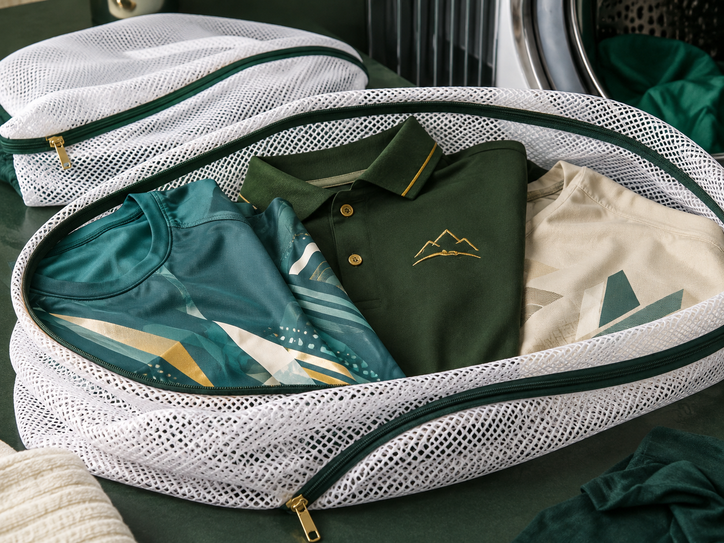
Printing and branding
Can a Laundry Bag Help Protect Printed Shirts?
Silkscreen Printing
Turning the shirt inside out is usually the first step. A mesh bag can add protection by reducing rubbing against zippers, rough fabrics and other hard details in the load.
DTF Transfers
A mesh bag can help limit direct abrasion on transfer surfaces. Wash inside out, use a suitable gentle cycle and avoid high heat unless the garment care instructions allow it.
Sublimation Printing
Sublimated designs are within the polyester fibres, so a bag is less about protecting the ink and more about reducing snagging, stretching and surface abrasion on lightweight sports fabric.
Embroidery
Raised threads can catch against rough items or hardware. A mesh bag is especially useful for lightweight embroidered garments when you want to reduce direct contact.
A Laundry Bag Is Not a Shield Against a Rough Load
Do not rely on the bag to make every mixed load safe. Heavy jeans, towels, workwear and garments with large hardware can still create strong movement and abrasion. Sort incompatible items separately.
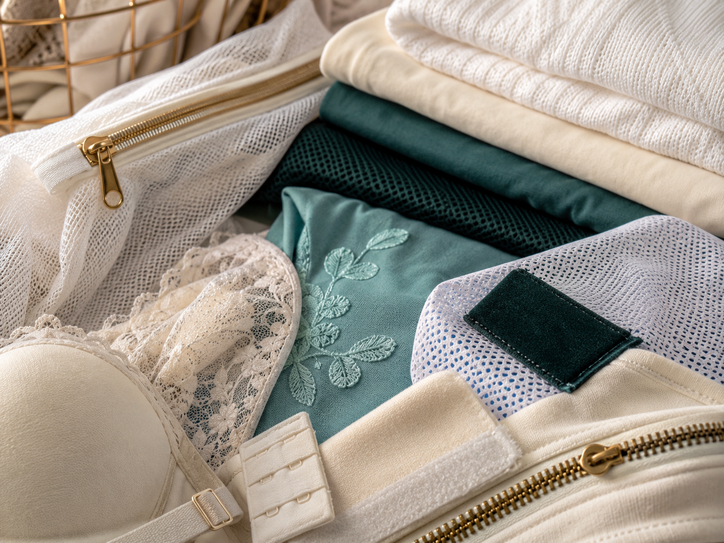
Fabric and design guide
When Is a Laundry Bag Most Useful?
Thin Fabric
Lightweight fabric is more likely to twist around heavier clothes or catch on exposed hardware.
Loose Knit
Open or soft knit structures can benefit from less rubbing and less contact with sharp or rough items.
High Stretch
Stretchy garments can become tangled and pulled during agitation, especially in crowded loads.
Small Size
Small items are easier to keep together and less likely to become trapped among larger garments.
Raised Details
Embroidery, trims and small accessories can snag or rub against surrounding fabric.
Mixed Hardware
If the load contains zippers, hooks or clasps, a bag can provide extra separation for vulnerable garments.
| Fabric or design | Bag recommendation | Important note |
|---|---|---|
| Cotton T-shirt | Usually optional | Use a bag if the shirt has delicate decoration or shares a load with snag-prone hardware |
| Polyester sports shirt | Optional to useful | Helpful for lightweight mesh, stretch fabric or heavily decorated pieces |
| Stretch blend | Often useful | Choose a roomy bag and a suitable gentle cycle |
| Embroidered shirt | Useful for delicate embroidery | Turn inside out first when appropriate |
| Heavy denim or towel | Usually unnecessary | Wash separately from delicate garments when weight and abrasion differ greatly |
Colour still matters: a mesh bag does not prevent dye transfer. Continue separating whites, lights and dark colours when the fabric or care instructions require it.
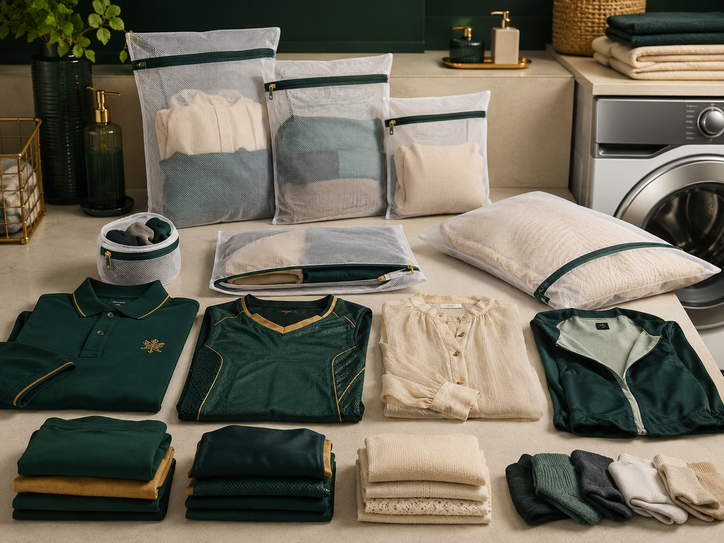
Step-by-step washing
How to Use a Laundry Bag Properly
Check the Care Label
Confirm that the garment is machine washable and note the recommended temperature, cycle and drying method.
Fasten Snag-Prone Details
Close working zippers, secure hooks and check for loose trims. Do not force broken fasteners.
Turn the Garment Inside Out
For suitable printed, embroidered or decorative garments, washing inside out helps reduce rubbing on the outer surface.
Choose the Correct Bag Size
Use a bag large enough for the garment to move. Avoid stuffing several bulky items tightly into one small bag.
Zip or Secure the Bag
Close the laundry bag fully so the garment stays contained throughout the wash cycle.
Wash With Compatible Clothes
Match colours, fabric weights and care requirements. The bag adds protection, but correct sorting is still essential.
Common situations
Should You Use a Laundry Bag in These Loads?
Printed T-Shirt With Everyday Clothes
Turn the shirt inside out. A mesh bag is optional, but it can help if the rest of the load contains zippers or rougher garments.
Lightweight Sports Shirt
A bag can be useful for thin mesh or stretch performance wear. Wash with similar lightweight synthetic garments rather than heavy towels or jeans.
Socks in a Family Wash
Place matching pairs or small items together in one mesh bag so they stay grouped while still receiving water and detergent.
Embroidered Uniform Shirt
Turn it inside out and use a laundry bag when the embroidery or fabric is delicate. Avoid washing it with heavy hardware or abrasive items.

Quick checklist
Do's and Don'ts for Laundry Bags
Do
- Use mesh bags for small, delicate or snag-prone items
- Choose a bag that gives the garment room to move
- Close zippers and secure hooks before bagging
- Turn printed or embroidered garments inside out when suitable
- Sort colours and fabric weights before washing
- Follow the garment care label
Avoid
- Stuffing too many garments into one small bag
- Using a laundry bag to justify mixing incompatible colours
- Mixing delicate bagged items with very heavy workwear
- Leaving sharp hooks or broken zippers exposed
- Using high heat simply because the garment was bagged
- Ignoring special hand-wash or dry-clean instructions
Frequently asked questions
Laundry Bag FAQ
What clothes should be washed in a laundry bag?
Delicate, lightweight, stretchy, small or snag-prone garments are the strongest candidates. Garments with embroidery, hooks or small zippers may also benefit from extra protection.
Do normal T-shirts need a laundry bag?
Usually not. A standard cotton or polyester T-shirt can normally be washed without one when sorted correctly. A bag becomes more useful when the shirt has delicate decoration or shares a load with rough hardware.
Should printed T-shirts go in a laundry bag?
It is optional extra protection. Turning the shirt inside out is generally more important, while a mesh bag can further reduce rubbing against other garments.
Can I put several clothes in one laundry bag?
Yes, if the bag remains roomy enough for water, detergent and movement. Avoid packing it tightly, especially with bulky garments.
Can colours still run inside a laundry bag?
Yes. A mesh bag does not stop water or loose dye from moving through the load, so colour sorting is still important.
Should socks go in a laundry bag?
They can. It is a convenient way to keep small items together, especially in larger household loads.
Do zippered clothes need a laundry bag?
Not all of them. Close working zippers first. A bag is most useful when the garment itself is lightweight or delicate, or when the zipper is small and could snag nearby fabric.
Can I put heavy jeans or towels in a laundry bag?
Usually there is little benefit. Heavy items generally need space to move and rinse properly, and they are better kept separate from delicate clothes when the weight difference is large.
Choose garments that suit regular washing
Need T-Shirts for Work, Sports or Events?
Uniform Penang can help you compare cotton, polyester and blended shirts together with suitable printing methods for company uniforms, schools, sports teams, events and group orders.
Useful Uniform Penang resources
More T-Shirt Washing and Care Information
Should You Zip Zippers Before Washing?
Learn why closing zippers can reduce snagging and rubbing in the wash.
Open article →Common T-Shirt Washing Mistakes
See washing habits that can affect fabric, fit, colour and decoration.
Open article →Should You Separate Whites and Colours?
Learn when separating laundry can reduce dye transfer and dull-looking whites.
Open article →Can You Wash Towels With Clothes?
See when towels and everyday clothing can share a load and when separation is better.
Open article →What Temperature Should You Wash Clothes At?
Compare common wash temperatures for different clothing and fabric types.
Open article →Contact Uniform Penang
Share your fabric, colour, quantity, artwork and required date.
Go to contact →Our other company websites
Regional Apparel and Printing Support
JC Print Malaysia
Regional apparel and printing support.
Visit website →Selangor Print
Regional apparel and printing support.
Visit website →Uniform Johor
Regional apparel and printing support.
Visit website →Uniform Sabah
Regional apparel and printing support.
Visit website →Uniform Singapore
Regional apparel and printing support.
Visit website →Uniform Hub SG
Regional apparel and printing support.
Visit website →Tanah Studio
Regional apparel and printing support.
Visit website →KitaPrint
Regional apparel and printing support.
Visit website →Product ranges, stock, colours, delivery coverage and service arrangements may vary by region.