
Laundry & Fabric Care
Should You Separate Whites and Colours?
Separating white clothing from coloured clothing is still one of the simplest ways to reduce dye transfer, keep whites looking cleaner and protect the original shade of darker garments. It matters most with new, dark or strongly coloured shirts that may release excess dye during washing.
Direct answer: Yes, in most cases you should wash whites separately from dark and strongly coloured clothes. This lowers the risk of colour transfer and helps white T-shirts stay brighter. Light, colourfast garments may sometimes be washed together when their care labels allow the same cycle, but new dark shirts, red garments, denim and other high-dye items are safer in a separate load. Cold or cool water can reduce dye release, but it does not eliminate the need for sensible sorting.
Protect White Shirts
Even a small amount of loose dye can leave whites looking grey, dull or slightly tinted after repeated mixed washes.
Watch New Dark Clothes
Black, navy, red and other deep colours are more likely to release excess dye when they are new.
Sort Beyond Colour
Also consider fabric weight, soil level, washing temperature and decoration before putting garments in the same load.
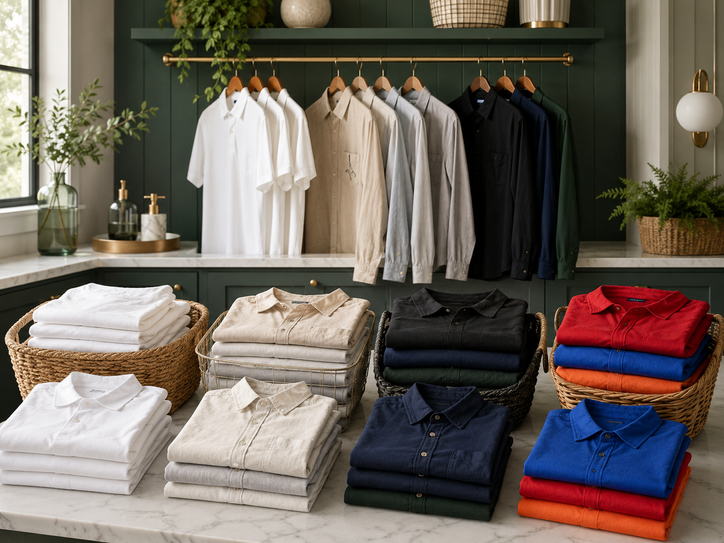
Quick comparison
Which Clothes Can Go in the Same Wash?
| Clothing group | Examples | Best washing approach |
|---|---|---|
| Whites | White T-shirts, white polos, white socks | Wash together where care labels and fabric types are compatible |
| Light colours | Beige, pale grey, pastel blue, light pink | Usually safer together after checking that the garments are colourfast |
| Dark colours | Black, navy, charcoal, dark green | Wash separately from whites, especially while garments are new |
| Bright colours | Red, royal blue, orange, purple | Separate from whites and pale colours if dye transfer is a concern |
| New coloured shirts | Recently purchased or freshly dyed garments | Wash alone or with similar colours for the first few washes |
| Printed or decorated shirts | DTF, silkscreen, sublimation or embroidery | Follow decoration care instructions as well as normal colour sorting |
Simple rule: If you would be unhappy to see the colour of one garment transferred onto another, do not wash them together until you are confident both items are colourfast.
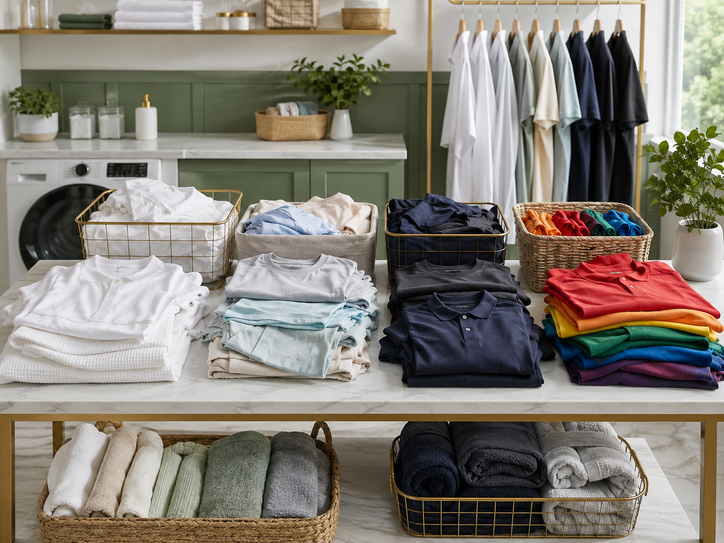
Colour groups
A Practical Way to Sort T-Shirts Before Washing
Pure White T-Shirts
Keep white shirts away from dark garments when brightness matters. Check for coloured trims, prints or embroidery before using any whitening product, because the decoration may need gentler care than the base fabric.
Pastels and Light Neutrals
Light grey, cream, beige and pastel garments can often share a load when they are colourfast and have similar care instructions. Avoid adding a new dark garment simply to fill the machine.
Black, Navy and Dark Shades
Wash darker shades together to reduce the chance of tinting whites. Turning dark T-shirts inside out can also reduce surface friction during washing and help preserve the appearance of the outer face.
Red and Strong Colours
Strong colours deserve extra caution when new. If you are unsure whether a garment will bleed, wash it separately or with closely matched colours before combining it with other clothing.
Colour Is Only One Part of Sorting
Heavy towels, muddy workwear and delicate lightweight T-shirts may still be better in separate loads even when their colours match. Fabric weight, dirt level and recommended wash cycle also affect the result.
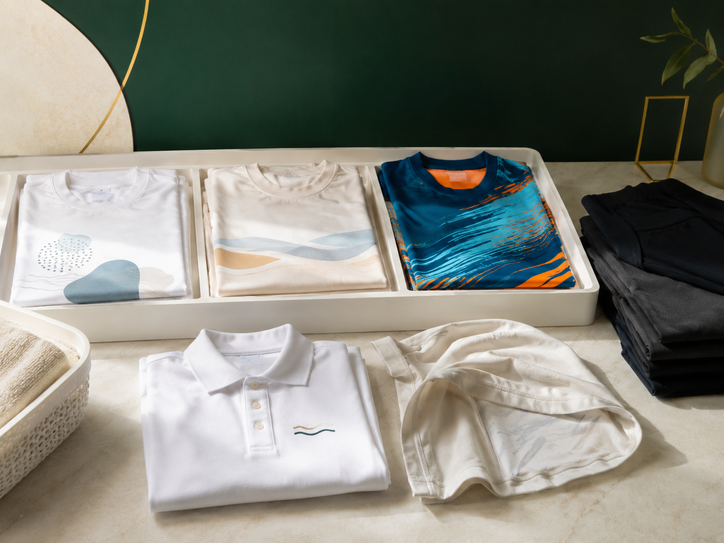
Printing and branding
How Colour Sorting Affects Printed and Branded Shirts
Silkscreen Printing
Sort by garment colour first, then follow the printer's recommended wash temperature. Turning the shirt inside out and avoiding harsh cycles can help reduce surface wear on the printed area.
DTF Transfers
Keep white or pale DTF shirts away from dark garments that may release dye. Use a gentle cycle when appropriate and avoid excessive heat or aggressive rubbing over the transfer.
Sublimation Printing
Sublimated sportswear is commonly polyester and often carries strong colour. Wash it with similar-coloured performance garments and keep it away from white cotton loads when dye transfer is a concern.
Embroidery
Consider both the garment colour and thread colours. A white polo with coloured embroidery may need to be treated as a decorated garment rather than a plain white item when choosing bleach or strong whitening products.
Do Not Assume a White Shirt Is Bleach-Safe
White fabric can still contain coloured thread, printed logos, heat transfers, trims or finishes that may react poorly to chlorine bleach. Always read the garment care label and any decoration care instructions first.
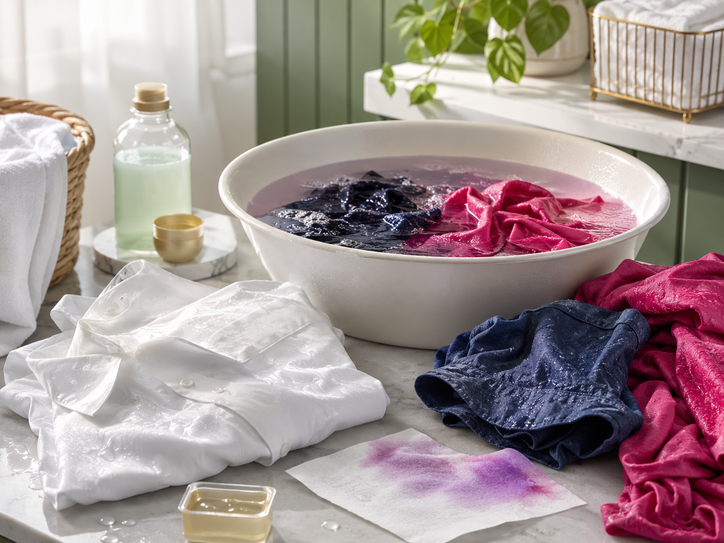
Why sorting matters
Why Colours Can Transfer in the Wash
Loose Surface Dye
New garments can carry excess dye that is released during the first few wash cycles, particularly with deep or saturated colours.
Warm Water
Higher wash temperatures can increase dye movement in some garments. Use the temperature recommended on the care label instead of assuming hotter water is better.
Long Contact Time
Leaving wet coloured garments sitting against white clothing after the cycle can increase the opportunity for unwanted colour transfer.
Overloaded Machines
When clothes cannot move and rinse properly, loose dye, detergent and soil may not be carried away as effectively.
Fabric and Finish
Different fibres, dyes and garment finishes behave differently in water, so two shirts of the same colour may not release dye at the same rate.
Age of the Garment
Many well-washed, colourfast garments release less loose dye than brand-new items, although separation is still the safer choice for valuable whites.
Cotton T-Shirts
Dyed cotton can release colour, especially when new. Sort dark and bright cotton shirts away from whites and follow the recommended wash temperature to reduce fading and transfer.
Polyester Quick-Dry Shirts
Polyester is often colourfast, but strong dyes, prints and performance finishes still make similar-colour loads a sensible choice. Avoid mixing heavily soiled sportswear with clean white shirts.
Extra protection: Colour-catcher sheets may absorb some loose dye in a mixed load, but they are not a guaranteed substitute for separating garments that are likely to bleed.

Step-by-step laundry sorting
How to Sort a T-Shirt Load Before Washing
Read the Care Labels
Check temperature, cycle, bleaching and drying instructions. Garments that need very different care should not share the same load even if the colours match.
Separate Whites From Dark Colours
Put pure whites in one group and black, navy, red and other strong shades in another. This is the safest basic split for everyday laundry.
Keep New Dark Garments Apart
If a shirt is new or you are unsure whether the dye is stable, wash it separately or with closely matched colours for the first few cycles.
Sort by Fabric Weight and Soil
Do not automatically wash light T-shirts with heavy towels, greasy workwear or muddy sports clothing simply because they are the same colour.
Choose a Suitable Detergent and Cycle
Use the correct amount of detergent and a cycle appropriate for the garments. Cool or cold water is often useful for coloured clothing when the care label allows it.
Remove Clothes Promptly
Take garments out soon after the cycle finishes rather than leaving wet dark colours pressed against white or pale clothing for a long time.
Common situations
Sorting Shirts for Work, School, Sports and Events
Mixed Staff Uniform Colours
If one department wears white polos and another wears dark polos, separate the loads rather than washing all uniforms together for convenience.
White School Shirts With Coloured Sportswear
Keep white school tops away from house-colour jerseys, track pants and dark socks to reduce the chance of tinting the white fabric.
Bright Quick-Dry Jerseys
Wash strongly coloured jerseys with similar shades, especially after outdoor events where sweat, mud and sunscreen may require different treatment from everyday whites.
Newly Issued Group T-Shirts
Brand-new event shirts may still release loose dye. Advise participants to wash strong colours separately before mixing them with light household laundry.

Quick checklist
Do's and Don'ts When Sorting Laundry
Do
- Separate white shirts from dark and strongly coloured garments
- Wash new dark clothing separately when you are unsure about dye release
- Check care labels before combining items
- Keep similar fabric weights and soil levels together
- Use a suitable wash temperature for the garments
- Remove wet clothing promptly after the cycle
Avoid
- Adding one new red or black shirt to a white load
- Assuming cold water makes all mixed-colour loads risk-free
- Using chlorine bleach on decorated whites without checking the label
- Mixing heavily soiled workwear with lightly worn T-shirts
- Overloading the washing machine
- Leaving damp dark garments pressed against whites for hours
Frequently asked questions
Whites and Colours Washing FAQ
Do I really need to separate whites and colours?
Separating them is the safest option when you want to protect white garments from dye transfer. It is especially important with new, dark or strongly coloured clothing.
Can I wash whites and colours together in cold water?
Cold water can reduce dye release in some garments, but it does not guarantee that colours will not bleed. If keeping whites bright is important, separate them.
Can light grey clothes be washed with whites?
Light grey garments may sometimes be washed with whites if they are colourfast and share compatible care instructions. For the brightest white result, keeping pure whites separate is still safer.
Should new black T-shirts be washed separately?
Yes, that is a sensible precaution. New dark garments may release excess dye during their first few washes, so washing them with similar dark colours reduces the risk to lighter clothing.
What colours are most likely to bleed?
Deep reds, dark blues, black and other saturated shades can be higher-risk when new, although dye stability depends on the garment, fabric, dye and manufacturing process.
Can I use colour-catcher sheets instead of separating clothes?
They may help capture some loose dye, but they cannot guarantee protection. Separate high-risk garments when colour transfer would be difficult to accept.
Do white printed T-shirts belong in the white load?
Often yes, but check the print colours and care instructions first. Avoid bleach or strong whitening treatments unless both the garment and decoration can safely tolerate them.
Should towels and T-shirts be separated even if they are the same colour?
Often yes. Heavy towels can create more friction and lint than lightweight T-shirts, so separating by fabric weight can help protect the shirt surface and printed decoration.
Choose practical shirts for repeated wear
Need T-Shirts for Work, Sports or Events?
Uniform Penang can help you compare cotton, polyester and blended T-shirts together with suitable colours and printing methods for company uniforms, schools, sports teams, events and group orders.
Useful Uniform Penang resources
More T-Shirt Washing and Care Information
How to Wash White T-Shirts
Use a simple routine to reduce dullness, staining and unwanted colour transfer.
Open article →Common T-Shirt Washing Mistakes
See everyday washing habits that can affect fabric, fit, colour and decoration.
Open article →Can You Use Bleach on T-Shirts?
Learn when bleach may be suitable and when it may damage colour, fabric or decoration.
Open article →Why Do Clothes Shrink After Washing?
Understand how fibre type, heat and agitation can change garment size.
Open article →Why Do Clothes Smell After Washing?
Find common causes of musty or sweaty smells that remain after laundry.
Open article →Contact Uniform Penang
Share your fabric, colour, quantity, artwork and required date.
Go to contact →Our other company websites
Regional Apparel and Printing Support
JC Print Malaysia
Regional apparel and printing support.
Visit website →Selangor Print
Regional apparel and printing support.
Visit website →Uniform Johor
Regional apparel and printing support.
Visit website →Uniform Sabah
Regional apparel and printing support.
Visit website →Uniform Singapore
Regional apparel and printing support.
Visit website →Uniform Hub SG
Regional apparel and printing support.
Visit website →Tanah Studio
Regional apparel and printing support.
Visit website →KitaPrint
Regional apparel and printing support.
Visit website →Product ranges, stock, colours, delivery coverage and service arrangements may vary by region.